
The best dog crate end table should do two things well: give the dog a calm resting space and make the room look better, not more crowded.
If you are choosing this product direction for your range, I would not start with appearance alone. I would first ask: which material fits the dog, the room, and the daily cleaning routine? That is where plastic, clear acrylic, wood, and woven styles become very different choices.
Why Pet Owners Choose Crate End Tables
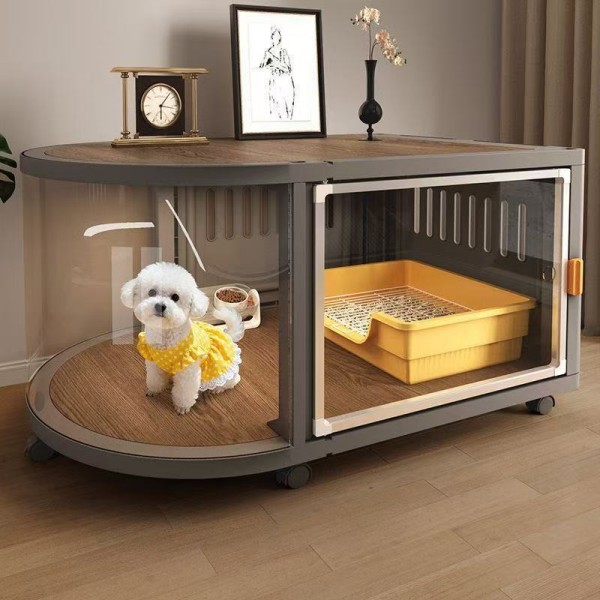
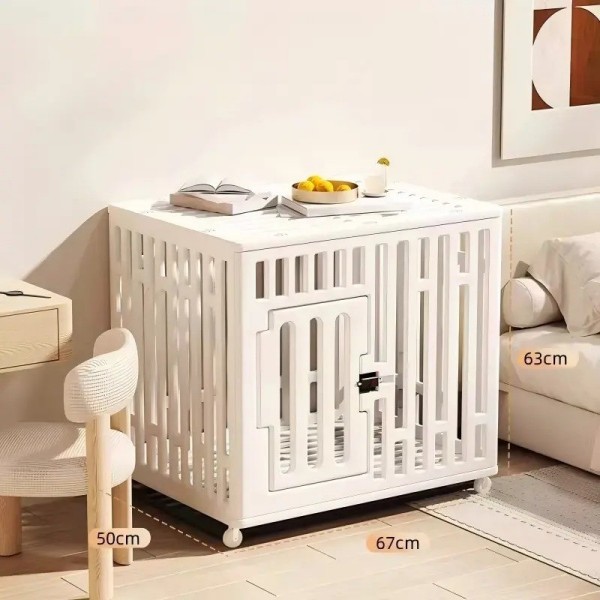
Many pet owners still need a crate, but they do not always like the look of a wire cage in the living room or bedroom. A dog crate end table solves that problem by turning the crate into usable furniture.
It can work beside a sofa, beside a bed, or in a small apartment corner. The top surface can hold light daily items, while the lower space gives the dog a defined resting area.
This is why the product has stronger value than a basic crate. It is not only containment; it is pet furniture for real home living.
For your range, that home-integration problem creates a clearer selling story than a basic wire crate. Material, finish, usable size, cleaning, and room fit give you more ways to differentiate without relying only on price.
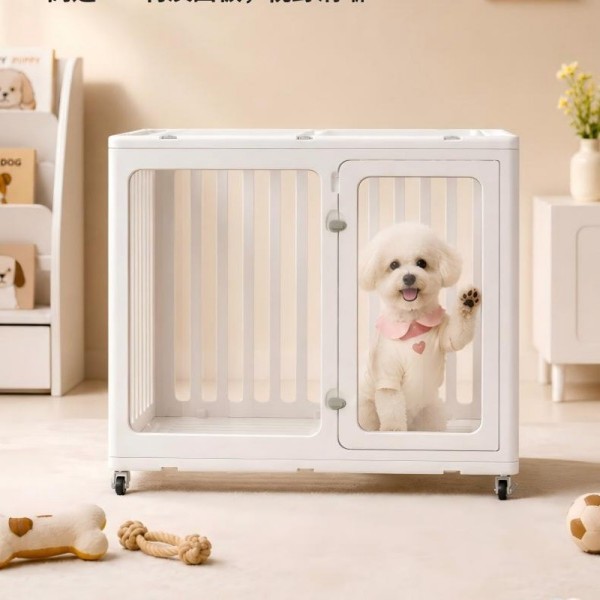
Modular Plastic Dog Crate End Tables
A modular plastic dog crate end table is one of the most practical directions for modern pet homes. It gives the product more flexibility because panels can be combined, adjusted, and arranged for different room layouts.
Plastic also makes daily cleaning easier than many wood or woven styles. For pet owners who worry about odor, stains, moisture, and wipe-down care, this material direction feels more practical.
I would choose modular plastic for small to medium dogs, apartment homes, indoor pet corners, and collections that need flexible sizing. The key value is easy cleaning, lighter structure, flexible combination, and modern indoor use.
Clear Acrylic Dog Crate End Tables
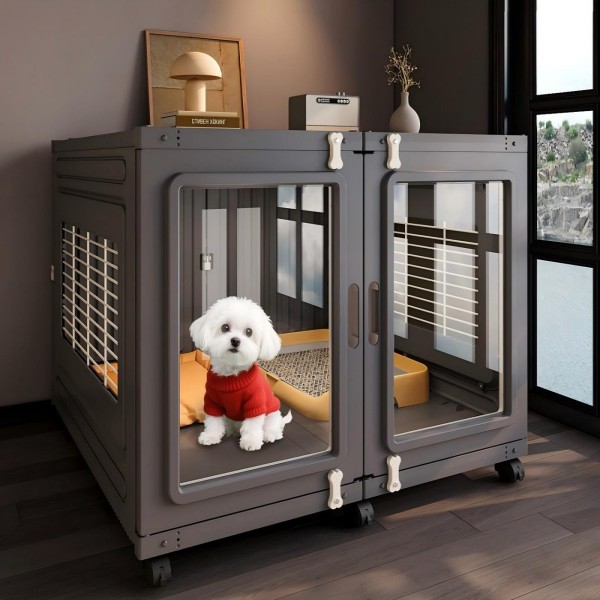
A clear acrylic dog crate end table answers a different home problem. It gives the dog visibility while keeping the room visually open.
A transparent structure can make a small room feel cleaner and less crowded. I would choose clear acrylic for modern apartments, minimalist homes, and design-led pet spaces where visibility and a lighter furniture look matter.
Plastic vs Clear Acrylic: Which Direction Is Better?
Plastic and clear acrylic are not competing for the same feeling.
A modular plastic crate end table is better when the priority is practical use, easier cleaning, and flexible setup. Clear acrylic is stronger when visual openness and premium room presentation matter.
If I were building a focused range, I would use plastic for everyday indoor pet furniture and acrylic for a more design-led option.
Wood and Board Crate End Tables
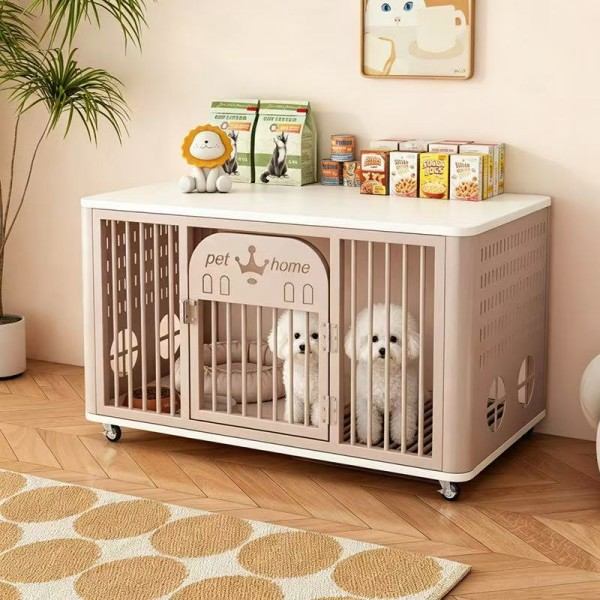
A wood or board crate end table still has strong value when pet owners want a classic furniture look. It works well beside sofas, beds, and traditional home furniture.
This direction suits calm dogs and rooms where the product should look like a side table first. Wood finishes can match many interiors.
I would be careful with strong chewers or dogs that push heavily against doors. Wood-style crate furniture looks warm, but it needs the right dog behavior.
Eco-Flex Resin Composite Crate End Tables
Eco-flex resin composite is a useful middle direction between furniture look and practical cleaning. It can offer a smoother surface, stable color, and a more pet-friendly feel than some wood-style products.
This material direction works well when the product needs a cleaner furniture look but still has to handle daily wipe-down care. I would place it beside modular plastic as a practical home-use option, while wood remains more furniture-classic.
Wicker, Willow, and Rattan Crate End Tables
Wicker, willow, and natural rattan crate end tables bring a warmer, more decorative feeling. They suit boho rooms, coastal homes, sunrooms, and natural pet furniture collections.
Their value is not heavy containment; it is natural texture, home décor, and soft visual style. I would choose woven crate furniture for calm indoor dogs, not heavy chewers or dogs that need stronger containment.
PE Rattan Crate End Tables
PE rattan gives a woven look with easier material control. It can be easier to wipe, more consistent in color, and more repeatable across a product range than some natural woven materials.
This works when your market likes rattan style but still wants practical daily care. Natural rattan feels warmer and more handcrafted; PE rattan feels more controlled and repeatable.
Inner Size Comes Before Outer Style
No matter which material you choose, inner size comes first. The dog should have enough room to stand naturally, turn around, and lie down comfortably.
A crate end table can look beautiful outside and still fail if the dog feels cramped inside. Furniture panels, tabletop structure, and decorative frames can reduce usable space.
In real home use, size confusion is one of the fastest ways furniture crates lose trust. I judge the inside space before the color because the furniture value does not matter if the dog cannot use it comfortably.
Ventilation Should Stay Visible
A dog crate end table should never sacrifice airflow for style. Dogs need ventilation, visibility, and a space that does not feel closed or hot.
Plastic panels, acrylic panels, wood slats, metal bars, and woven sides create different airflow levels. I would always balance home appearance with dog comfort rather than make the crate more enclosed for a cleaner look.
Door and Hardware Matter
The door decides daily use. A weak latch, noisy hinge, or awkward opening can make the product frustrating quickly.
For plastic and acrylic styles, door alignment and connector stability matter. For wood and woven styles, hinge strength, latch security, and the frame around the opening carry repeated daily stress.
I would avoid any crate end table that looks good but feels weak at the door. Repeated opening usually exposes that problem early.
Cleaning Should Match the Material
Cleaning is one of the biggest differences between material types.
Plastic and clear acrylic are easier to wipe. Eco-flex resin composite also works well for practical indoor care. Wood needs more care around corners and moisture, while woven materials can trap hair and dirt in gaps.
In real home use, cleaning complaints often start around joints, corners, and unfinished edges rather than the main panel. Material choice should match both the room and the maintenance routine.
Quick Comparison
| Crate End Table Type | Best For | What I Would Watch |
|---|---|---|
| Modular plastic crate end table | Flexible indoor use, easy cleaning, small-space homes | Connector stability, panel fit, ventilation |
| Clear acrylic crate end table | Modern rooms, visual openness, premium style | Scratch care, airflow, frame strength |
| Wood and board crate table | Classic furniture look | Chew risk, coating, hardware |
| Eco-flex resin composite crate table | Practical home use and wipe-down care | Structure, surface feel, color match |
| Wicker, willow, rattan crate table | Natural décor and calm indoor dogs | Smooth weaving, chew risk, inner space |
| PE rattan crate table | Practical woven style | Frame stability, wipe-clean surface, color consistency |
This comparison keeps the choice practical. The best crate end table is not only the prettiest one; it is the one that fits the dog and the room.
Where I Would Be Careful
Furniture-style crates are not automatically suitable for every dog. If a dog shows panic, frantic escape attempts, or strong distress during confinement, the better decision is to address that behavior first rather than treat furniture styling as the solution.
I would also be careful with strong chewers, weak door hardware, difficult assembly, and large flat-pack cartons. These are the points where a premium-looking product can turn into after-sales cost.
A furniture crate also needs a gradual, positive introduction if it is new to the dog.
For a first order, I would rather choose a proven structure with clear instructions and protected hardware than over-customize the shape. That keeps the test commercial without ignoring the dog’s real use needs.
How Archova Approaches Dog Crate End Tables
Archova looks at dog crate end tables as part of modern pet furniture, not just dog containment.
For modular plastic styles, we focus on panel combination, easy cleaning, stable connectors, ventilation, and practical indoor use. For clear acrylic styles, we focus on transparency, clean visual design, frame strength, airflow, and room-friendly appearance.
For wood, Eco-flex resin composite, wicker, willow, rattan, and PE rattan styles, we help match material direction to the product range. For custom dog crate furniture projects, we also review usable size, door structure, packaging protection, and practical private-label changes before a first order becomes too complicated.
When This Product Direction Is Worth Adding
Dog crate end tables are worth adding when your market cares about indoor dog furniture, small-space pet living, modern home style, and cleaner alternatives to wire crates.
Modular plastic and clear acrylic are especially worth attention because they answer home-use problems directly: cleaning, flexibility, visibility, and lighter room appearance.
Do not choose this category only because it looks premium. Add it when usable size, ventilation, door structure, cleaning, and material choice are strong enough to support repeat use.
FAQ
What is the best dog crate end table?
The best option fits the dog’s usable space, provides airflow, has a stable door, and works naturally in the room. Material comes after those basics.
Are modular plastic dog crate end tables good?
Yes, especially for flexible indoor layouts and easy cleaning. Check connector stability, panel fit, door alignment, and ventilation before choosing a model.
Are clear acrylic dog crate end tables good?
They can work well in modern rooms where visual openness matters. Frame strength, airflow, scratch expectations, and easy cleaning still need careful review.
Are wood crate end tables better than plastic ones?
Wood gives a more classic furniture look. Plastic is usually easier to wipe and can support more flexible modular structures.
Are wicker or rattan crate end tables suitable for dogs?
They suit calm indoor dogs and natural home décor. I would avoid them for heavy chewers, aggressive scratchers, or dogs needing stronger containment.
What size dog crate end table should I choose?
Choose by usable inner space first. The dog should be able to stand, turn, lie down, and rest without being cramped.
Can a dog crate end table replace a wire crate?
It can for some calm, crate-trained indoor dogs. It is not the right replacement for dogs that panic, escape aggressively, or need stronger containment.
How does Archova support dog crate end table projects?
Archova supports material selection, usable-size planning, door and structure review, packaging protection, color direction, and practical private-label development.
Conclusion
The best dog crate end table is not the style with the strongest furniture look. It is the one that gives the dog suitable usable space while making cleaning, airflow, door access, and room placement easy for the owner.
For your product range, start with the use scene and dog behavior, then choose the material. That approach gives you a stronger product story and reduces the risk of buying a premium-looking crate that performs poorly after delivery.
References