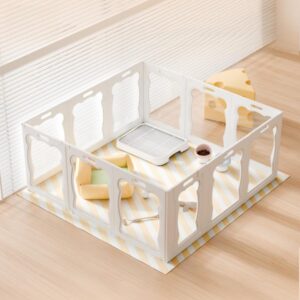
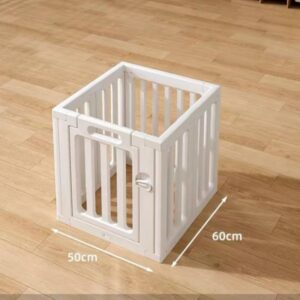
Project Snapshot
- Client: Australian pet distributor supplying retail and online channels
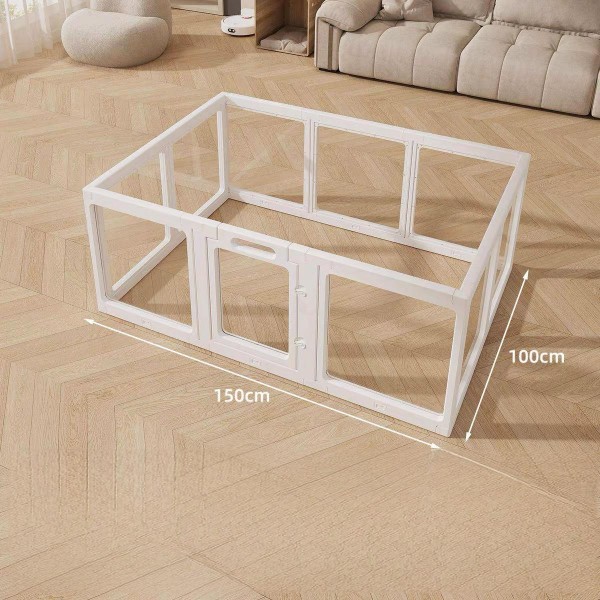
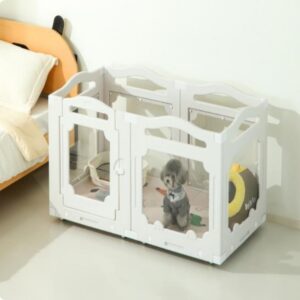
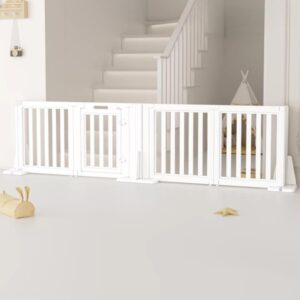
- Category: Indoor modular plastic dog playpens
- Starting Point: Standard Archova playpen platform
- First Objective: Test category demand without a new mold
- Second Objective: Create a recognisable private-label range after validation
- Key Decisions: Panel configuration, height positioning, brand presentation, packaging and SKU discipline
- What Stayed Standard: Core molded panel architecture
- What Changed: Private-label presentation and the commercial SKU plan
The Distributor Did Not Need Another Generic SKU
When the distributor first contacted us, the request sounded simple: add a plastic dog playpen to an existing pet range. The real concern appeared in the second conversation. The team could already see many generic enclosures in the Australian market and did not want to become another seller competing only on price.
At the same time, moving directly into a proprietary mold did not make commercial sense. The distributor had not yet established which playpen height, footprint, configuration or price position would perform best across its channels.
We Started With the Australian Retail Reality
Before recommending a SKU, we reviewed how dog and pet enclosures were being presented in Australia. The category already covered a wide range—from low-cost wire enclosures to higher-priced molded plastic systems. Common retail offers used modular or eight-panel formats, with compact heights around the low-60-centimetre range and larger plastic systems around the high-60-centimetre range.
More important than the price points were the recurring user concerns. Adaptability and fold-away storage were valued, while weak panel connections, poor grip on smooth floors and inconvenient gates could quickly turn into negative product feedback. That gave us a practical test list for the first order instead of an abstract design brief.
The First Order Was Designed to Answer Five Questions
- Which height and enclosure footprint best matched the distributor’s intended customer base?
- Would shoppers understand the value difference between a rigid plastic playpen and lower-priced wire alternatives?
- Was the gate position and everyday access convenient enough for indoor use?
- Did the chosen configuration feel stable and practical on common hard indoor flooring?
- Which product presentation could support the distributor’s own brand without adding unnecessary SKU complexity?
We therefore recommended keeping the molded structure unchanged for the first stage. The distributor could focus on product-market fit instead of spending the first project cycle on tooling, engineering revisions and mold qualification.
Why We Did Not Push a Custom Mold
A new mold can create real differentiation, but only when the market problem is clear enough to justify it. In this project, the distributor still needed evidence about basic category behaviour. A proprietary panel shape would not solve the wrong height. A new latch would not compensate for a weak price position. And a unique appearance would not matter if the chosen configuration was inconvenient in the home.
Our role was to separate what needed to be learned from what needed to be engineered.
The Turning Point: From Standard Product to Private Label
After the initial market test, the distributor had a much clearer view of how it wanted to position the category. The next order no longer needed to be treated as a generic product purchase.
We moved the project into private label while retaining the proven core platform. The range was organised around a tighter SKU plan and the distributor’s own brand presentation. Depending on the selected model and order requirements, private-label work can include brand marks, colour direction, labels, instruction content, barcode information, retail packaging and outer-carton requirements.
Keeping the core molded components common across the range also supported easier replenishment and reduced the risk of creating too many low-volume variants too early.
What the Private-Label Range Changed — and What It Did Not
- Core molded panel architecture: Kept standard because it was already suitable for the tested use case.
- Panel configuration / SKU mix: Refined based on the distributor’s channel needs.
- Brand presentation: Moved to private label to move the range away from a generic sourcing position.
- Instructions and labels: Adjusted for the program to support a cleaner retail launch.
- Retail and outer packaging: Reviewed for distribution and replenishment.
- New tooling: Deferred because no proven structural gap required it at this stage.
The Commercial Result
The distributor moved from testing a standard dog playpen to carrying a more deliberate private-label offer, without making a custom mold the price of entry.
For us, the value of the project was not that the client bought a more customised product. It was that the sequence of decisions became better: first prove the category, then build the brand layer, and only engineer a proprietary structure if the market later shows a reason to do so.
What We Would Review Before Any Future Tooling
- Repeated requests for a different playpen height or panel geometry
- A consistent usability issue with the existing gate or connection method
- Demand for a proprietary accessory or expansion interface
- A clear premium position that can support the additional development cost
- Sufficient recurring volume to justify dedicated tooling and longer-term SKU ownership
Archova’s Approach
We do not treat private label and ODM as the same thing. Private label is often the right way to build brand ownership around a proven product. ODM becomes more valuable when there is a validated structural problem or a commercial opportunity that an existing platform cannot address.
For this Australian distributor, the standard product was not the end solution. It was the evidence-gathering stage that made the private-label range more focused—and kept future tooling decisions grounded in actual market needs.