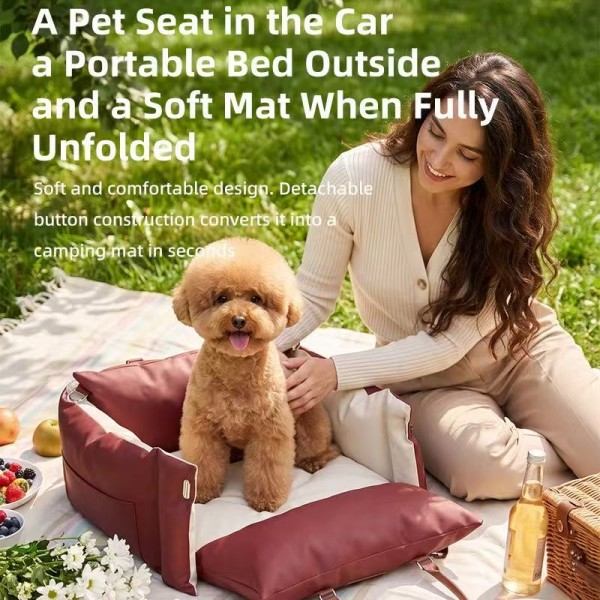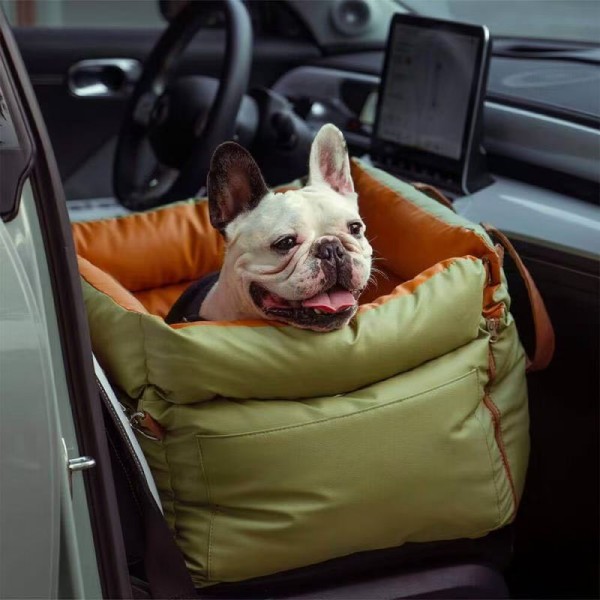
For a true large dog, the best car seat is rarely a raised booster. Start with usable lying space, stable support, and vehicle fit.
Then choose a separately verified restraint for crash protection. The padded seat should manage comfort, position, and upholstery contact.
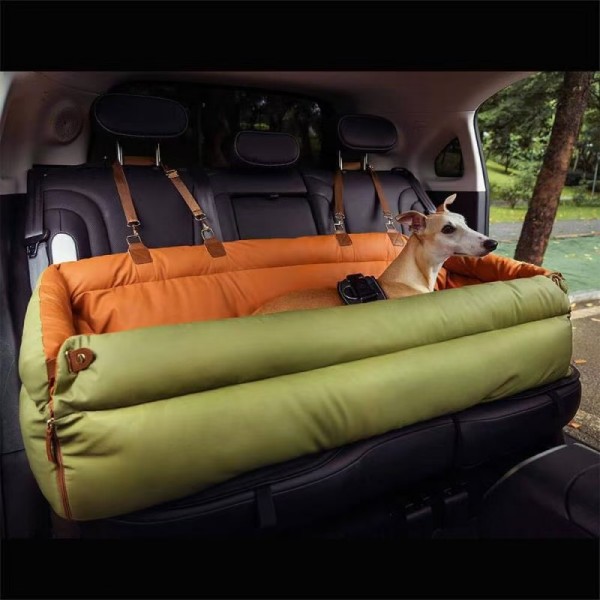
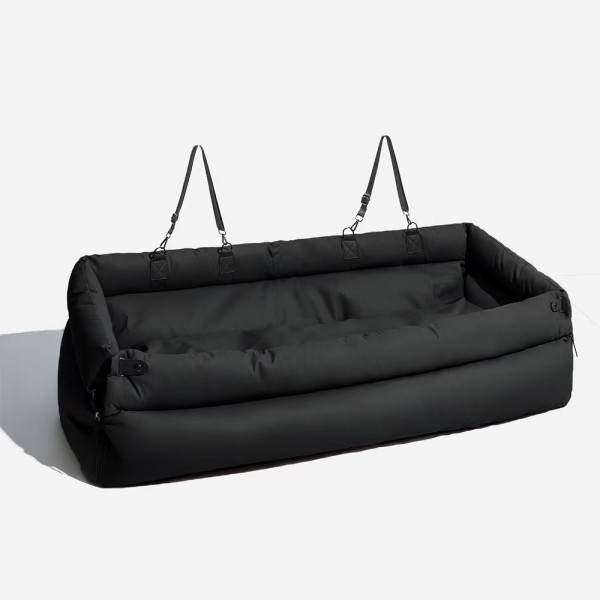
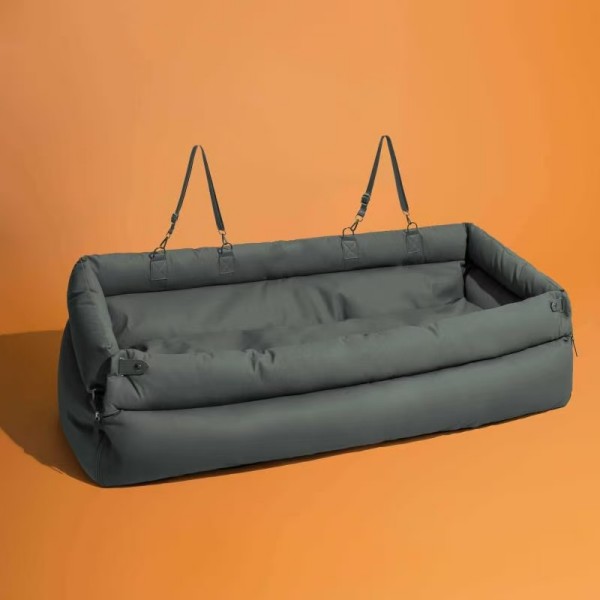
Archova’s pet car seat for dogs includes a full-width rear-seat travel-bed direction. That structure gives larger dogs more horizontal space than compact booster formats.
However, we do not publish a universal large-dog weight limit for this model. Fit must be confirmed by SKU and vehicle.
Which Car-Seat Format Works Best for a Large Dog?
The answer depends on the problem you need to solve. “Large dog car seat” covers several structures with very different functions.
| Travel Need | Better Starting Format | Main Reason | Important Limit |
|---|---|---|---|
| Dog lies across most of the rear bench | Full-width padded travel bed | Broad resting surface | Does not bridge the footwell structurally |
| Dog uses one wide seat position | Wide single-position padded bed | Preserves adjacent passenger space | Vehicle depth can limit lying room |
| Dog slides or falls toward the footwell | Rigid back-seat extender plus pad | Adds supported platform area | Load structure must be verified |
| Dog settles well on an open rear bench | Verified harness plus flat pad | Keeps comfort layer simple | Pad is not containment |
| Dog needs stronger containment | Secured travel crate | Controls movement within an enclosure | Vehicle must fit the correct crate size |
| Small dog needs elevation | Raised booster | Higher resting position | Usually not a true large-dog solution |
For many large dogs, the choice is not “booster or no booster.” It is supported surface versus containment, followed by restraint.
“Large” Is Not a Reliable Fit Standard
Product size names can be misleading in this category. “Large” sometimes means only the largest version within a small-dog booster family.
In our current market check, one “Large” booster publishes a 25 × 14-inch interior. Its recommended pet weight stops at 34 lb.
Another “Large” booster publishes an 18 × 13-inch inner cushion. Its name still uses the same large-size language.
Those products may be perfectly useful for their intended dogs. They simply show why the word “Large” cannot replace measurements.
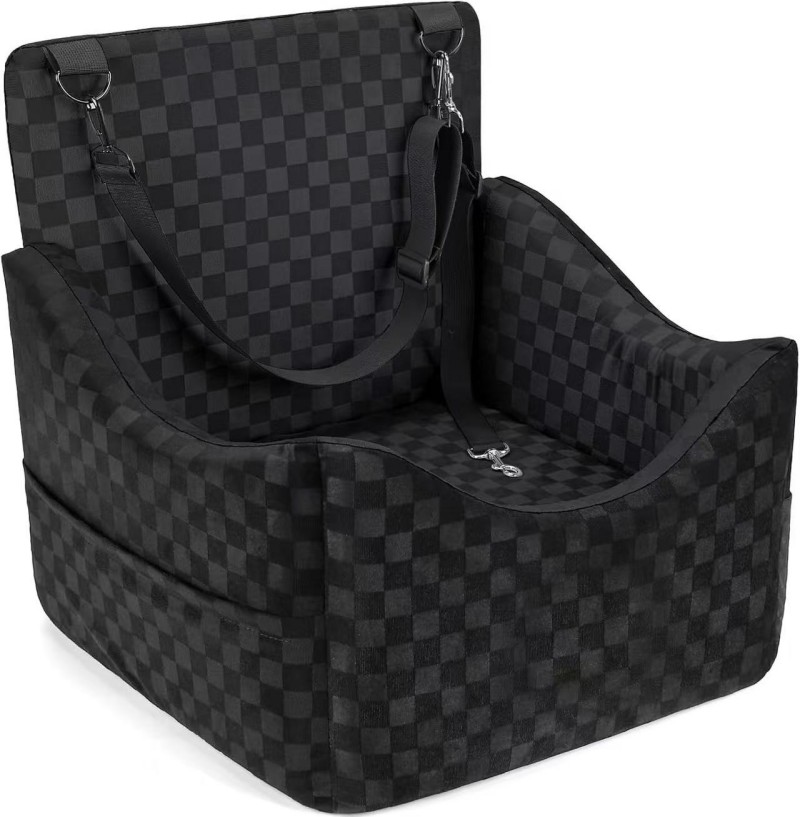
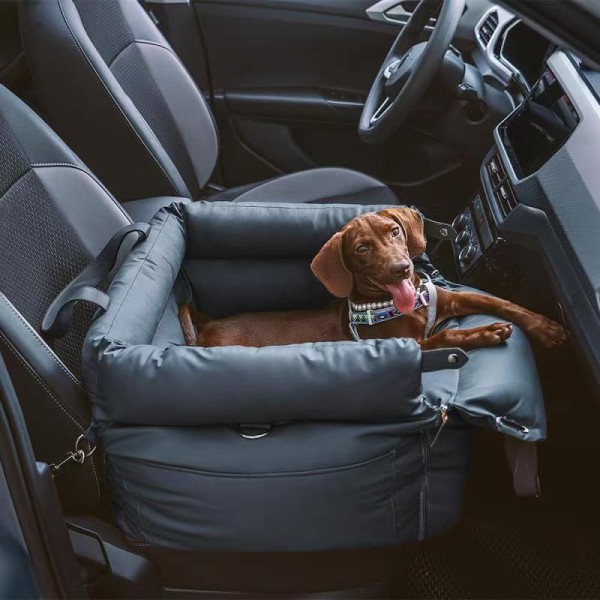
Archova’s dog car booster seat illustrates the opposite approach. We publish its usable cushion dimensions and small-dog fit direction separately.
For a Labrador-sized or similarly long-bodied dog, horizontal space becomes the priority. Extra elevation usually solves the wrong problem.
Size the Dog by Resting Footprint, Not Body Weight
Large dogs do not use the rear seat in one fixed posture. They sit, curl, turn, brace, and often lie on one side.
Measure the dog in the posture used during longer drives. Record body length while lying naturally and the widest curled position.
Shoulder height also matters when the dog sits. High side bolsters should not force the shoulders inward or crowd the door.
The final comparison must use usable inner space. Outer dimensions include bolsters, piping, and other areas the dog cannot occupy.
A thick perimeter can make a 50-inch product feel much smaller inside. This is why outer width alone is a poor fit metric.
The Measurements We Would Compare
| Dog Measurement | Product Measurement | What You Learn |
|---|---|---|
| Natural lying length | Usable inner length | Whether the dog can rest without curling excessively |
| Curled width | Usable inner width | Whether turning and settling are realistic |
| Seated shoulder width | Clear width between bolsters | Whether the sides crowd the body |
| Step-over ability | Front entry height | Whether entry is practical |
| Standing shoulder height | Bolster and window relationship | Whether the dog sits too high |
| Body weight | Base support specification | Whether padding retains useful support |
A weight label is still useful after these checks. It should confirm the fit decision, not create it.
Vehicle Depth Often Matters More Than Vehicle Width
Large-dog products usually advertise width first. In practice, rear-seat depth can become the harder limit.
A large dog may have enough room across the bench but too little room front to back. The body then hangs toward the footwell.
Measure the supported seat depth before ordering. Do not include empty space above the footwell as usable platform depth.
Also check the seatback angle and door-side contour. Strong sculpting can reduce the flat area under a wide padded bed.
Front-seat position matters too. Moving the driver or passenger seat backward can reduce the dog’s usable cabin space.
For full-width products, confirm buckle locations and the 60/40 split. A bed can fit physically while making passenger seating impractical.
Support Has Three Layers for a Large Dog
Support is not just “thick foam.” A large dog exposes weak structure faster because more load reaches the base.
The first layer is the vehicle support underneath. Every soft section needs a stable surface unless another structure carries the load.
The second layer is the bed base. It should resist excessive compression and recover after the dog changes position.
The third layer is surface traction. The dog should not slide across the top while the bed remains fixed underneath.
That last point is often missed. A non-slip bottom and a non-slip dog surface solve different problems.
A waterproof-looking top can still become slippery under paws. A grippy top can still move if the underside slides on leather.
For large-dog development, we evaluate both interfaces separately. We also check whether the base stays level on a contoured rear bench.
Do Not Use “Orthopedic” as a Shortcut for Support
A padded car bed can feel more comfortable than bare upholstery. That does not automatically make it orthopedic.
Real support depends on material type, thickness, density, compression, and recovery. Those specifications should exist before stronger claims appear.
Archova’s current full-width travel bed is visibly padded and filled. We do not publish an unverified foam density for that version.
We therefore keep the claim at comfort and supportable resting space. We do not turn unknown filling into a medical benefit.
This matters more for heavy dogs. A thick-looking base can still flatten quickly if the internal structure is too soft.
The Footwell Can Change the Product Category
A large dog often reaches the front edge of the rear bench. That makes the footwell gap a major design issue.
A soft full-width bed can cover the rear seat and create a broad padded area. It cannot create rigid support over empty space.
Archova’s full-width format is a padded travel bed and seat-protection layer. It is not a rigid back-seat extender.
If the dog repeatedly slides toward the footwell, consider a barrier or supported platform. The correct solution depends on the vehicle.
A hammock can create a fabric barrier between the front and rear seats. It still does not provide the same support as a rigid extender.
A true extender needs a documented load path. Panel material, span, folding joints, and support points all affect performance.
“Hard bottom” is also incomplete language. A hard panel can still flex if the unsupported span is too large.
Safety Starts With the Restraint, Not the Bed
A padded seat can help a dog settle during normal driving. It cannot be assumed to protect the dog during a collision.
Current veterinary travel guidance recommends a crash-tested harness, seat belt, or travel crate. Dogs should not roam freely inside the vehicle.
Current public-health travel guidance also keeps seat-riding pets in the back seat. It recommends a harness attached to the seat buckle.
For crates, the same guidance requires enough space to stand, sit, lie, and turn. The crate should also resist sliding or shifting.
These rules are especially important for large dogs. Their body mass increases the consequences of uncontrolled movement.
Why Included Straps Do Not Prove Crash Protection
A soft car seat may use headrest straps, routing loops, or internal clips. Those components can help with ordinary placement.
They do not establish crash performance. Independent pet-seat crash research has documented rotation and connection failures in soft travel seats.
The study tested products intended for much smaller dogs than many large breeds. That makes unsupported large-dog safety claims even less defensible.
For Archova, visible straps remain placement components unless separate evidence proves more. We keep restraint claims outside the comfort claim.
A verified harness, carrier, or crate should handle collision restraint. The padded bed should work around that approved system.
More Tether Length Is Not More Safety
Large dogs need room to lie down, which can tempt owners to use longer tethers. That tradeoff needs caution.
Current tether safety guidance warns that extra tether length increases forward excursion. It can also undermine a harness system’s crash performance.
Do not lengthen a restraint simply to match a wide bed. Choose the restraint first, then design the resting area around it.
The same principle applies to buckle openings. A full-width bed should not force the approved restraint into a new route.
Rear-Seat and Cargo Placement Need Different Plans
For open-seat travel, the rear seat is the better default. It separates the dog from the driver and front controls.
Front placement also adds airbag-related risk. Airbag deployment is rapid and vehicle-specific.
An unrestrained large dog can also create significant driver distraction. Movement near the front seats can obstruct vision or controls.
SUVs and wagons may support a secured cargo-area crate. That option should use a suitable crate and approved securement method.
Pickup beds are not an alternative seating area. Large dogs should not ride loose in an open truck bed.
Senior Large Dogs Need Stability Before Extra Padding
For a senior large dog, entering the vehicle and staying stable are separate problems. A deeper bed only addresses the second one.
Mobility-focused veterinary guidance highlights both vehicle access and stability during travel. A sturdy ramp may help with entry.
Inside the vehicle, a level and grippy surface can reduce constant bracing. Encouraging the dog to lie down may also reduce swaying.
Choose a lower entry when possible. High bolsters and raised boosters can create unnecessary step-over height.
Do not describe a normal car bed as treatment for arthritis or joint disease. Comfort and medical management are different decisions.
Cleaning and Durability Matter More With a Larger Contact Area
A large dog brings more hair, moisture, paw dirt, and body contact into the cabin. Cleaning design should match that reality.
Look for surfaces that vacuum easily before washing. Hair trapped in deep quilting or narrow piping channels takes more work.
Removable covers can simplify deeper cleaning. The zipper opening must still be wide enough for practical removal and reassembly.
“Machine washable” should identify the exact component. The complete padded structure may require different care.
Water-resistant and waterproof are also different claims. Seams, zippers, and openings can allow liquid through a coated fabric.
Archova does not publish a waterproof rating for the current full-width travel bed. We prefer a narrower claim over an unsupported one.
Choose by Scenario, Not by the Word “Large”
The dog’s behavior and vehicle layout should decide the final format. These examples show how the decision can change.
| Real Travel Scenario | Better Direction | Why |
|---|---|---|
| Long-bodied dog lies across a sedan bench | Full-width padded bed | Horizontal space matters most |
| Large dog keeps sliding toward the footwell | Rigid extender plus suitable pad | The missing support area is the problem |
| Large dog settles well with a harness | Flat pad or wide padded seat | No need for oversized bolsters |
| Senior dog struggles with vehicle entry | Low-entry surface plus stable ramp | Access matters before cushion thickness |
| Rear passenger must sit beside the dog | Wide single-position format | Preserves one seating position |
| Two large dogs share an SUV | Secured crate system or planned zones | Space and restraint must work for both dogs |
| Dog climbs over every soft bolster | Secured crate | Stronger containment may fit the behavior |
| Dog rides in muddy outdoor conditions | Removable, easy-clean surface | Maintenance becomes a primary requirement |
There is no single structure that wins every row. A professional product range should make these differences obvious.
What We Would Want to See Before Calling a Seat “For Large Dogs”
A serious listing should give enough information to predict fit before purchase. We would not rely on a large-breed photo alone.
| Specification | Why It Matters for Large Dogs |
|---|---|
| Outer installed footprint | Confirms vehicle fit |
| Usable inner length and width | Confirms real resting space |
| Supported base area | Shows which sections need vehicle support |
| Front entry height | Affects short-legged and senior dogs |
| Base material and filling | Helps evaluate compression |
| Compression or recovery data | Shows whether support survives repeated loading |
| Top-surface traction | Helps the dog stay stable |
| Bottom-surface traction | Helps the product stay stable |
| Headrest strap range | Confirms installation geometry |
| Buckle openings | Preserves restraint access |
| Footwell function | Distinguishes bed, hammock, and extender |
| Washable components | Sets realistic care expectations |
| Water-performance claim | Prevents waterproof overstatement |
| Verified dog-fit range | Separates fit guidance from marketing labels |
| Crash-test evidence | Required for any crash-protection claim |
This is the type of specification Archova prefers for a serious travel collection. It helps retail teams explain the product without guessing.
How Archova Approaches a Large-Dog Car-Seat Program
Our current range already separates compact seats from full-width rear-seat beds. We do not stretch one structure across every dog size.
For larger-dog programs, we begin with usable surface and vehicle support. Bolster volume, entry height, and cleaning follow after that geometry is fixed.
The current full-width Archova format uses a broad padded surface and raised perimeter. Four straps reach rear headrest positions on the shown version.
We do not assign that model a universal dog-weight limit today. We also do not call it a rigid extender or crash barrier.
That restraint in product claims is intentional. A professional listing should state what the approved SKU actually proves.
For OEM/ODM projects, we can review textile, filling, piping, strap layout, labels, and packaging. Structural restraint changes require separate engineering and compliance review.
The Practical Buying Rule
For a large dog, first ask whether the rear bench provides enough supported depth. Then check whether the dog can lie naturally.
If both answers are yes, a wide padded bed may be enough for comfort. Add the appropriate verified restraint separately.
If the dog reaches beyond the supported bench, solve the footwell gap. A rigid extender or different vehicle setup may be necessary.
If the dog will not settle on an open surface, consider a secured crate. Do not add taller soft walls and assume containment is solved.
Frequently Asked Questions
What type of dog car seat is best for a large dog?
A wide rear-seat bed often suits large dogs that settle on an open bench. The dog must fit the usable surface.
If footwell support or stronger containment is needed, choose another structure. A rigid extender or secured crate may be more appropriate.
Are raised booster seats suitable for large dogs?
Usually not for true large breeds. Booster formats prioritize elevation and often provide limited horizontal resting space.
Check usable inner dimensions rather than the word “Large.” Some current large-size boosters still target dogs around 34 lb.
How should I measure a large dog for a car seat?
Measure the dog while lying naturally and while curled. Compare those dimensions with the usable inner surface.
Also check seated shoulder width and entry height. Weight alone cannot predict comfort.
How much rear-seat space does a large dog need?
There is no universal number for every dog. The dog should be able to settle without hanging over unsupported edges.
Vehicle depth is especially important. Empty footwell space should not be counted as supported platform area.
Is a full-width padded bed the same as a back-seat extender?
No. A padded bed uses the vehicle’s existing supported surface.
A true extender bridges unsupported space with a load-bearing structure. Panel design and support points should be documented.
Does a dog car seat keep a large dog safe in a crash?
Not automatically. A soft seat can manage comfort and ordinary position without providing collision protection.
Use a separately verified harness, secured crate, or carrier. Follow its approved vehicle-installation instructions.
Is a non-slip bottom enough for a large dog?
No. The underside and dog-contact surface perform different jobs.
The bed should resist sliding on the vehicle seat. The top should also give the dog usable paw traction.
What is better for a senior large dog?
Prioritize easy entry, stable footing, and enough lying room. A ramp may help when vehicle access is difficult.
Avoid unnecessary elevation. A normal padded car bed should not be presented as medical treatment.
Is a crate better than a dog car seat for large dogs?
It can be when containment is the priority and the vehicle fits a suitable crate. The crate must also be secured properly.
An open padded bed may suit a calm dog using a verified harness. Behavior and vehicle layout should guide the choice.
What should a retail or private-label specification include?
Publish usable dimensions, supported footprint, filling, entry height, traction, strap layout, buckle access, and care instructions.
Also define footwell support and restraint status clearly. Avoid vague “large breed,” “universal,” or “crash safe” claims without evidence.
References
- Center for Pet Safety — Pet Seat Pilot Study
- Center for Pet Safety — CPS Certified Products
- Center for Pet Safety — Extension Tether Safety Warning
- Cornell University College of Veterinary Medicine — Traveling Safely With Your Dog
- CDC — Pet Travel Safety
- VCA Animal Hospitals — Creating a Comfortable Home for Your Mobility Compromised Dog
- NHTSA — Vehicle Air Bags and Injury Prevention
- NHTSA — Distracted Driving