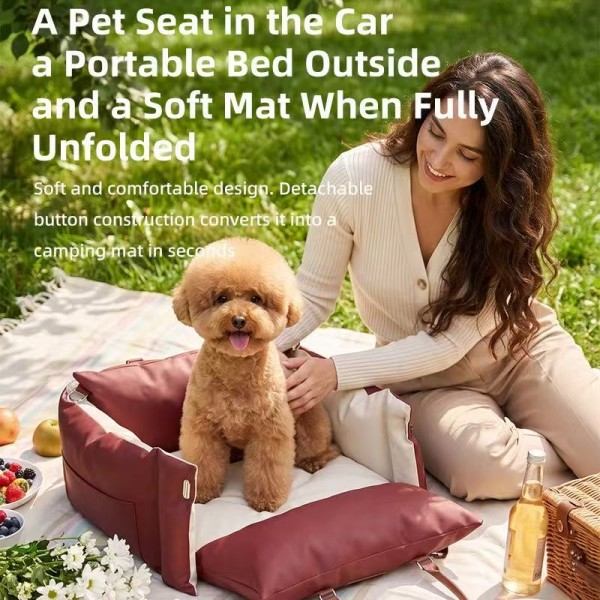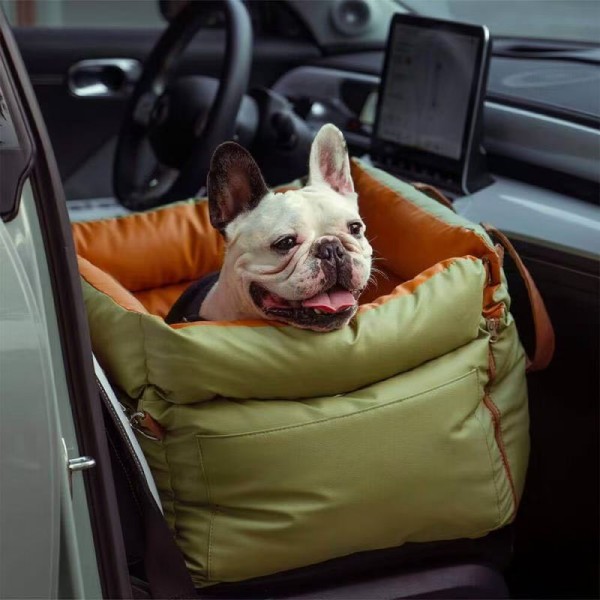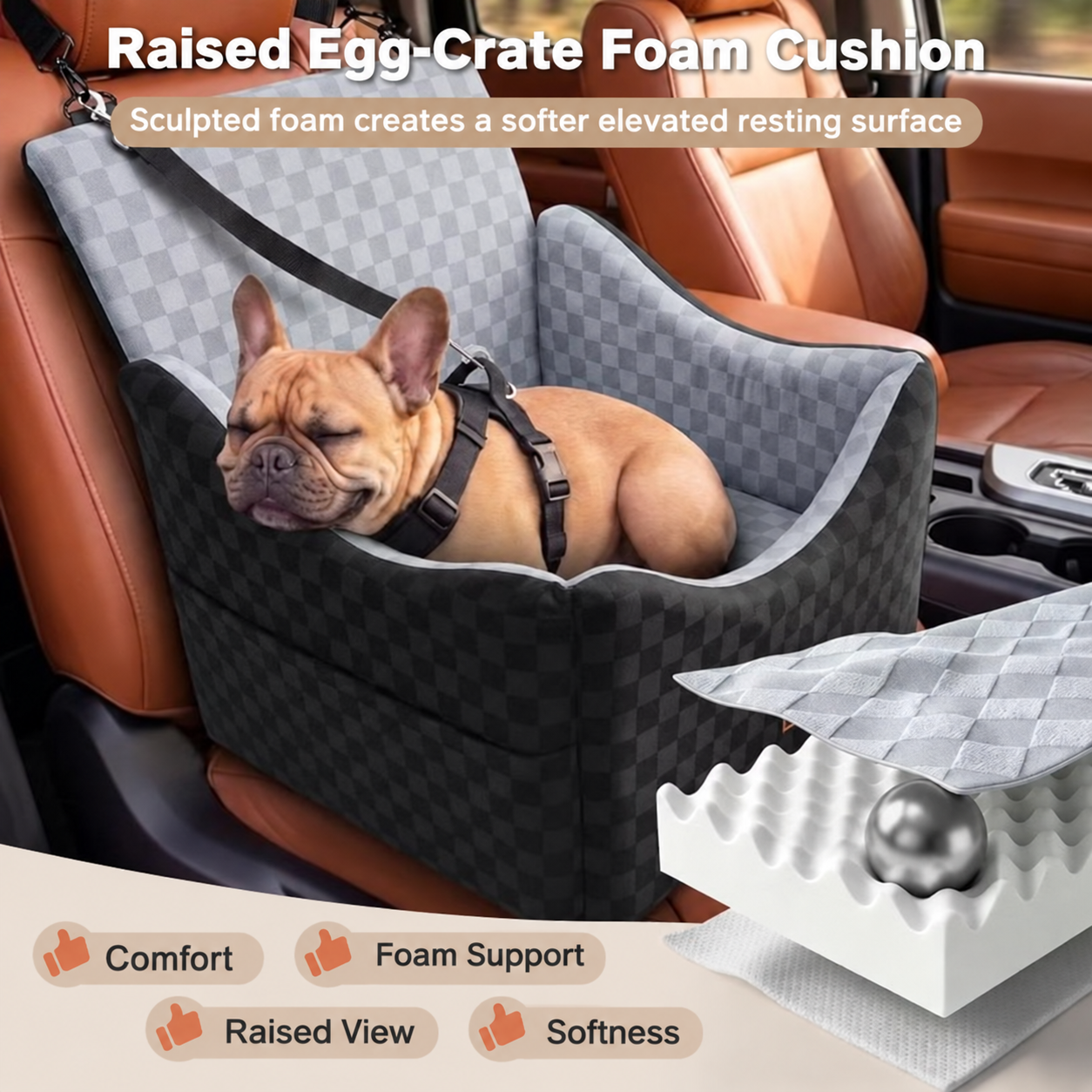
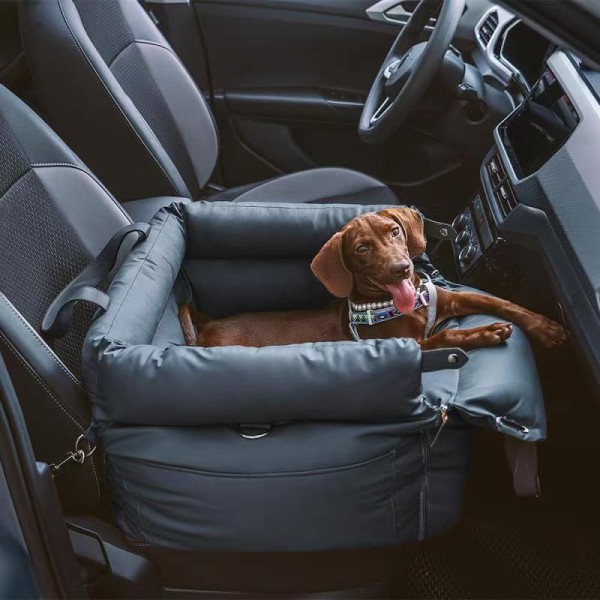
The best dog bed for a car back seat must fit the dog, vehicle, and restraint plan together. Start with usable resting space and stability, then compare padding, bolsters, cleaning, and upholstery protection.
At Archova, we treat a rear-seat dog bed as a comfort and seat-management product. It should make travel easier without being confused with a crash restraint or structural back-seat extender.
First Decide What Problem You Actually Need to Solve
“Dog bed for car back seat” can describe several very different products. Choosing the wrong category causes more problems than choosing the wrong fabric.
| What You Need | Best Product Direction | What It Does Not Automatically Provide |
|---|---|---|
| A defined resting place for one small dog | Compact high-bolster car bed | Crash protection |
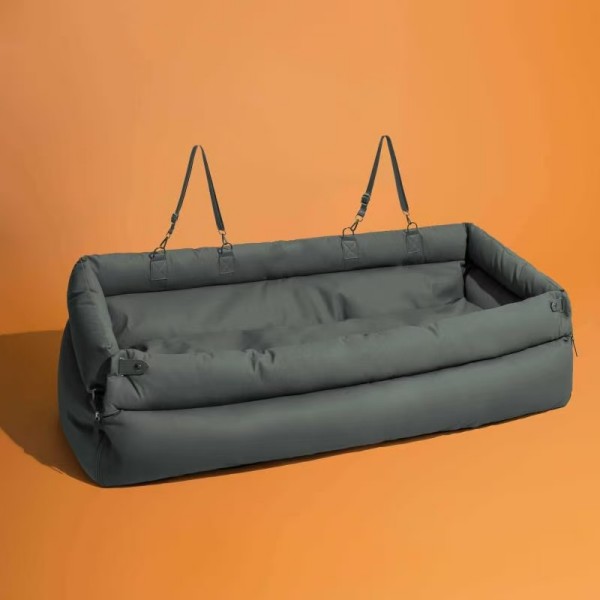
| More lying room across the rear bench | Full-width padded travel bed | Footwell load support |
| Protection from mud, hair, and scratches | Seat cover or hammock | Bed-like cushioning |
| A barrier over the rear footwell | Hammock or structured extender | Verified crash restraint |
| A larger rigid platform over the footwell | Hard-bottom back-seat extender | Restraint for the dog |
| Higher viewing position for a small dog | Booster seat | More horizontal lying space |
| Collision restraint | Verified harness, carrier, or crate | Soft-bed comfort by itself |
This distinction should come before price. A padded bed cannot safely perform every function shown in a marketing photograph.
Archova’s pet car seat for dogs follows this rule. Our current range separates compact padded seats from full-width rear-seat travel beds.
1. Measure the Back Seat as an Installed Platform
Do not start with a generic vehicle category such as sedan or SUV. Two vehicles in the same class can have very different rear benches.
Measure the clear bench width between the door-side contours. Then measure usable depth from the backrest to the front edge.
Check whether the middle seat is raised or sculpted. Also note split-fold seams, center armrests, and protruding buckle receivers.
A full-width bed must follow those contours without twisting. A compact bed needs enough flat support under its entire base.
The Vehicle Measurements Worth Recording
| Measurement | What It Tells You |
|---|---|
| Clear rear-bench width | Whether a full-width bed can sit without compression |
| Usable seat depth | Whether the base is fully supported |
| Door-side contour | Whether bolsters will be crushed by door closure |
| Backrest angle | Whether rear bolsters reduce usable lying space |
| Headrest positions | Whether the intended strap layout can work |
| Seat-belt buckle positions | Whether the restraint remains accessible |
| 60/40 split location | Whether passengers or cargo still need one section |
| Center armrest location | Whether the dog loses usable center space |
| Footwell gap | Whether any part of the bed would be unsupported |
| Child-restraint hardware | Whether required anchors remain usable |
For retailers, these fields are stronger than “universal fit.” Vehicle geometry varies too much for that phrase to add real value.
2. Measure the Dog in Its Real Travel Posture
A dog that fits while sitting may not fit when sleeping. This matters most on drives longer than a few minutes.
Measure the dog while curled, then while lying on one side. Use the larger realistic resting footprint when comparing beds.
Do not use outer product dimensions as the sleeping area. Raised bolsters can remove substantial usable width and depth.
This is particularly important for long-backed dogs. Their weight may fit a label while their body does not fit the inner surface.
Our rule is simple: usable inner area should be published separately from outer footprint. That one specification prevents many poor fit decisions.
3. Decide Whether the Dog Needs One Seat or the Whole Bench
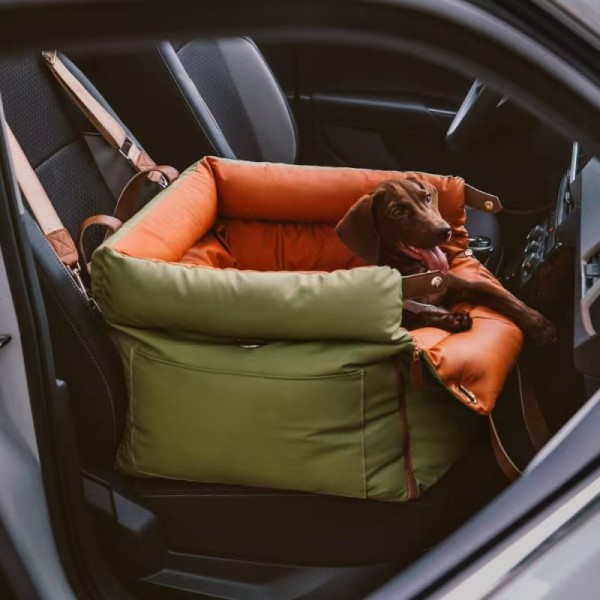
A compact bed preserves passenger space. It works best for a small dog that settles inside one defined area.
A full-width bed gives more turning and side-lying room. It is more suitable when the dog naturally uses most of the rear bench.
Real travel routines should decide this choice. A product used daily with a child passenger has different requirements from a weekend dog-only vehicle.
For two dogs, a wide surface does not automatically solve space competition. Each dog still needs enough resting area and an appropriate restraint arrangement.
A 60/40 split strategy can be useful when one rear seat must remain available. The bed footprint should follow that planned seating layout.
4. Stability Has Two Separate Parts
Many car-bed listings mention a non-slip bottom. That addresses only the movement between the product and vehicle upholstery.
The dog also needs traction on the top surface. A slick quilted fabric can stay fixed while the dog slides across it.
This distinction matters during turns, braking, and uneven roads. Large dogs often reveal poor top-surface traction faster than small dogs.
At Archova, we would evaluate base grip and dog-contact grip separately. One should never be used as evidence for the other.
A stable product should also resist rocking. Deep vehicle-seat contours can make a soft bed tilt even when the underside does not slide.
5. Falling Into the Footwell Is a Structure Problem
A common back-seat problem is the gap between the rear bench and front seats. A dog can slide or fall into that space.
A hammock may create a fabric barrier across the gap. That can reduce the chance of the dog dropping directly into the footwell.
However, suspended fabric is not the same as a load-bearing platform. It should not be described as a rigid extender without structural support.
A true back-seat extender needs a panel or other load-bearing system. The support span, panel material, and intended load should be documented.
This difference becomes critical for medium and large dogs. Their body weight can concentrate near the unsupported front edge.
Archova’s full-width format is a padded travel bed and upholstery-protection layer. We do not describe it as a rigid footwell bridge.
6. Do Not Let “Hard Bottom” Replace Real Load Information
“Hard bottom” is a useful structural description, but it is not a complete specification. A thin board can still flex across a wide span.
Ask what supports the panel and where the load transfers into the vehicle. Also ask whether the rating applies across the full unsupported width.
Dog weight alone does not answer this. A standing dog can place much of its weight on a smaller area.
For private-label development, panel thickness and material should follow the intended span. Folding joints and cutouts also affect stiffness.
If no structural documentation exists, treat the product as a comfort platform. Do not publish a confident extender load claim.
7. Restraint Access Must Be Designed Into the Bed
A comfortable bed becomes the wrong choice if it hides the restraint connection. Check this before choosing the product.
Current CDC pet travel guidance recommends keeping a dog on the back seat with an appropriate harness connection. It also recommends securing crates so they cannot slide.
Cornell veterinary guidance also advises securing dogs with crash-tested harnesses, seat belts, or travel crates.
A bed should therefore preserve the approved belt path. Thick bolsters should not force the restraint into an improvised route.
For full-width products, buckle openings need to align with the vehicle. A generic slit in the wrong position provides little value.
8. Bed Straps and Dog Restraints Are Not the Same Thing
Headrest straps can help position a soft bed. A non-slip base can reduce ordinary surface movement.
Neither feature proves crash protection. An internal clip should also remain separate from crash-safety claims.
The Center for Pet Safety Pet Seat Pilot Study found major performance differences among soft pet travel seats. It documented rotation and restraint-component failures.
Current CPS Certified guidance keeps certified harnesses, carriers, and crates in defined categories. A padded travel bed is not included simply because it has straps.
Archova follows that boundary in our product pages. Placement hardware is described as placement hardware, not a certified safety system.
9. Avoid Long Tethers Just to Give the Dog More Bed Space
A large bed can tempt pet owners to use a long connection. That gives the dog more freedom across the bench.
More movement is not automatically safer. The Center for Pet Safety extension-tether advisory warns that added tether length increases excursion.
The correct restraint length comes from the verified restraint system. It should not be changed simply to match a wider bed.
This is another reason to choose the restraint first. The comfort product should fit around the approved safety setup.
10. Bolster Height Should Match Resting Style and Entry Needs
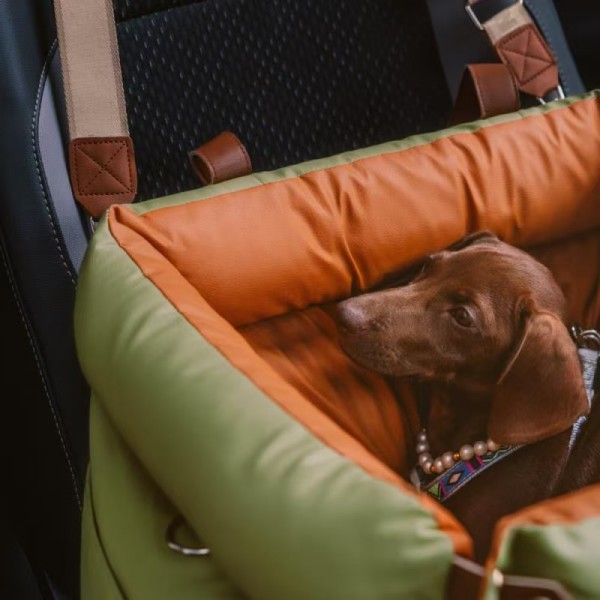
High bolsters work well for dogs that curl against an edge. They can create a more defined resting boundary.
They also reduce usable inner space. A very tall front edge can make entry harder for short-legged or mobility-limited dogs.
Archova’s small dog car seat includes a convertible structure with detachable sections. The front can open on compatible versions for easier access and extended rest use.
For an older dog, entry geometry deserves more attention than decorative height. A lower step-over can be more useful than an extra-thick bolster.
VCA mobility guidance notes that car travel challenges include both vehicle access and staying stable while moving. Ramps can help some dogs enter and exit.
11. Do Not Turn Ordinary Padding Into an Orthopedic Claim
A padded base can create a more comfortable resting surface. That does not make every car bed orthopedic.
Foam chemistry, density, thickness, recovery, and final compression all affect support. Those specifications should exist before stronger claims are made.
Archova’s current full-width car-bed range uses padded or filled structures. Exact foam density is not supplied for the full-width format.
We therefore do not describe that product as memory foam or orthopedic support. Honest limits make the rest of the specification more credible.
For senior dogs, comfort can still be improved without medical wording. Stable padding and easier entry are meaningful benefits on their own.
12. Cleaning Is a Performance Feature, Not an Afterthought
Dog car products collect hair, sand, mud, drool, and food debris. The best design makes routine cleaning predictable.
Hair behavior depends on the surface. Some textured fabrics trap hair even when they are durable and easy to wipe.
Look for vacuum-friendly surfaces and accessible seams. Deep piping channels can collect hair where a handheld vacuum struggles to reach.
For wet use, distinguish water-resistant from waterproof. Water can still move through seams, zippers, and stitching.
A removable shell is useful only when removal is practical. Large filled bolsters should not require excessive force through a narrow zipper opening.
Archova’s selected compact car-seat shells can be wiped, vacuumed, or removed for washing. Wash instructions remain model-specific.

13. Check Zippers, Handles, and Hardware Before Calling a Bed Travel-Friendly
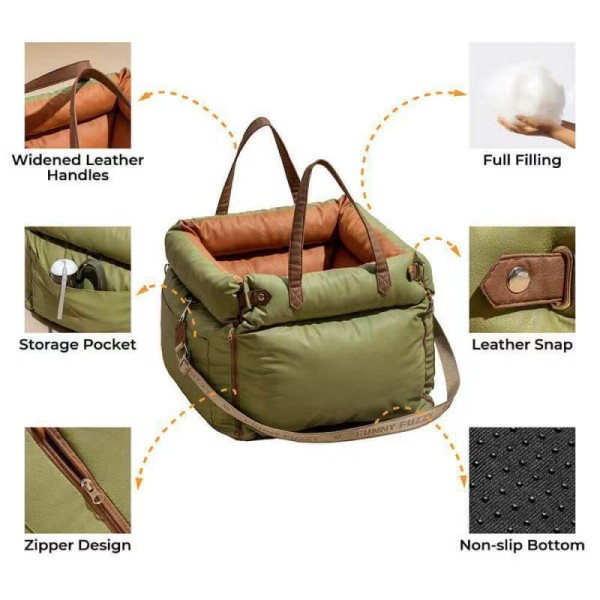
A portable product needs more than handles. The filled structure still has to recover after folding or compression.
Zippers should open wide enough for realistic cushion removal. Hardware should not sit under the dog’s main pressure area.
Handles are useful for moving the empty bed. They should not imply that the bed is a load-rated pet carrier.
Storage pockets also need a clear job. Waste bags or a cloth are appropriate; sharp or heavy objects are not.
For Archova, these details are specified separately. A convenience feature never inherits a safety claim from the product category.
14. Heat and Long Trips Change the Comfort Requirement
A warm, plush bed may be pleasant in winter. The same surface can feel less comfortable during warm-weather travel.
Breathable textiles can improve passive airflow. They do not actively cool the dog unless the product has a separate verified cooling function.
Never use a bed material as justification for leaving a dog in a parked vehicle. CDC guidance states that pets should not be left alone in parked cars.
Long trips also require breaks. Cornell recommends opportunities to stretch, hydrate, and relieve themselves during road travel.
A bed supports rest between those breaks. It cannot replace travel planning or acclimation.
15. A Dog That Will Not Lie Down May Need a Different Solution
Some dogs stand because the rear seat feels unstable. Others stand because they are anxious or uncomfortable with vehicle motion.
Adding more padding may help the first problem. It may do little for the second.
VCA car-travel guidance recommends gradual acclimation and appropriate restraint. It also describes anxiety triggers linked to vehicle movement and confinement.
Watch what happens before the dog stands. Sliding, footwell gaps, noise, restraint tension, and motion can point to different causes.
The best product decision begins with the actual behavior. Do not assume every standing dog simply needs a softer bed.
16. Choose the Format by Dog Size and Travel Pattern
| Dog / Travel Pattern | Better Starting Format | Why |
|---|---|---|
| Small dog curls tightly | Compact high-bolster bed | Defined one-seat resting area |
| Small dog wants elevation | Dog car booster seat | Raised position without full-bench coverage |
| Medium dog lies sideways | Larger one-seat or partial-width bed | More horizontal area |
| Large dog uses most of the bench | Full-width padded bed | Broad resting surface |
| Large dog falls toward the footwell | Structured extender or compatible hammock | Addresses the gap directly |
| Senior dog struggles to enter | Lower-entry bed plus access aid | Reduces unnecessary step-over |
| Two dogs compete for one wide area | Separate zones or restraints | Limits space conflict |
| Rear passenger rides with the dog | Compact or split-width format | Preserves passenger seating |
| Mud-heavy outdoor travel | Cover/hammock plus removable bedding | Easier upholstery protection |
| Crash protection is the priority | Verified harness, carrier, or crate | Safety system comes first |
This table deliberately separates comfort from restraint. One product does not need to solve every travel problem.
17. Full-Width Bed, Hammock, and Extender Need Different Claims
These three formats are frequently mixed together online. That makes product pages harder to trust.
A full-width padded bed provides a broad soft surface over supported rear seating. It may have bolsters and headrest straps.
A hammock extends fabric toward the front headrests. Its primary value is coverage and a barrier across the footwell.
A rigid extender adds structural surface area. It needs a real load path and a support specification.
Our rule at Archova is straightforward: name the product by the structure it actually has. Do not call a soft padded bed an extender because the photograph fills the rear cabin.
18. Large Dogs Expose Weak Product Specifications Faster
Large dogs put more pressure on base fill and front edges. They also need more room to turn and lie naturally.
A narrow bench can force a large dog to brace against a door. A wide bed cannot change the vehicle’s underlying depth.
If the dog is repeatedly slipping forward, check the footwell gap. If the dog slides sideways, check top-surface traction.
If the bed compresses unevenly, examine the base structure. Adding taller sidewalls will not correct a weak floor.
This diagnostic approach is better than chasing maximum thickness. It identifies the structural problem that actually needs solving.
19. Senior Dogs Need Access and Stability Before Luxury
For a senior dog, getting into the vehicle may be harder than resting inside it. Solve entry before adding more cushion.
A ramp with adequate traction can be useful for some dogs. The vehicle opening and ramp angle must still suit the dog.
Once inside, a stable lying surface can reduce constant bracing. VCA recommends encouraging mobility-compromised dogs to lie down during travel.
Do not promise that a normal car bed treats arthritis or pain. Medical concerns still belong with veterinary care.
For product selection, focus on lower entry, surface grip, adequate room, and stable support. Those are practical decisions without medical overclaiming.
20. Passenger Space Should Be Part of the Product Specification
Full-width beds are useful only when the rear bench can be dedicated to the dog. Many vehicles still need passenger seating.
A one-seat product may be the better daily choice. A removable full-width bed may be better for weekend trips.
If the seat is split 60/40, decide which side the dog normally uses. Then keep the passenger belt and buckle fully accessible.
This also matters for retail assortment planning. Compact and full-width models should have clearly different use cases, not just different sizes.
Archova keeps those product directions separate. That makes the line easier to explain and reduces accidental feature mixing.
21. Five Common Mistakes That Lead to Poor Purchases
| Mistake | What Goes Wrong | Better Decision |
|---|---|---|
| Choosing by dog weight only | Body length can exceed the inner area | Measure resting footprint |
| Buying the widest bed available | It may block passengers or buckles | Match the actual rear-seat plan |
| Looking only for a non-slip bottom | The dog may still slide on top | Evaluate both traction surfaces |
| Calling every full-width product an extender | Soft sections may hang over the footwell | Confirm structural support |
| Choosing the longest tether | Extra movement can increase excursion | Follow the verified restraint system |
These are specification problems, not cosmetic preferences. A good product page should answer them before purchase.
22. What a Serious Product Listing Should Tell You
The following fields make a back-seat dog bed easier to evaluate.
| Specification | What We Want to See |
|---|---|
| Outer footprint | Installed width, depth, and height |
| Usable inner area | Actual dog-contact length and width |
| Front entry height | Step-over distance |
| Bolster height | Side and rear dimensions |
| Base structure | Padded only or structurally reinforced |
| Footwell function | No support, barrier only, or load-bearing platform |
| Top-surface traction | Dog-contact grip direction |
| Bottom traction | Vehicle-seat grip direction |
| Headrest requirement | Number and location of attachment points |
| Buckle access | Position of restraint openings |
| Filling | Verified material and density information |
| Cleaning | Exact washable components |
| Water performance | Water-resistant or tested waterproof |
| Restraint status | Comfort product or independently verified system |
| Vehicle-fit limits | Seat depth, width, and installation restrictions |
For your market, this table can also serve as a supplier questionnaire. It turns a visual product into a measurable specification.
23. How Archova Approaches Back-Seat Dog Beds
We start by separating the use case. Compact high-bolster seats and full-width rear-seat beds should not share one vague specification.
The current Archova compact format includes a padded base, raised sides, placement straps, a non-slip bottom, and removable components. Selected versions also support convertible rest-bed use.
Our full-width format uses a broad padded surface, raised perimeter, and multiple headrest-position straps. It is positioned as a travel bed and seat-protection layer.
We do not publish an unverified waterproof rating for that full-width structure. We also do not claim a rigid extender function or crash certification.
For private-label development, fabric, filling, piping, trim, pockets, labels, and packaging can be reviewed after the base format is fixed. Structural restraint changes need separate evaluation.
That order matters. Product credibility comes from matching the claim to the approved structure.
A 30-Second Decision Rule
Choose a compact car bed when one settled small dog needs a defined resting area and rear passenger space still matters.
Choose a full-width padded bed when the dog needs most of the bench. The vehicle should be able to dedicate that space.
Choose a hammock when upholstery coverage and a footwell barrier matter more than thick bed-like padding.
Choose a rigid extender when the actual problem is missing platform area over the footwell. Verify the structure before trusting a load claim.
Choose a verified harness, carrier, or crate when collision restraint is the priority. Then fit the comfort product around that safety system.
Final Verdict
The best dog bed for a car back seat is not the thickest, softest, or widest model. It is the product that solves the vehicle’s real space problem.
Measure the rear bench and the dog’s resting footprint first. Then check top traction, base stability, buckle access, cleaning, and footwell support.
For a compact dog, a high-bolster seat can preserve passenger space. For a larger dog, a full-width padded bed can provide more useful lying area.
If the dog falls into the footwell, solve that gap structurally. Do not expect ordinary padding to become a rigid extender.
This is the standard Archova uses: define the job, verify the structure, and keep comfort claims separate from safety claims.
Frequently Asked Questions
Is a full-width dog bed better for a large dog?
It can be better when the dog needs more side-lying and turning space. The vehicle bench still has to support that footprint.
Measure seat depth as carefully as width. A shallow bench can remain uncomfortable even with a wide bed.
Is a dog hammock the same as a back-seat dog bed?
No. A hammock mainly protects upholstery and creates a barrier across the rear footwell.
A padded bed prioritizes resting comfort. Some hybrid products combine both functions, but each structure should still be identified clearly.
Do I need a hard-bottom back-seat extender?
You need one only when the dog requires usable platform area beyond the rear bench. The footwell gap is the deciding factor.
Ask for panel construction and load information. Do not assume “hard bottom” means unlimited support.
Why does my dog still slide on a non-slip dog bed?
The non-slip claim may refer only to the underside. The dog-contact surface can still be slick.
Check both traction layers. A stable base cannot compensate for a slippery top fabric.
Should a dog bed cover the seat-belt buckles?
No required restraint point should become inaccessible. The bed needs compatible openings or a different footprint.
Always follow the approved restraint instructions. Do not improvise a belt path around thick bolsters.
Is an orthopedic dog bed better for the car?
Only if the product actually has verified orthopedic-support construction. Padding alone does not justify that claim.
For travel, stability and fit may matter more than a marketing label. Senior dogs can also benefit from easier entry and better traction.
Is waterproof fabric necessary?
Not for every trip. Water-resistant fabric may be enough for light drool, hair, and damp paws.
Outdoor use creates stronger moisture demands. Confirm seams and construction before accepting a waterproof claim.
Should I choose a bed with high bolsters?
High bolsters can suit dogs that curl against an edge. They also reduce inner space and raise the entry.
Compare bolster height with the dog’s body and mobility. A lower front section can be more practical.
They can share the surface when both have enough room. Each dog still needs an appropriate restraint arrangement.
Watch for space competition. Separate zones may work better when one dog repeatedly crowds the other.
Can a dog bed replace a safety harness or crate?
No. A soft travel bed manages comfort and position during ordinary use.
Use a separately verified restraint, secured carrier, or crate for crash protection. Install it according to its approved instructions.
References
- CDC — Pet Travel Safety
- Cornell University College of Veterinary Medicine — Traveling Safely With Your Dog
- Center for Pet Safety — Pet Seat Pilot Study
- Center for Pet Safety — CPS Certified Guidance
- Center for Pet Safety — Extension Tether Safety Warning
- VCA Animal Hospitals — Dog Behavior and Training: Air and Car Travel
- VCA Animal Hospitals — Creating a Comfortable Home for Your Mobility Compromised Dog