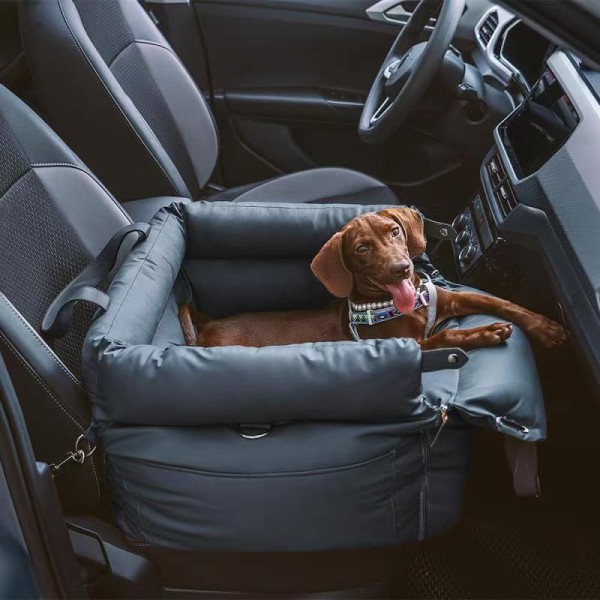
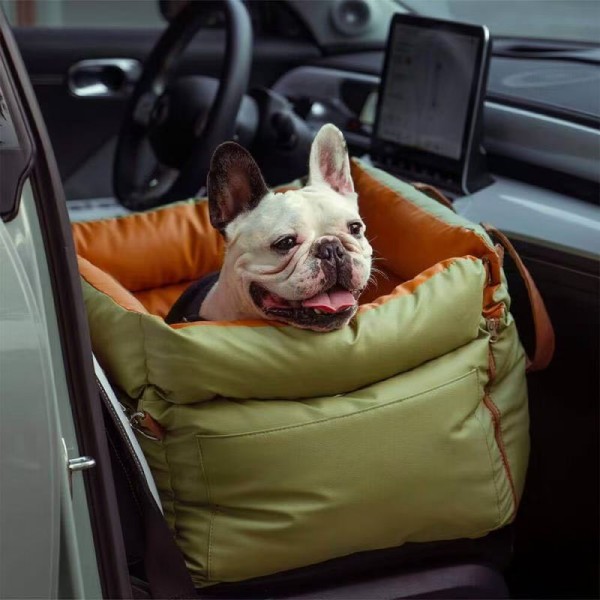
A dog car booster seat is better for a suitable small dog that benefits from a higher resting position. A regular dog car seat is usually better when lying space, lower access, or broader sizing matters more.
That is the practical answer, but one distinction matters first. A dog car booster seat is a type of dog car seat, not a higher safety class.
At Archova, we separate three decisions that are often mixed together: dog fit, vehicle fit, and crash restraint. A good product choice has to solve all three independently.
The Real Difference Is Elevation, Not “Safety”
A booster seat adds height between the dog and the vehicle cushion. A regular dog car seat usually keeps the resting surface closer to vehicle-seat height.
That difference changes the dog’s view, usable interior space, entry height, and center of mass. It does not prove better crash protection.
Independent pet travel seat testing defines these seats as products that hold or elevate pets without full containment. The study also found major performance differences between tested seat designs.
Current independent certification categories cover safety harnesses, travel carriers, and travel crates. Ordinary soft booster seats are not automatically part of those certified restraint categories.
For that reason, Archova describes our soft car seats as comfort and placement products. We do not turn headrest straps or internal clips into crash-safety claims.
Booster Seat vs Regular Dog Car Seat: Quick Decision Table
| What You Need to Decide | Dog Car Booster Seat | Regular Dog Car Seat | Our Practical Choice |
|---|---|---|---|
| Small dog needs a higher view | Strong advantage | Usually limited | Booster |
| Dog mainly curls up or sleeps | Can work if inner area is large enough | Usually stronger | Regular seat |
| Dog stretches while resting | Raised insert may reduce usable area | More layout flexibility | Regular seat |
| Low entry is important | Often less suitable | Easier to design with lower entry | Regular seat |
| One rear-seat position must remain compact | Strong fit | Compact versions also work | Either |
| Most of the rear bench needs padding | Not the main use | Full-width formats work better | Regular seat |
| Portable bed use after arrival | Model-dependent | Convertible designs are stronger | Regular seat |
| Higher seat position is the main feature | Core purpose | Not usually | Booster |
| Crash protection | Not automatic | Not automatic | Separate verified restraint |
| Product range needs clear differentiation | Strong small-dog niche | Wider format coverage | Use both for different jobs |
The better product depends on the dog’s behavior and available vehicle space. It should never be chosen by product name alone.
1. Start With the Dog’s Normal Travel Posture
This is the first question we would ask before comparing fabric, color, or storage pockets. Does the dog normally sit and watch, curl tightly, or lie along the seat?
A booster suits a small dog that often sits upright and remains settled. The raised surface gives that dog a higher position without occupying the whole rear bench.
A regular seat better suits a dog that spends most of the journey lying down. A lower padded base can devote more volume to horizontal resting space.
This difference becomes important on longer trips. A product that looks spacious while the dog sits may feel cramped after the dog turns sideways.
A useful fit check is simple. Measure the dog in its normal resting posture, then compare that footprint with the usable inner area.
Do not compare the dog only with the outside dimensions. Thick bolsters can remove several inches from the space that actually matters.
2. Do Not Choose a Booster by Weight Limit Alone
Weight labels are useful, but they are not enough. Two dogs at the same weight can have very different body lengths and shoulder heights.
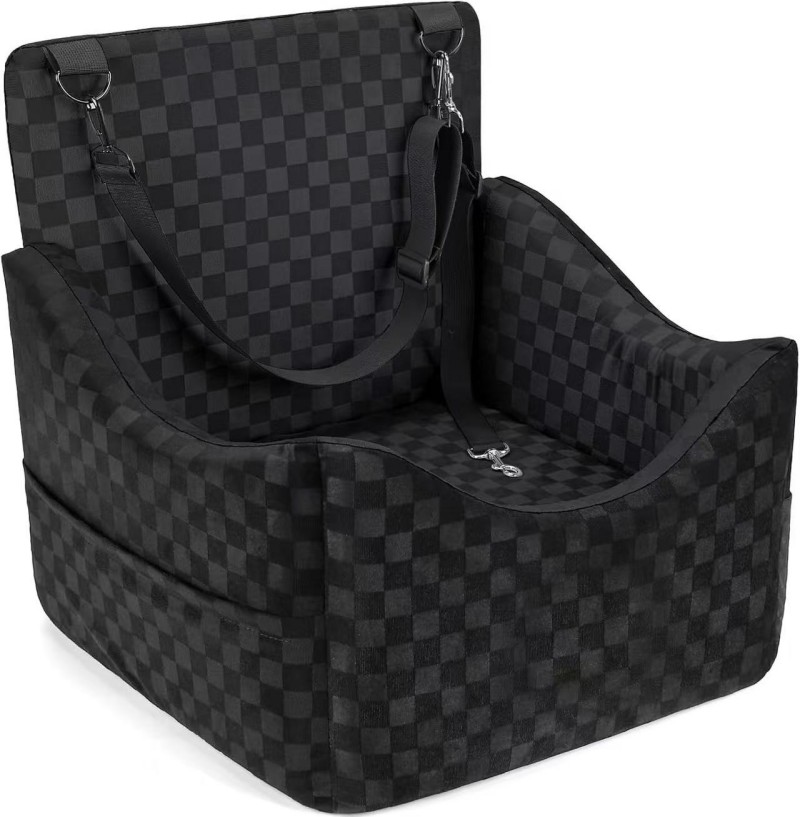
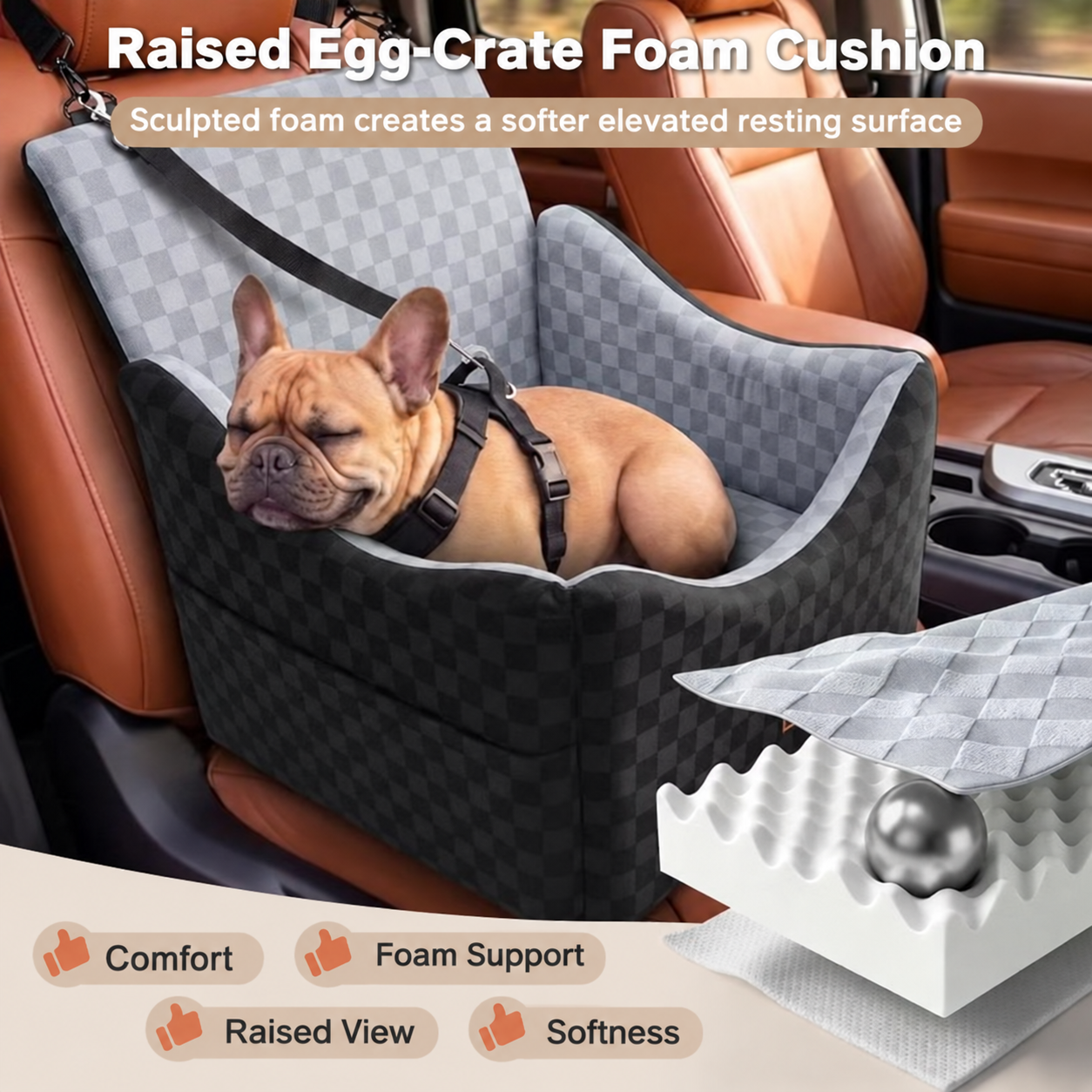
Archova’s current booster measures about 19 × 18 × 18.5 inches overall. Its raised cushion is about 15 × 15 × 5 inches.
The model carries a fit direction up to 35 lb. That figure is not a crash-load rating, and it does not override body fit.
For a long-backed dog, 15 × 15 inches may feel smaller than the outer footprint suggests. For a compact dog, the same space may work well.
This is why we would publish both outer dimensions and usable resting dimensions. That information helps pet owners make a much better decision.
3. A Higher View Is Useful, but It Is Not a Motion-Sickness Treatment
The strongest everyday reason to choose a booster is elevation. A short dog can sit higher relative to the door and window line.
Real-world discussions repeatedly show small-dog owners looking for this feature. They also report dogs trying to stand, climb, or move forward for a better view.
The mistake is turning that observation into a medical promise. Seeing outside should not be marketed as a treatment for nausea or anxiety.
Drooling, vomiting, pacing, and vocalizing can indicate motion sickness or travel distress. Those signs deserve training changes or veterinary guidance.
Our product wording stays narrower. A booster creates a higher viewing position; it does not cure car sickness or travel anxiety.
That distinction protects pet owners from false expectations. It also keeps the product claim aligned with what the structure actually does.
4. Regular Car Seats Usually Win on Resting Flexibility
A regular soft seat can use its full base for padding and body support. It does not need a thick lift section under the dog.
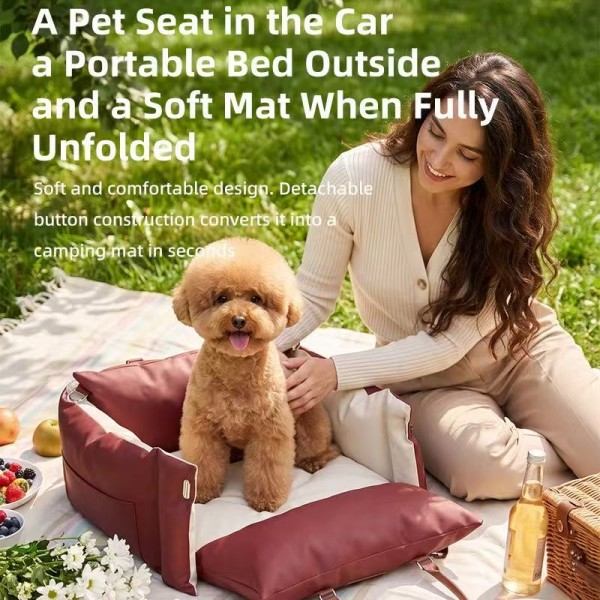
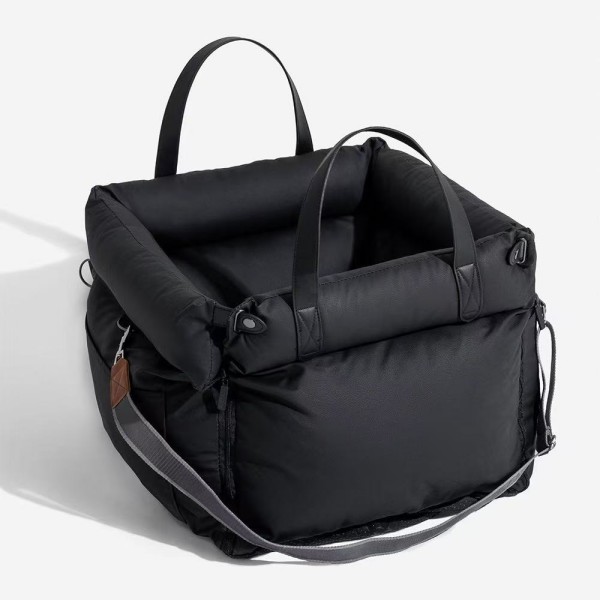
Archova’s small dog car seat takes this approach. High padded sides create a defined curl-up area rather than a raised viewing platform.
Its detachable sections can also open into a portable bed or soft mat. Removable inner cushions make the washable parts easier to separate.
That gives the product a different job from a booster. It is more about a familiar resting zone and flexible use after the drive.
For dogs that settle and sleep, this format can be the more rational choice. For persistent climbers or chewers, neither soft format is ideal containment.

5. Entry Height Matters More for Some Dogs Than Window Height
Elevation has a tradeoff. Every inch added under the dog also increases the step into the resting area.
That may be acceptable for a young, agile small dog. It can be less convenient for a senior dog or a dog with reduced mobility.
AAHA’s life-stage safety guidance treats mobility impairment and vehicle restraint as relevant safety considerations. Product selection should reflect those physical changes.
We would not present a low-entry car seat as a medical device. We would simply avoid adding unnecessary climbing height when access is already difficult.
A detachable or lowered front section can be valuable here. It changes entry geometry without requiring the entire seat to be lower.
Archova’s compact padded range includes versions with a detachable front cushion. That feature should be confirmed by SKU before it appears in a listing.
6. Vehicle Fit Can Change the Answer Completely
A perfect dog fit can still be the wrong product for the vehicle. Rear-seat width, depth, headrest layout, and buckle positions all matter.
A compact booster usually occupies one seat position. That can preserve space for another passenger or child restraint on compatible layouts.
A regular dog car seat can do the same, but the category also supports full-width rear-seat formats. Those products serve a different space-management need.
Archova’s pet car seat for dogs range includes compact high-bolster seats and broader rear-seat travel beds. We keep those structures separate because their installation logic is different.
A full-width bed can improve padded coverage and resting room. It can also block passenger buckles or occupy all rear seating positions.
Before ordering or listing a full-width model, confirm the installed width and buckle access. Also check whether the product actually supports the footwell.
A padded rear-seat bed is not automatically a rigid back-seat extender. We would never assign it a footwell load rating without a tested support structure.

7. Seat Placement and Dog Restraint Are Two Different Systems
This is the most important safety distinction in the article. The soft seat itself and the dog’s crash restraint do not perform the same job.
Headrest straps, belt-routing loops, and non-slip backing help position a soft seat during ordinary use. They do not prove crash performance.
The same caution applies to an internal connection clip. It may limit ordinary wandering, but that does not make it a certified automotive restraint.
Veterinary car-travel guidance recommends a crash-tested harness, seat belt system, or travel crate. Product instructions and vehicle instructions still need to match.
A long tether is not automatically safer because it gives the dog more freedom. Current extension-tether guidance warns that extra excursion can increase injury risk.
For Archova soft seats, we keep restraint claims outside the comfort claim. That is more precise than calling every strap a “safety system.”
8. Rear-Seat Use Should Be the Default Reference
A raised booster can tempt pet owners to place a small dog in the front passenger seat. The higher view can make that position seem convenient.
We do not use that convenience as the default installation recommendation. Rear-seat use is the clearer reference for our soft car-seat range.
Vehicle air bags deploy extremely quickly during a crash. Air-bag safety guidance also shows why dashboard proximity deserves careful attention.
Every vehicle has its own air-bag and occupant-sensing system. The vehicle manual must control the final placement decision.
The dog should also remain away from the driver’s controls. A booster is not useful if the dog can still climb toward the steering area.
9. Stability Is More Than a Non-Slip Bottom
Pet owners often notice movement during braking and cornering before they notice material quality. A seat that rocks or slides makes the dog work harder to balance.
The product therefore needs a stable relationship with the vehicle seat. Base shape, strap routing, headrest geometry, and backing all contribute.
A non-slip bottom helps with surface movement. It cannot compensate for loose straps or poor seat geometry.
A booster adds another variable because the dog sits higher. The raised insert should sit flat and fill its intended cavity without rocking.
A regular padded seat has its own issue. Very soft filling can feel comfortable but may allow the dog to sink toward the vehicle-seat contour.
We therefore look at shape retention and installed stability, not softness alone. Those qualities are easier to explain after physical sample review.
10. Cleaning Requirements Should Affect the Product Choice
Car products collect hair, dust, paw dirt, drool, and occasional spills. Cleaning is not a secondary feature for this category.
A fully plush seat may feel appealing but can hold visible hair. Real-world feedback often mentions this tradeoff.
Archova’s regular small-dog format uses removable inner cushions. Its outer surface is described as water-resistant and hair-resistant for routine cleaning.
Water-resistant does not mean waterproof. We keep those terms separate because leakage protection depends on materials, seams, zippers, and construction.
Selected Archova compact car-seat shells can be machine washed after inserts and hardware are removed. The exact care method remains SKU-specific.
Our booster uses a removable raised cushion with short-plush and breathable-mesh surfaces. The mesh is passive airflow material, not active cooling.
For a retail assortment, care instructions should be visible before purchase. That can matter as much as color after several weeks of use.
11. Think About the Space You Need After Leaving the Car
A booster’s main value exists inside the vehicle. Some models can still work as beds, but elevation remains the defining feature.
A convertible regular seat can deliver more value at the destination. It can become a rest bed or opened soft mat.
That matters for short trips, hotels, offices, camping setups, or visits. The dog keeps a familiar padded surface after leaving the vehicle.
Do not confuse portability with carrier function. Handles on a soft seat do not establish a load rating for carrying an animal.
At Archova, we use handles to describe movement of the empty seat. We only claim animal-carrying use when the final design supports it.
A Better Way to Measure Before You Choose
The following checks are more useful than a simple “small, medium, or large” label. They turn fit into measurable product information.
| Check | What to Measure or Confirm | Why It Matters |
|---|---|---|
| Dog resting footprint | Space used while curled or lying naturally | Shows whether the usable area is realistic |
| Dog seated height | Floor-to-head height while sitting | Helps judge the effect of booster elevation |
| Usable inner area | Interior length and width inside bolsters | More important than outside dimensions |
| Entry height | Height the dog must step over | Important for easy access |
| Vehicle seat width | Clear width at the intended position | Prevents overlap with passengers or restraints |
| Vehicle seat depth | Usable cushion depth | Affects base stability |
| Headrest layout | Posts, fixed headrests, spacing | Determines strap compatibility |
| Belt-buckle position | Exposed, recessed, or covered | Prevents blocked restraint access |
| Strap reach | Actual routing distance | Avoids unstable or improvised installation |
| Washable components | Shell, cushion, inserts, hardware | Prevents incorrect washing |
| Restraint compatibility | Approved harness, carrier, or crate setup | Keeps comfort and crash restraint separate |
This is also the information we recommend for a serious product listing. It gives pet owners something measurable instead of relying on breed examples.
Which One Would Archova Choose in Common Scenarios?
| Scenario | Better Direction | Why |
|---|---|---|
| 8–15 lb dog sits upright and wants a higher position | Booster seat | Elevation is the feature the dog actually needs |
| Small dog curls up for most of the drive | Regular high-bolster seat | More emphasis on horizontal resting comfort |
| Long-backed small dog barely fits a compact booster | Larger regular seat | Usable length matters more than weight label |
| Senior small dog finds step-up movement difficult | Lower regular seat | Avoids unnecessary entry height |
| Rear seat must still carry another passenger | Compact booster or compact regular seat | Uses one seating position |
| Dog needs most of the rear bench to lie down | Full-width regular travel bed | Provides broader padded coverage |
| Product should become a bed after arrival | Convertible regular seat | Multi-use structure is more valuable |
| Main selling point is window-height positioning | Booster seat | Elevation gives the category a clear purpose |
| Pet owner expects crash protection from the soft seat | Neither by itself | A separately verified restraint is still required |
Five Common Selection Mistakes
| Mistake | Why It Causes Problems | Better Approach |
|---|---|---|
| Choosing by dog weight only | Body proportions vary widely | Compare resting footprint with usable inner area |
| Treating outer size as sleeping space | Bolsters reduce the interior | Publish both outer and usable dimensions |
| Assuming “booster” means crash safer | Elevation is not certification | Evaluate restraint evidence separately |
| Choosing the longest tether possible | More movement can increase excursion | Follow the verified restraint instructions |
| Ignoring the vehicle layout | Buckles, headrests, and passengers may conflict | Measure the actual installation position first |
These mistakes also explain many disappointing product reviews. The problem is often specification mismatch rather than one universally bad seat type.
What Makes a Professional Dog Car Seat Assortment?
A useful assortment should not contain several products that differ only in color. Each format should solve a visibly different travel problem.
We would separate a raised small-dog booster from a high-bolster resting seat. A full-width rear-seat bed should form another clear tier.
The product page should state usable space, installed footprint, elevation, entry height, care method, and strap layout. Safety wording should remain separate.
For private-label work, we also review fabric, filling, trim, pockets, labels, and packaging. Structural restraint changes require separate engineering and compliance review.
This approach makes the category easier to merchandise. It also gives pet owners a clearer reason to choose one format over another.
Final Verdict: Which Is Better?
Choose a dog car booster seat when a properly sized small dog benefits from a raised resting position. It is especially useful when one-seat footprint matters.
Choose a regular dog car seat when the dog needs more lying space, lower access, or convertible bed use. It also suits broader rear-seat coverage. It is usually the stronger direction for larger resting areas.
Do not choose either one because you expect the soft seat alone to provide certified crash protection. Comfort, placement, and restraint are separate product decisions.
That is the distinction we use at Archova. The better seat is the one whose structure matches the dog, vehicle, and real travel behavior.
Frequently Asked Questions
Is a dog car booster seat safer than a regular dog car seat?
No format is automatically safer because it is elevated. A booster primarily changes the dog’s resting height and viewing position.
Crash protection depends on verified restraint performance. The soft seat should not substitute for that evidence.
Does a booster seat help dogs with car sickness?
A booster can give a short dog a higher view. We do not present that as treatment for motion sickness.
Drooling, vomiting, pacing, or severe distress need a different response. Proper travel training or veterinary guidance may be appropriate.
What size dog should use a booster seat?
There is no universal weight limit for the category. Use the approved dimensions and fit guidance for the exact model.
For Archova’s current booster, the cushion is about 15 × 15 inches. Check the dog’s resting footprint against that usable area.
Is a 35 lb dog automatically suitable for Archova’s booster?
No. The 35 lb figure is a model fit direction, not a guarantee for every dog at that weight.
Body length, shoulder height, posture, and available inner space still determine fit. It is also not a crash-load rating.
Is a regular dog car seat better for senior dogs?
It can be, especially when a lower entry reduces unnecessary climbing. The exact choice depends on the dog’s mobility and resting posture.
The seat should support comfortable access rather than make medical claims. Mobility concerns should be discussed with a veterinarian when needed.
Can I attach the dog to the internal clip?
An internal clip can manage ordinary movement when used as instructed. It should not be assumed to be a crash-tested restraint.
Use a separately verified automotive restraint, carrier, or crate. Never improvise a connection to the dog’s collar.
Should the seat go in the front or rear?
Rear-seat placement is our normal recommendation for these soft seats. It also keeps the dog farther from the driver’s controls.
Always check the vehicle manual, air-bag instructions, and restraint instructions. Vehicle-specific guidance takes priority.
Is a full-width rear-seat dog bed a back-seat extender?
Not automatically. A padded full-width bed can cover the rear bench without providing a load-rated bridge over the footwell.
Only describe a product as an extender when its support structure is confirmed. The intended load use also needs clear documentation.
Which type is easier to clean?
The answer depends on removable components, fabric, filling, and care construction. “Washable” should always specify exactly what can be washed.
Archova uses removable cushions or removable shells on selected formats. Final washing instructions remain model-specific.
Which type is better for a pet brand or retail range?
Use both when they solve different needs. A booster gives a clear small-dog elevation story, while regular seats cover rest and space options.
The assortment becomes stronger when each format has a distinct reason to exist. Avoid near-duplicate models with unclear functional differences.
References
- Center for Pet Safety — Pet Seat Pilot Study
- Center for Pet Safety — CPS Certified Products
- Center for Pet Safety — Extension Tether Safety Warning
- Cornell University College of Veterinary Medicine — Traveling Safely With Your Dog
- VCA Animal Hospitals — Dog Behavior and Training: Air and Car Travel
- AAHA — Lifestyle and Safety Assessment
- NHTSA — Vehicle Air Bags and Injury Prevention