A dog crate is not just a containment product. It is part of the home layout.
The right crate has to fit the dog, the room, the resting pattern, the door position, and the way the household manages movement. For retailers and importers, that means crate selection should be based on usable space and real home scenarios, not only material, colour, or outer dimensions.
The strongest product range also knows when a crate is the wrong tool. Sometimes a modular playpen or freestanding gate solves the home problem better.
Start With Usable Internal Space
The first sizing mistake is comparing only external dimensions.
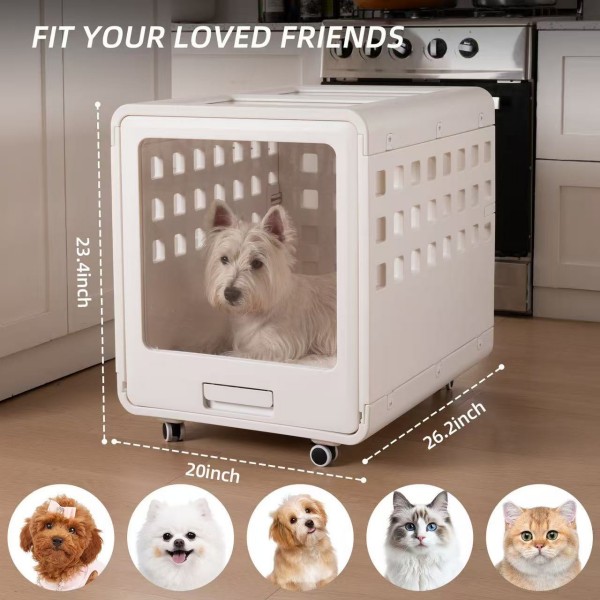
A dog needs enough usable room to stand, turn around, lie down, and stretch comfortably. Thick panels, frames, doors, and storage sections can reduce that space significantly.
For dog crate furniture, I would always compare the inside before judging the furniture outside.
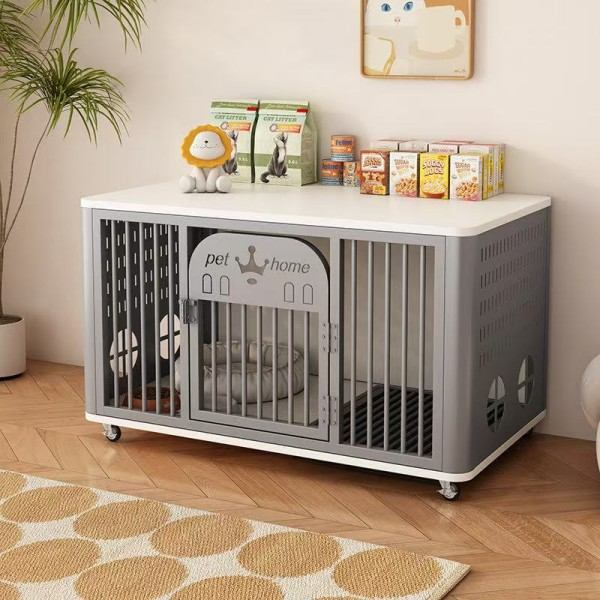
A useful product specification should show external dimensions, internal usable length and width, internal height, door opening, and divider compatibility when relevant.
This helps pet owners choose more accurately and helps retailers reduce size-related returns.
A crate that looks compact but leaves too little internal room is not a successful space-saving product.
Match the Crate to the Use Scene
The same crate should not be positioned for every dog and every household.
For a calm adult dog, the priorities are usable room, ventilation, stable floor contact, easy cleaning, and practical door access.
For puppies, the crate may sit inside a larger managed zone. Positive crate and playpen introduction matters, but the product decision is mainly about future size, safe gaps, cleanability, and compatibility with a playpen.
When the crate stays beside a sofa, desk, or bed, home integration becomes part of the value.
If the dog needs more controlled movement, choose a playpen. If the goal is only to block a room or hallway, a gate is usually more efficient.
The product should match the management problem instead of creating more confinement than necessary.
Furniture Crates Must Work as Furniture and Dog Space
Furniture-style crates reduce the visual conflict between pet equipment and the room.
But appearance should not hide functional compromises.
A modern dog crate furniture design should still be judged by ventilation, internal room, door access, floor stability, hardware noise, cleaning access, edge finish, and top-surface use.
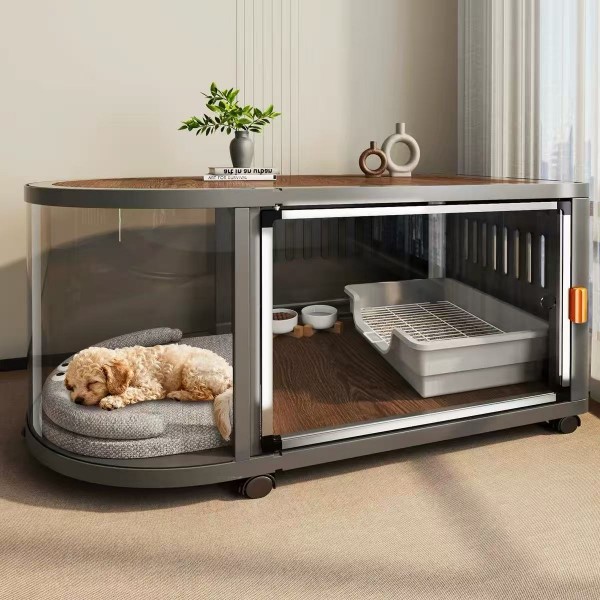
This is where B2B product selection and end-user experience meet directly.
A retailer may value the furniture look because it supports premium positioning. The pet owner values it only if the dog still has enough room and airflow.
That balance is what makes furniture crates commercially useful.
Storage Is Useful Only When It Does Not Steal Dog Space
A dog crate furniture with storage can combine containment, furniture, and organisation.
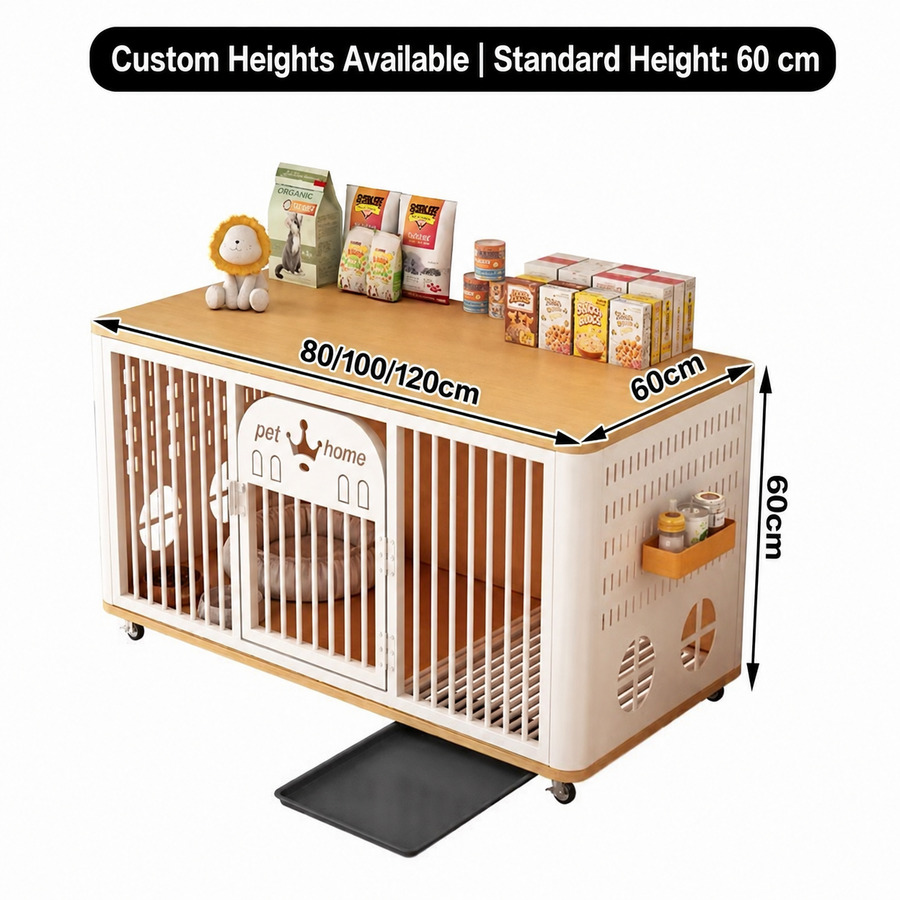
Storage can hold leads, toys, blankets, or grooming items.
But drawers and cabinets take volume. Check whether storage reduces the dog’s internal area or makes the unit too deep for the room.
Door Position Can Decide Whether the Crate Fits
A correctly sized crate can still be difficult to use if the door opens into the wrong space.
Front-door crates suit some narrow walls. Side-door models can work better beside sofas or beds. Dual-door designs give more flexibility when furniture moves.
For room planning, map walking routes, nearby room doors, heating sources, direct sunlight, cleaning access, other pets, and feeding areas.
A good safe resting area should let the dog settle without sitting in the busiest traffic path.
For retailers, door orientation can justify separate SKUs or a dual-door design.
Crate and Playpen Should Be Planned Together
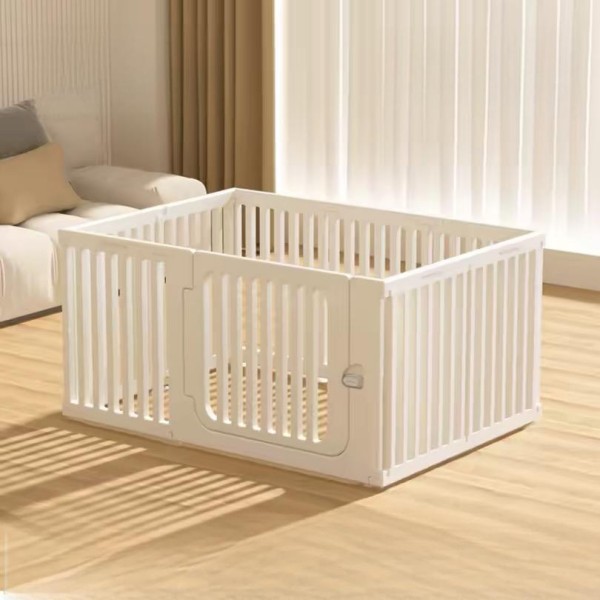
A crate gives the dog a defined resting zone. A playpen gives more controlled movement space.
For many indoor layouts, the two products work better together.
A plastic modular indoor dog playpen can surround or sit beside an open crate, creating a larger puppy or small-dog zone.
| Indoor Need | Better Product |
|---|---|
| Sleep and retreat | Crate |
| Controlled movement | Modular playpen |
| Toys and water in a managed zone | Playpen |
| Flexible puppy setup | Crate + playpen |
For a product line, this is more valuable than treating crates and playpens as unrelated categories.
Use a Freestanding Gate When the Problem Is Access
Many homes do not need another enclosure. They need a boundary.
A plastic freestanding pet gate can block a hallway, kitchen, front-door zone, or another room without creating a fully enclosed area.
For taller dogs, a freestanding pet gate tall may fit better.
For gates, I would check height, usable width, base stability, gap spacing, pass-through access, floor protection, resistance to pushing, and folding.
For front-door management or escape-prone layouts, a well-positioned indoor boundary can be more practical than crating the dog every time the door opens.
The restriction should match the actual problem.
Material Choice Should Follow the Home Scenario
Different crate structures create different trade-offs.
Furniture board or wood-look structures work well when home integration matters. Check edge protection, moisture exposure, panel rigidity, hardware, and assembly fit.
Plastic modular structures are useful when cleanability, replaceable panels, or configuration flexibility matter.
A modular plastic dog crate furniture direction can support that type of product line.
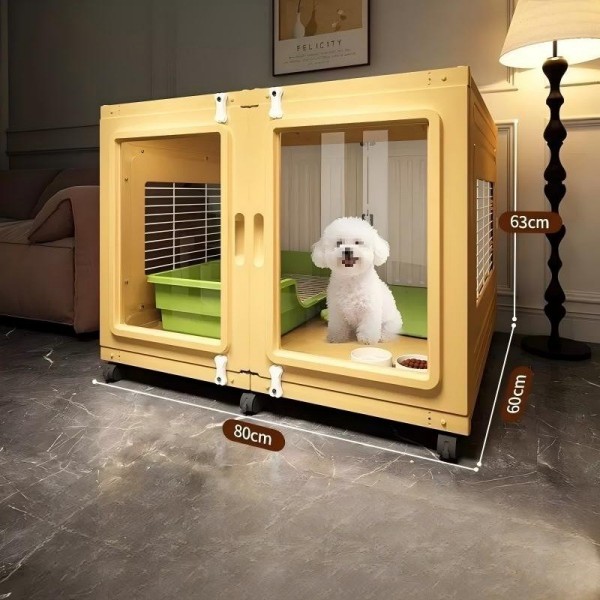
Metal-frame structures can create a slimmer profile, but coating quality, hardware noise, gap spacing, and home integration still need review.
The better material is the one that fits the room, cleaning routine, dog size, and product position.
Cleaning Access Is Part of the Structure
A crate may stay in the home for years.
I would check whether bedding removes easily, whether the floor is accessible, whether corners trap hair, whether doors open wide enough for cleaning, and whether surfaces tolerate routine wiping.
Furniture crates sometimes create more hidden corners than basic wire crates.
That is acceptable only if the final product remains practical to maintain.
For pet owners, this affects daily satisfaction. For retailers, it affects complaints and long-term product perception.
Training Context Should Change the Product Choice
A crate works best when the dog can develop a positive association with it.
That principle changes what should be sourced.
A home-use crate should feel stable, quiet, accessible, and comfortable. Doors should operate smoothly. Latches should not create unnecessary noise. The inside should allow appropriate bedding.
If a dog shows severe distress when left alone, stronger confinement is not automatically the answer. Separation-related problems are not a product feature.
For retailers, avoid claims such as “stops separation anxiety” or “solves destructive behaviour.”
The crate is a space-management product, not a behavioural cure.
Build the Product Line Around Jobs
I would not build the category around ten versions of the same crate.
| Product Direction | Best Use | Commercial Role |
|---|---|---|
| Standard furniture crate | Everyday indoor resting | Core SKU |
| Modern furniture crate | Visible living spaces | Premium home line |
| Crate with storage | Small homes | Space-saving upgrade |
| Modular plastic crate | Flexible layouts | Modular line |
| Modular playpen | Larger managed area | Adjacent category |
| Freestanding gate | Room zoning | Boundary product |
| Tall freestanding gate | Larger dogs | Expanded boundary range |
Each SKU has a clear reason to exist.
Pet owners can choose by home problem, while retailers gain a cleaner assortment structure.
What I Would Check Before Sourcing Dog Crates
Before approving a bulk order, I would inspect:
- usable internal dimensions
- panel and frame rigidity
- ventilation
- door alignment
- latch operation
- gap spacing
- edge finish
- floor stability
- cleaning access
- hardware consistency
- assembly instructions
- carton protection
For furniture products, assemble sampled units before shipment.
A crate can look correct in pieces and still have misaligned doors, unstable panels, or poor hardware fit after assembly.
That is where practical QC protects both the retailer and the end pet owner.
How Archova Approaches Indoor Dog Space Products
At Archova, we treat crates, playpens, and freestanding gates as one indoor-living system with different levels of space control.
For furniture crates, we focus on internal room, ventilation, door orientation, cleaning, hardware, home integration, and packaging.
For modular playpens, we focus on panel stability, connectors, door access, gap control, layout flexibility, and expansion.
For freestanding gates, we focus on width, height, stable floor contact, easy placement, and storage.
A practical private-label range can be built around four functions:
- rest — furniture crate
- movement — modular playpen
- boundary — freestanding gate
- home integration — coordinated finish, size, and packaging
That gives retailers a more complete indoor-dog collection and gives pet owners a clearer way to choose.
FAQ
What matters most when choosing dog crate size?
Usable internal dimensions. The dog should have enough room to stand, turn, lie down, and stretch comfortably.
Is furniture-style dog crate only about appearance?
No. The useful versions combine home integration with ventilation, stable structure, adequate internal room, and practical cleaning access.
When is a playpen better than a crate?
When the dog needs a larger controlled area for movement, toys, water, or a puppy setup around an open resting crate.
When is a freestanding gate better?
When the goal is only to restrict access to a room, hallway, stair area, or doorway.
Does storage make crate furniture better?
Only when it adds useful organisation without reducing internal dog space or making access awkward.
What should retailers check before ordering crate furniture?
Check internal size, frame rigidity, doors, latches, ventilation, cleaning access, hardware, assembly fit, and packaging.
Can a crate solve separation anxiety?
No. A crate can provide managed space, but separation-related distress is not solved by stronger confinement.
How can Archova support a complete indoor dog range?
Archova can support furniture crates, modular playpens, freestanding gates, size planning, materials, finishes, hardware, packaging, and private-label assortment planning.
Conclusion
The best dog crate is not simply the strongest or most attractive one.
It is the one that gives the dog enough usable space, fits the room, works with the household’s movement pattern, and solves the correct indoor-management problem.
For retailers and importers, that leads to a stronger product strategy too.
Build the range around rest, movement, boundaries, and home integration. Use crates where a defined resting zone is needed, playpens where more managed space is useful, and freestanding gates where access control is the real job.
References
- RSPCA — How to Crate Train a Puppy
- Blue Cross — Dog Crates and Indoor Kennels
- Dogs Trust — Playpen and Crate Training a Puppy
- Dogs Trust — Creating a Safe Space for Your Dog
- Dogs Trust — How to Toilet or House Train Your Dog
- Dogs Trust — How to Stop Your Dog Escaping or Running Away
- Dogs Trust — Separation Anxiety in Dogs