Teaching a dog to sleep on its own bed is less about forcing the dog to stay there and more about making the bed easy to choose, rewarding to remain on, and predictable as a place to relax.
The useful sequence is:
go to the bed → lie down → relax → stay longer → tolerate distance → ignore mild distractions → choose the bed independently.
If the dog still avoids the bed after good training, the problem may be the product itself. The bed may be too warm, too small, unstable, or badly placed.
For pet owners, that distinction reduces frustration. For retailers and importers, it shows why a dog bed has to work with behaviour as well as product design.
Make the Bed Worth Approaching
Do not begin with a long “stay.”
The first goal is simply for the dog to step onto the bed voluntarily.
Reward-based training works because the dog learns that good things happen after the behaviour you want.
Place the bed in a quiet, familiar area. Toss a small treat onto it, let the dog step on by choice, and reward again while the dog is still there.
Do not drag or push the dog onto the bed.
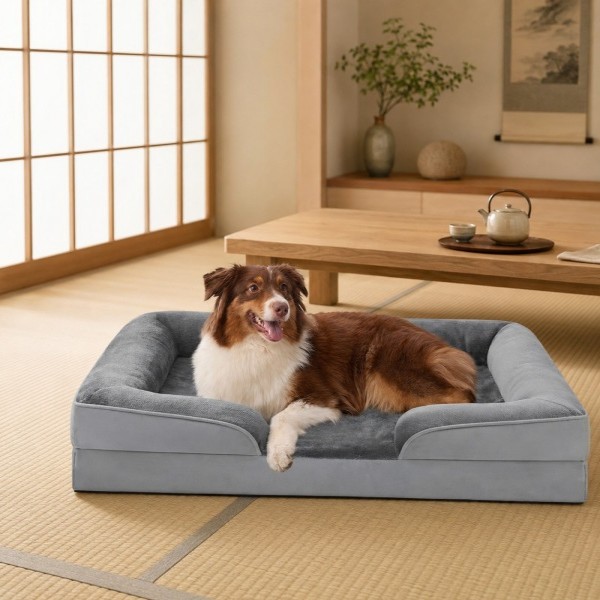
For a new bed, four paws on the surface may be enough for the first session.
Add the Cue After the Movement Makes Sense
Once the dog is reliably going onto the bed, introduce a cue such as “bed,” “place,” or “settle.”
A practical go-to-bed training sequence starts by encouraging the dog onto the bed, then adding the cue and increasing distance gradually.
Say the cue once and reward on the bed.
If every reward arrives after the dog runs back to you, leaving the bed can accidentally become part of the behaviour.
Reward Relaxation, Not Just Location
A dog standing rigidly on the bed and staring at your treat hand has learned to stand on an object.
It has not learned to relax there.
Begin rewarding calmer behaviour:
- lying down
- shifting weight onto one hip
- lowering the head
- looking away from you
- remaining without constantly asking for food
A settle-training approach gradually rewards more relaxed postures rather than constant attention-seeking.
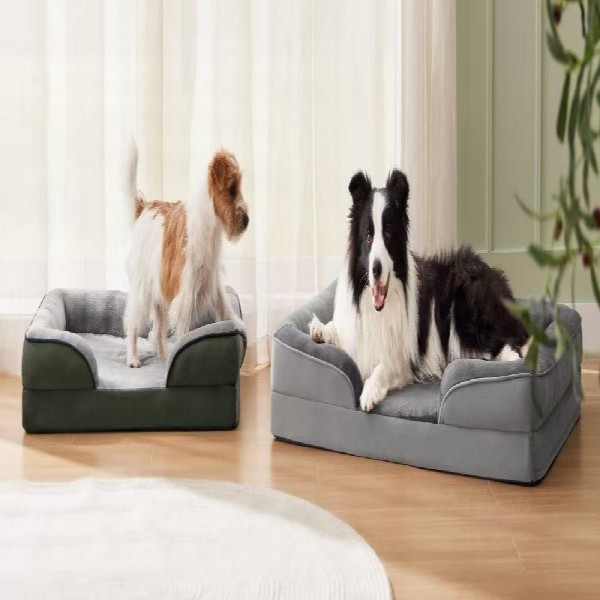
This is the difference between teaching “place” and building a real resting habit.
Build Time and Distance Gradually
Once the dog can lie down calmly, increase the time between rewards.
Do not jump from a few seconds to twenty minutes.
Training a stay behaviour follows the same principle: increase difficulty gradually.
Then add distance separately.
Start with one step away, return, and reward on the bed. Increase the distance only when the dog remains relaxed.
A staged approach to remaining relaxed in a bed while the owner moves away uses the same logic.
The dog should learn that you moving does not automatically end the resting period.
Add Distractions Only After the Basics Are Strong
Visitors, food, children, doorbells, and other dogs can make an easy bed exercise much harder.
Add one mild distraction at a time:
- stand up and sit down
- walk across the room
- have another person walk past
- open a door
- introduce normal household activity
If the dog keeps leaving, reduce the difficulty.
The goal is not to trap the dog on the bed. It is to make settling there easier than reacting to everything around it.
Use a Release Cue
A resting cue is clearer when the dog also knows when it is finished.
After a successful stay, use a release word such as “okay,” “free,” or “all done.”
Then let the dog leave.
This makes the routine predictable and prevents the dog from guessing how long it must remain.
Reward Voluntary Bed Use
If the dog walks to the bed without being asked and lies down, quietly reinforce that choice.
A veterinary behaviour approach to go-to-mat and settle training builds toward the dog choosing relaxed postures without constant prompting.
That is the result you actually want.
A dog that goes to bed only after a cue has learned an exercise.
A dog that chooses the bed when tired has developed a habit.
Put the Bed Where the Dog Already Likes to Rest
Training becomes harder when the bed is in the wrong location.
If the dog always sleeps beside your desk, putting the new bed in a distant hallway creates two challenges: accepting a new surface and accepting a less-preferred location.
Start near an existing favourite resting place.
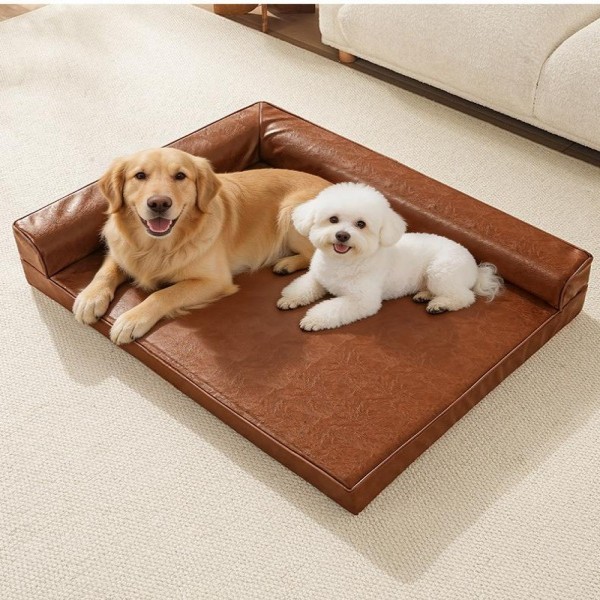
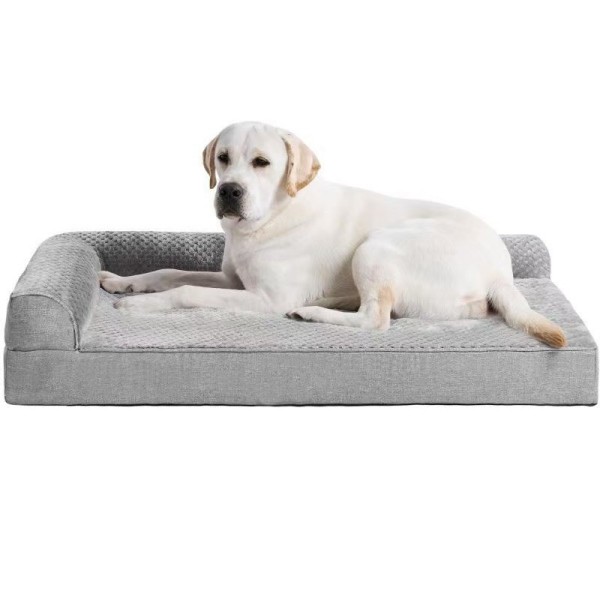
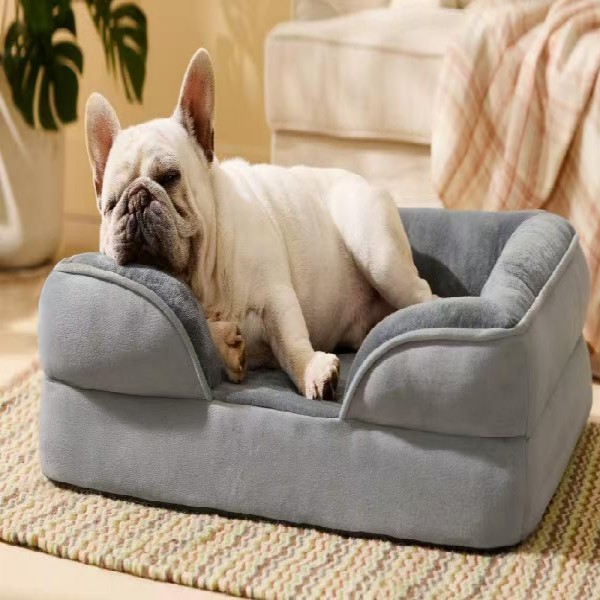
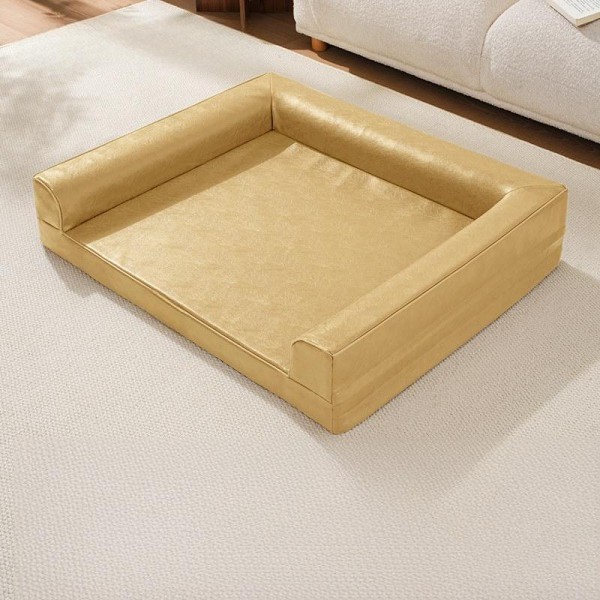
For dogs that like leaning against a side while remaining near family activity, an orthopedic dog sofa can provide a defined personal surface.
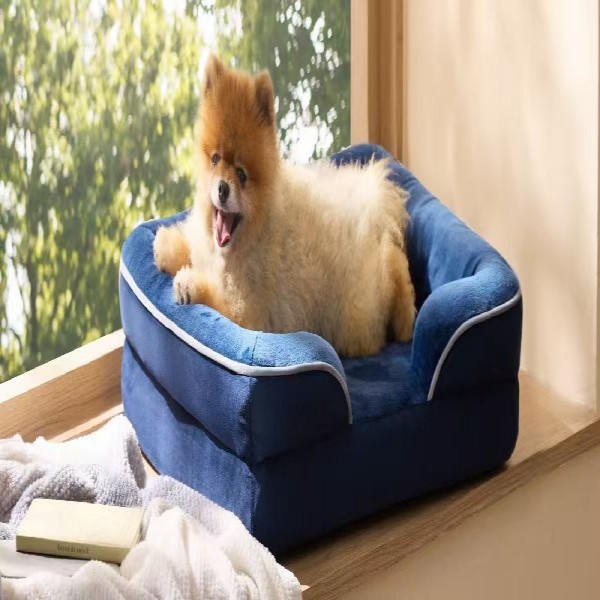
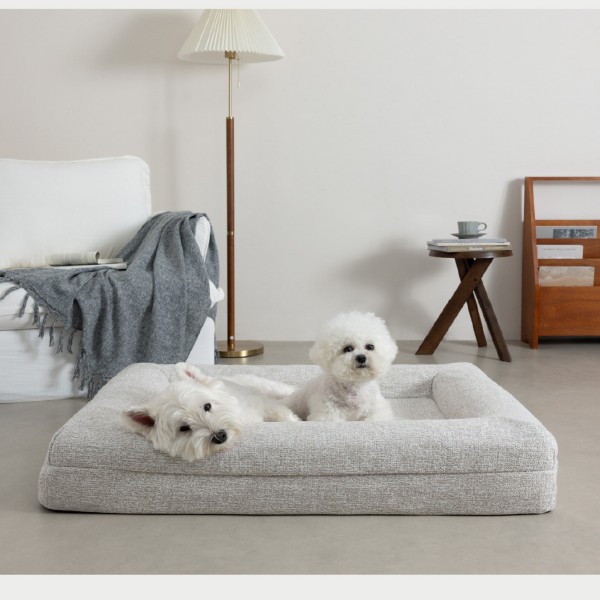
For B2B planning, room fit matters because a bed is more likely to be used when it fits where dogs already choose to rest.
If the Dog Refuses the Bed, Check the Bed
A dog can understand “bed” and still dislike the product.
Check whether the bed is:
- too warm
- too soft or too firm
- too small
- unstable on the floor
- difficult to enter
- noisy underfoot
- strongly scented from new materials
- placed somewhere the dog dislikes
A dog that leaves a plush bed for tile may be choosing temperature rather than rejecting the training.
In that case, a lighter surface such as a pet cooling mat may fit the dog better.
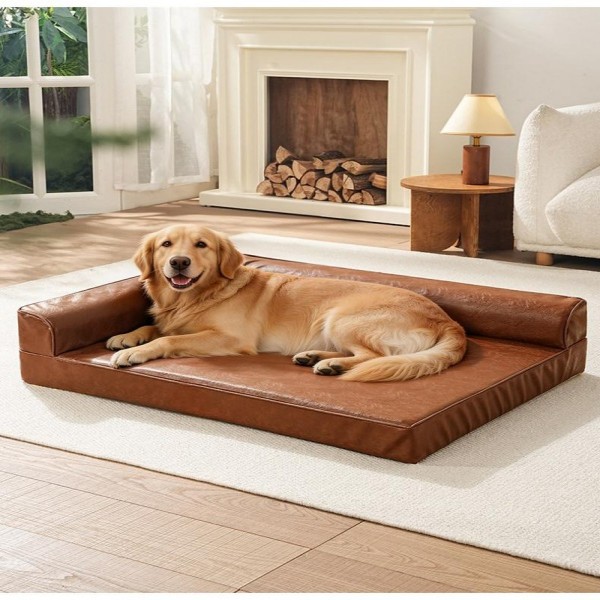
Training should not be used to override a reasonable product preference.
Some Dogs Prefer a More Defined Resting Area
Not every dog wants an open bed in the middle of a room.
Some settle more easily beside a wall, in a corner, inside an open crate, or within a pen.
A modern dog crate furniture setup can function as a longer-term resting station when the crate has been introduced positively and the dog can enter freely.
The bed and enclosure should support relaxation.
Neither should be used as punishment.
Do Not Make “Go to Bed” Predict Only Unpleasant Things
If the cue always predicts visitors, the owner leaving, play ending, or exclusion, the bed can lose value.
Mix the behaviour into ordinary calm moments.
Reward the dog for resting there while you read, work, watch television, eat, or move around the room.
The bed should mean:
this is a normal place where relaxing works well.
Check Timing Before Blaming the Training
A dog that urgently needs the toilet, has had no exercise, or is highly stimulated is less likely to settle.
A veterinary behaviour resource on independent rest on a mat recommends addressing exercise, food, and elimination needs before asking for a rest period.
Sometimes the dog is not “bad at bed training.”
The timing is simply poor.
What I Would Avoid
I would avoid:
- dragging the dog onto the bed
- repeating the cue when the dog does not understand it
- starting with long stays
- increasing duration and distance together
- using the bed as punishment
- rewarding only after the dog leaves
- forcing a dog onto a bed it finds uncomfortable
- assuming every floor-sleeping dog needs more training
A good resting routine is built through voluntary success.
How Archova Looks at Dog Beds as Resting Stations
At Archova, the product question is not only “Is this bed comfortable?”
It is also:
Can the dog identify it, enter it easily, settle on it, and use it naturally within the room?
For beds intended to support everyday settling, we would look at clear boundaries, usable sleeping area, floor stability, practical entry, surface comfort, temperature suitability, and washable covers.
For private-label retailers, a range can separate open family-room beds, bolster resting beds, cooler resting surfaces, crate-compatible sleep areas, and portable settle mats.
That connects product structure directly to behaviour and use scene.
FAQ
How do I get my dog to sleep on a new dog bed?
Reward the dog for approaching and stepping onto the bed. Then build lying down, calmness, duration, distance, and distractions gradually.
Should I put treats on my dog’s bed?
Yes. Reward while the dog is on the bed so the bed itself becomes valuable.
What word should I use?
“Bed,” “place,” or “settle” can all work. Consistency matters more than the exact word.
Should I force my dog to stay on the bed?
No. Build the behaviour gradually. If the dog repeatedly leaves, reduce the difficulty or check whether the bed is uncomfortable.
Why does my dog understand “bed” but still sleep on the floor?
The dog may prefer the floor’s temperature, firmness, location, or stability. Training is only one part of the decision.
Can a dog bed be used for a “place” command?
Yes. A bed can become a useful settle station, but the dog should also be allowed to use it voluntarily for normal rest.
Conclusion
Training a dog to sleep on a dog bed works best when the dog learns three things in order:
the bed is worth approaching, staying there is rewarding, and relaxing there is normal.
For pet owners, the strongest result is a dog that understands the cue and also chooses the bed independently when it wants to rest.
For retailers and importers, a successful dog bed is not only a cushion. It is a resting station that has to work with behaviour, room placement, temperature, and the dog’s own preferences.
References
- Dogs Trust — Positive Reinforcement Training With Rewards
- Dogs Trust — Train Your Dog to Settle
- Dogs Trust — Prepare Your Dog for Visitors
- RSPCA — How to Train Your Dog to Stay Home Alone
- RSPCA — Train Your Dog to Stay
- VCA — Teaching Calm: Settle and Go to Mat
- VCA — Using Enrichment, Predictability and Scheduling to Train Your Dog