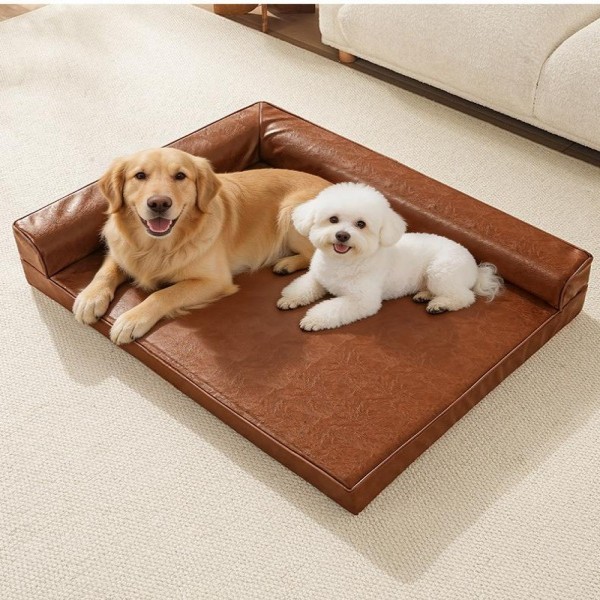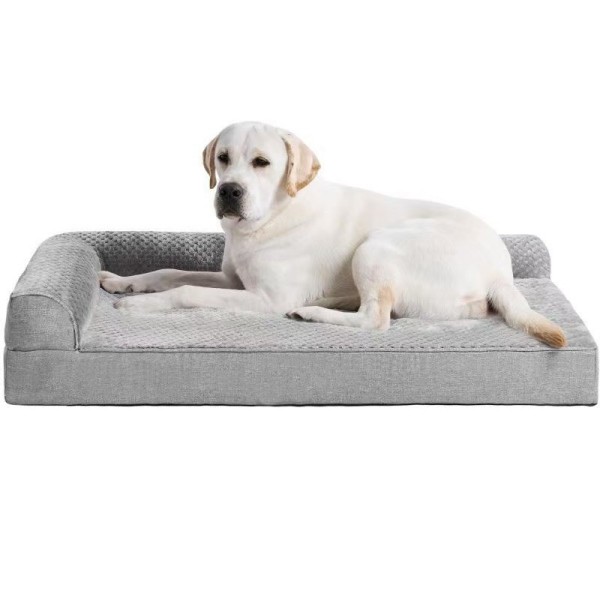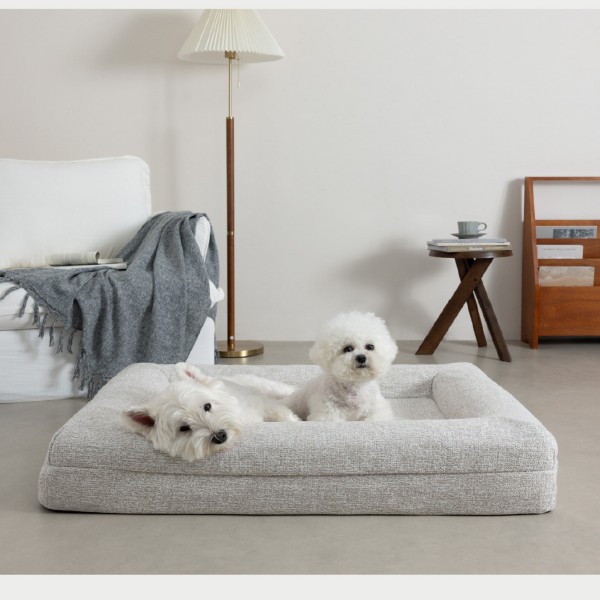
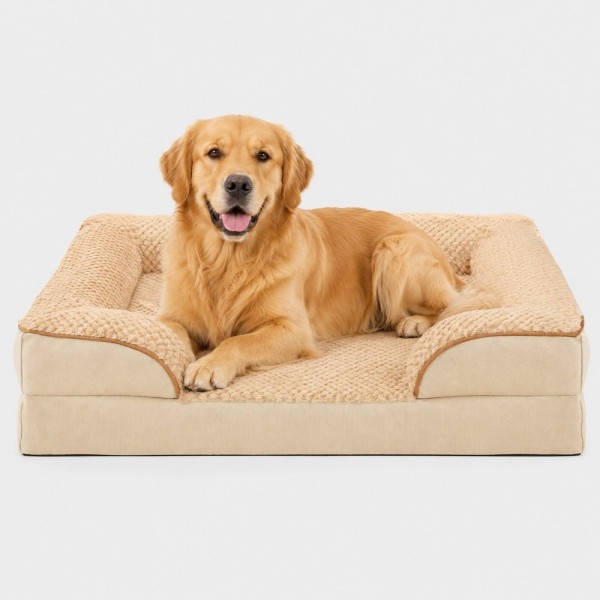
The main difference is support structure, not softness.
A normal dog bed may use polyester fibre, shredded filling, basic foam, or a thin cushion. An orthopedic dog bed usually uses a more deliberate support core designed to distribute body weight, resist bottoming out, and keep its shape for longer.
That does not mean every dog needs an orthopedic bed. A well-made normal bed can be the better choice for a young, healthy, lightweight dog.
For retailers, the difference affects product positioning, price, durability, return risk, and which customers each SKU should serve.
Orthopedic vs Normal Dog Bed: Quick Comparison
| Buying Question | Normal Dog Bed | Orthopedic Dog Bed |
|---|---|---|
| Main purpose | Everyday comfort | Comfort + structured support |
| Common filling | Fibre, shredded fill, basic foam | Memory foam, latex, layered foam |
| Bottoming-out resistance | Often lower | Usually higher when well specified |
| Best fit | Young, small, healthy dogs | Senior, large, heavier dogs |
| Price position | Entry to mid-range | Mid to premium |
| Retail role | Volume and style-led | Functional premium |
The important point is when well specified.
An orthopedic label alone does not prove that the bed has better support.
1. The Support Core Is the Biggest Difference
Ignore the cover first and look inside.
A normal bed can feel plush because it contains a large amount of soft fibre. That can be comfortable, but the filling may move away from pressure areas or flatten over time.
An orthopedic dog bed should keep more material underneath the dog after body weight is applied.
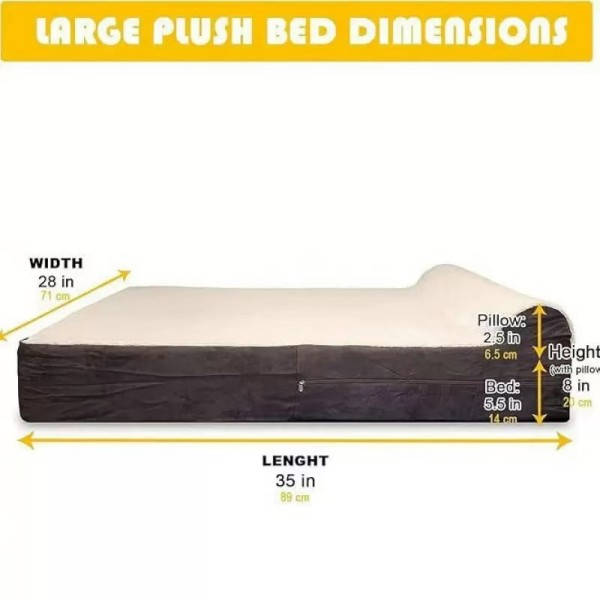
Support may come from:
- memory foam
- high-density foam
- latex
- layered foam
- resilient support fibre
For B2B buyers, I would compare thickness, density, recovery, firmness, and sample-to-bulk consistency before trusting the word orthopedic.
2. Softness Is Not the Same as Support
This is where many comparisons go wrong.
A very soft bed may feel luxurious by hand. But if a heavier dog sinks through the filling and reaches the floor, the bed is not giving useful support.
A flatter orthopedic dog mattress may feel firmer but maintain more cushioning underneath the torso.
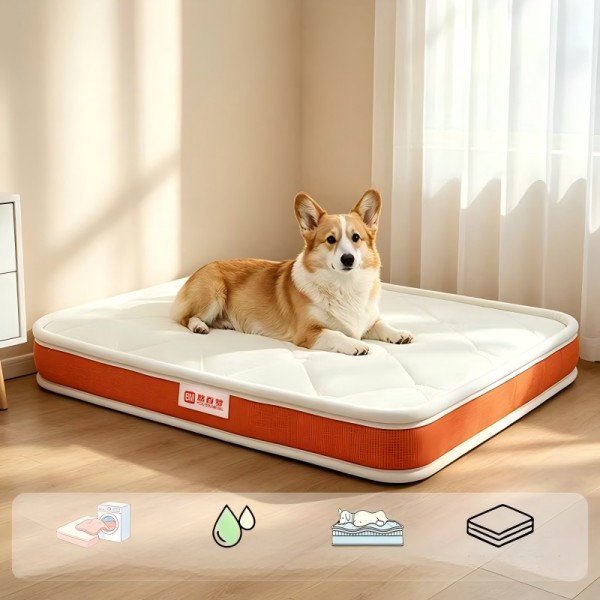
I would check whether the bed:
- keeps the dog away from the hard floor
- recovers after use
- supports the full torso
- avoids permanent deep hollows
For retailers, those same points influence reviews, replacements, and return rates.
3. Body Weight Changes the Buying Decision
A 7 kg dog and a 40 kg dog do not load a mattress in the same way.
That is why large dogs expose thin foam and weak filling much faster.
An extra large orthopedic dog bed should scale more than the fabric shell. Support depth and usable centre area should increase too.
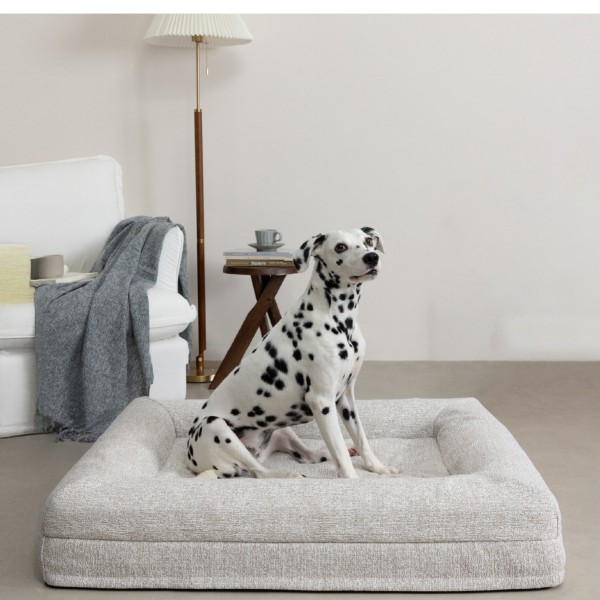
For large-dog products, I would check:
- support depth
- firmness under load
- usable sleeping area
- seam strength
- centre compression
“XL” should describe the supported sleeping system, not simply a bigger cover.
4. Senior Dogs Need Support and Easy Access
For senior dogs, support is only one part of the decision.
Home adaptations such as orthopedic bedding and nonslip surfaces can make the environment easier for dogs with reduced mobility.
A practical senior bed should combine:
- supportive core
- low entry
- stable floor contact
- enough turning space
- removable cover
- moisture protection where useful
A deep, soft normal bed with a high wall may actually be harder to enter than a lower orthopedic mattress.
That is why orthopedic design should be judged as a complete structure, not just a foam specification.
5. Orthopedic Does Not Mean Medical Treatment
An orthopedic dog bed is still pet furniture.
It can provide cushioning, reduce direct contact with hard flooring, and create a more supportive resting environment.
It does not cure arthritis, hip dysplasia, injury, or chronic pain.
Dogs with osteoarthritis can show stiffness, pain, and difficulty using affected limbs. Those signs deserve veterinary attention.
For product copy, I would use claims such as:
- supportive foam
- pressure-distributing structure
- low-entry design
- cushioning from hard floors
- senior-friendly resting design
Avoid turning the bed into a treatment claim.
6. A Normal Dog Bed Can Still Be the Better Product
Orthopedic does not automatically mean better.
A healthy young dog may prefer a softer nest-style bed. A small dog may not need a thick support core. A puppy may benefit more from easy washing and replacement than from premium foam.
Normal beds also work well when the buying motivation is:
- lower entry price
- seasonal colour
- lightweight portability
- nesting comfort
- secondary-room use
For retailers, that matters.
If every bed becomes orthopedic, the range loses price diversity and clear use cases.
7. Size and Entry Height Matter as Much as the Filling
A premium foam core cannot fix a bed that is too small.
The dog should be able to stretch, curl, turn, and change position while staying on the supported area.
For bolster beds, separate outside dimensions from usable centre dimensions.
Entry height matters too.
A furniture-style orthopedic dog sofa can provide supportive sides, but a high front wall may be inconvenient for some senior dogs.
A mobility-focused setup benefits from low-access bedding and stable nonslip surroundings.
For retailers, low-entry and high-bolster products should be treated as different use cases rather than cosmetic variations.
8. Cleaning Can Make a Normal Bed More Practical
A normal fibre bed may sometimes be easier to wash than an orthopedic bed with a fixed foam core.
That is why better orthopedic construction separates the components.
A practical structure usually has:
- removable outer cover
- protective liner
- support core that stays dry
For crate use, an orthopedic dog bed for crate should remain low enough for easy access and removal.
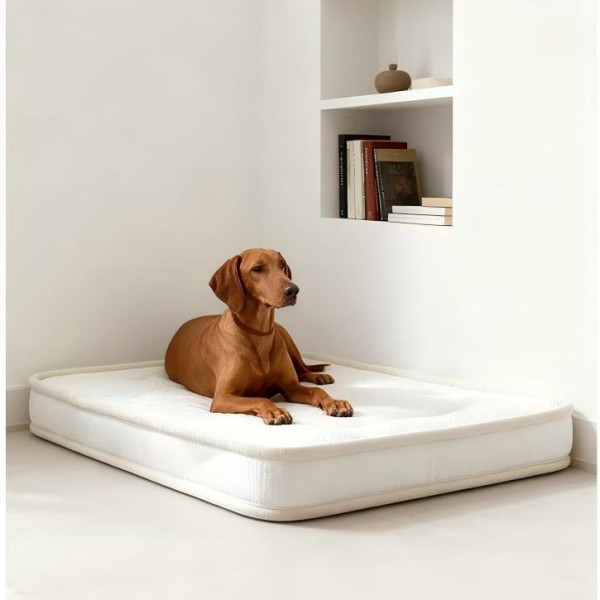
Routine pet-supply cleaning should follow the material and care instructions.
Do not assume a foam core can be machine washed unless the manufacturer specifically allows it.
9. Cooling Is a Separate Function
Orthopedic and cooling are not the same claim.
A normal bed can use lighter fabrics or mesh. An orthopedic bed can combine structured support with a cooling layer or more breathable surface.
A cooling orthopedic dog bed is useful when the product needs both support and warm-weather comfort.
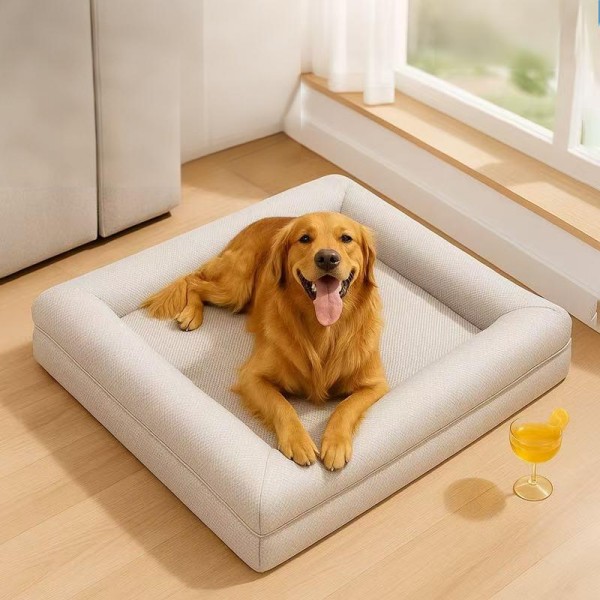
Keep the claims separate:
- orthopedic = support direction
- cooling = actual cooling material or structure
One does not automatically create the other.
10. Durability Changes the Real Price Difference
A normal bed may cost less initially.
That does not always mean it costs less over time.
If the filling shifts, flattens, or becomes difficult to clean, replacement may come sooner.
A well-specified orthopedic bed can justify a higher price when it offers:
- longer-lasting support
- replaceable cover
- protected core
- stronger stitching
- stable shape
For retailers, this creates a premium story based on construction rather than vague health language.
The useful comparison is price versus service life and complaint risk.
How I Would Build a Dog Bed Range
For most retailers, I would use both normal and orthopedic beds.
| Product Direction | Best Fit | Commercial Role |
|---|---|---|
| Basic padded bed | Young/small dogs | Entry price |
| Soft bolster bed | Curling dogs | Mainstream comfort |
| Orthopedic mattress | Large dogs | Functional upgrade |
| Low-entry orthopedic bed | Senior dogs | Support-focused |
| Orthopedic sofa | Living rooms | Premium home line |
| Cooling orthopedic bed | Warm seasons | Seasonal function |
| Crate orthopedic pad | Crate users | Space-specific add-on |
This creates both a price ladder and a use-case ladder.
Pet owners can choose based on real need. Retailers avoid forcing every customer into the highest-priced option.
How Archova Approaches the Difference
At Archova, we do not treat orthopedic as a label that can be added to any padded bed.
We look at the support system first.
For orthopedic products, that means reviewing support material, depth, weight response, usable area, entry height, cover construction, liner protection, floor grip, and compression recovery.
For normal beds, priorities may shift toward softness, nesting comfort, lighter weight, washable construction, seasonal fabrics, and price accessibility.
For private-label development, both categories can share colours or fabric families while keeping different internal structures.
That creates a coherent collection without pretending every dog needs the same bed.
When Is an Orthopedic Bed Worth the Upgrade?
I would lean toward orthopedic construction when:
- the dog is large or heavy
- the dog is senior
- the current bed bottoms out
- long-term support matters
- a premium functional SKU is needed
A normal bed may be enough when:
- the dog is young and healthy
- the dog is small and lightweight
- the bed is mainly for secondary use
- washability matters more than foam structure
- the owner wants an entry-price product
The right decision depends on the use case, not the word on the label.
FAQ
Is an orthopedic dog bed just a memory foam bed?
No. Memory foam is one option. Orthopedic beds can also use latex, layered foam, high-density foam, or other resilient support systems.
Are normal dog beds bad for dogs?
No. A well-padded normal bed can be comfortable and appropriate for many young, healthy, or smaller dogs.
Do senior dogs need orthopedic beds?
Many senior dogs benefit from supportive bedding, but entry height, floor grip, size, and cleaning are also important.
Is a soft bed the same as a supportive bed?
No. Softness describes surface feel. Support describes how well the structure keeps the dog from sinking through to the floor.
Are orthopedic beds easier to clean?
Not automatically. Better designs use removable covers and protective liners so the support core stays dry.
Are orthopedic beds worth the higher price?
They can be when the support structure lasts longer, fits the dog better, and reduces replacement or complaint risk.
What should retailers compare before sourcing orthopedic beds?
Compare support material, thickness, usable sleeping area, entry height, cover construction, liner, floor grip, compression recovery, and sample-to-bulk consistency.
Conclusion
The difference between an orthopedic dog bed and a normal dog bed is not simply price, thickness, or softness.
It is the way the bed supports weight, keeps the dog away from the hard floor, retains shape, manages access, and performs over time.
A normal dog bed can be the right product for a young, small, healthy dog or a price-sensitive use case. An orthopedic bed becomes more valuable when support, body weight, senior access, durability, or premium positioning matter more.
For retailers, the strongest range includes both—and gives each one a clear job.
References