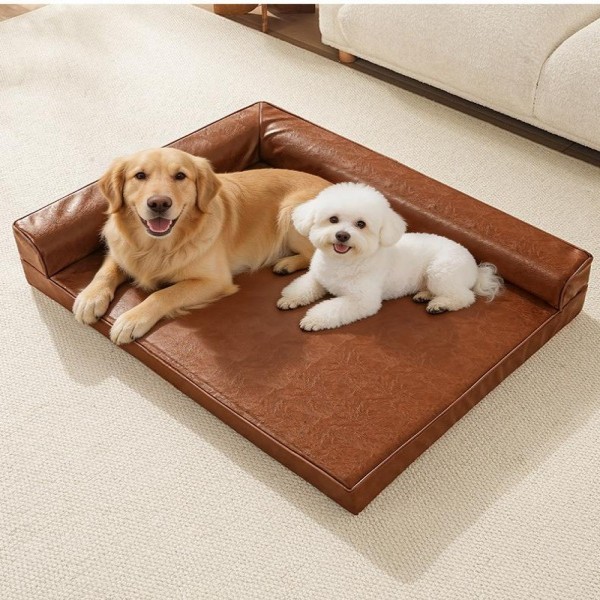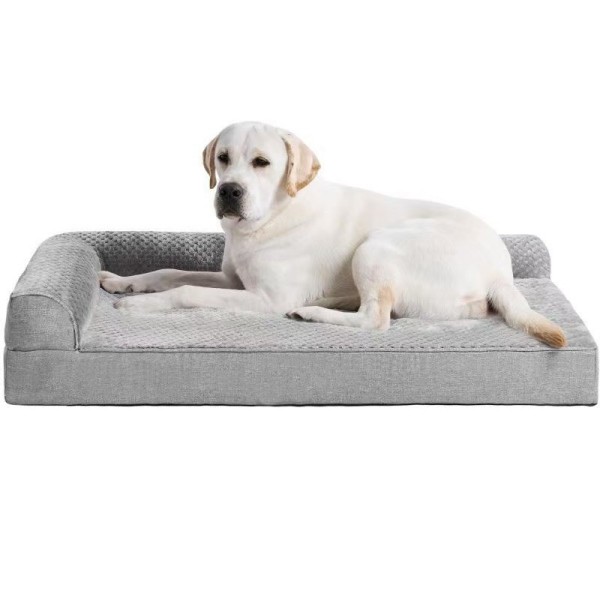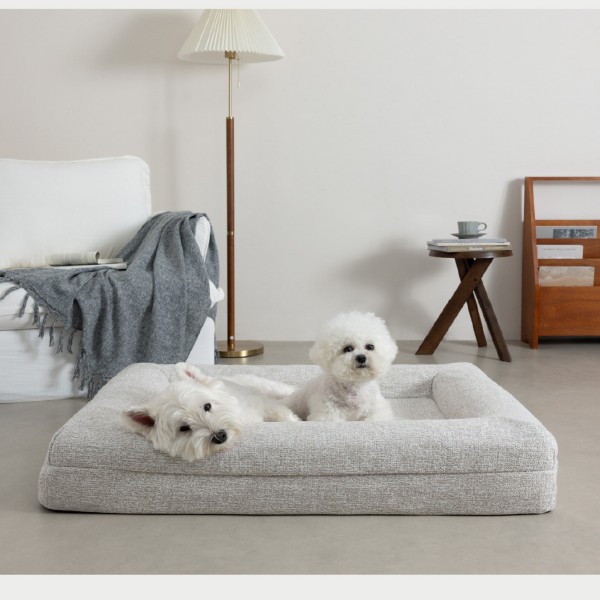
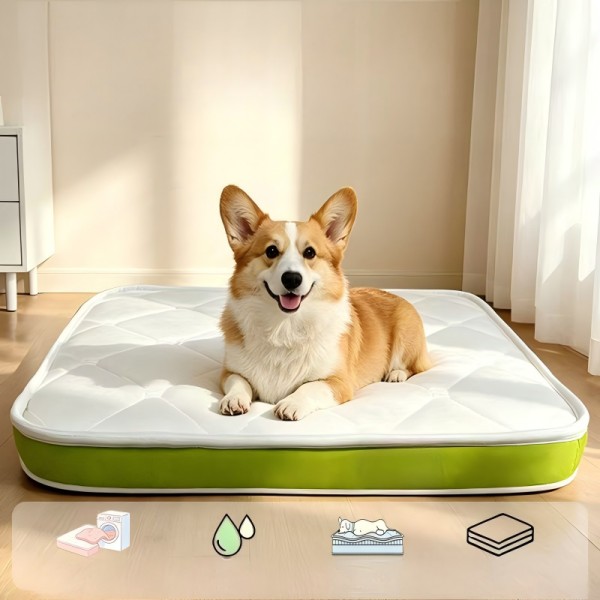
Sometimes yes. Sometimes no.
An orthopedic dog bed is worth paying more for when the extra cost buys better support under the dog’s body weight, longer shape retention, easier access, and a product that does not need replacing quickly.
It is not automatically worth it because the label says “orthopedic,” “memory foam,” or “premium.”
For pet owners, the real question is:
Will this bed solve a problem my dog actually has, and will it keep doing that long enough to justify the price?
For retailers and importers:
Does the premium come from measurable performance, or mostly from styling and marketing?
The Premium Should Buy Structure, Not a Label
A 2026 retail scan shows a very wide price spread among beds labelled orthopedic.
Two beds can use the same word while having very different internal constructions. One may be a thin foam insert inside a decorative cover. Another may use a layered support system designed to resist compression.
A veterinary pressure-support study in dogs found that pressure-relieving surfaces produced lower contact pressures than a standard mattress or blanket in several key areas.
That supports one useful point:
support-surface design can matter.
It does not mean every orthopedic-labelled bed performs the same way.
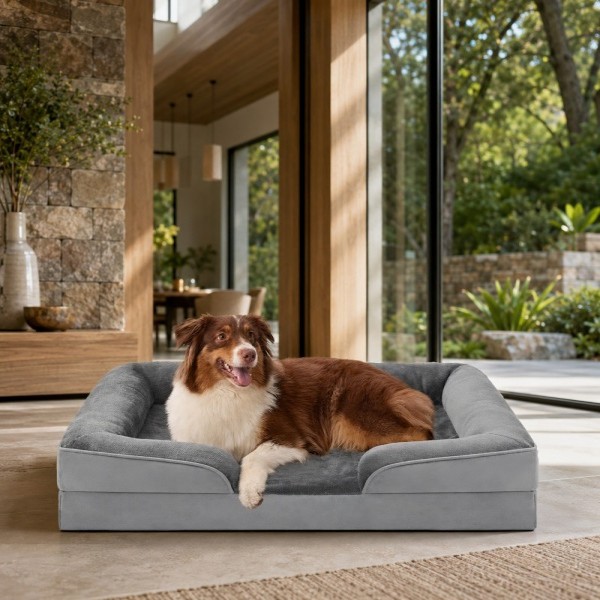
When you pay more, the premium should buy a better support system—not just a better product description.
When It Is More Likely to Be Worth It
Large or Heavy Dogs
Body weight changes how a bed performs.
A light dog may be comfortable on a simple padded surface. A heavier dog exposes weak foam much faster.
For larger dogs, the useful question is whether enough cushioning remains between the body and the floor after the dog lies down.
An extra large orthopedic dog bed should justify its premium through support under load, not only through larger dimensions.
Senior or Mobility-Compromised Dogs
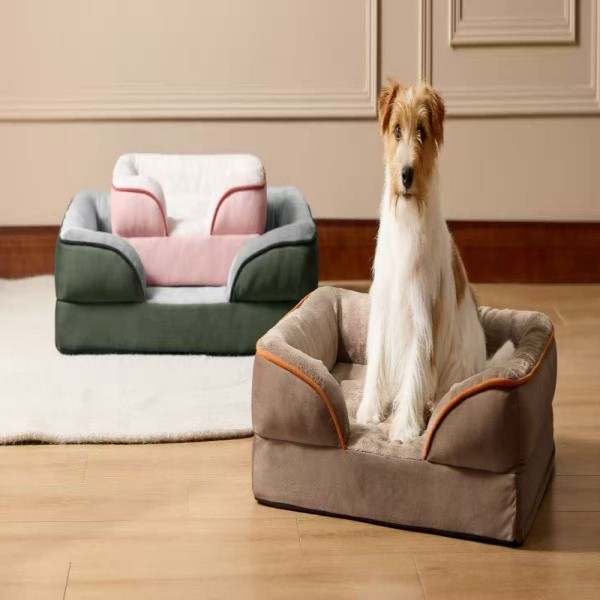
Orthopedic bedding can be part of a more supportive environment for senior dogs.
Senior-care guidance includes orthopedic bedding, nonslip flooring, ramps, and stairs among practical mobility modifications.
That does not make the bed a treatment for arthritis.
It means the bed may be worth more when it provides stable support, easy entry, enough usable space, good floor grip, and practical cleaning.
Dogs That Flatten Cheap Beds Repeatedly
This is one of the strongest value cases.
If a lower-cost bed needs replacing repeatedly because the filling shifts, compresses, or develops a permanent crater, the cheap purchase price can be misleading.
The better comparison is:
total useful cost over time.
Dogs That Use the Bed Every Day
A bed used every night and throughout the day has a different value equation from a spare bed used occasionally.
Better support, easier cleaning, and replacement parts have more opportunity to create value when the product is used heavily.
Use Cost Per Year, Not Sticker Price
Consider this illustrative example:
| Bed | Purchase Price | Useful Life | Approx. Cost Per Year |
|---|---|---|---|
| Basic padded bed | $45 | 1 year | $45 |
| Better orthopedic bed | $120 | 4 years | $30 |
| Premium orthopedic bed | $240 | 5 years | $48 |
These are hypothetical numbers, not a market guarantee.
The point is the method.
A more expensive bed can be better value if it keeps its support much longer.
A $240 bed that collapses in eighteen months is poor value even if it looks premium.
Replacement Covers Change the Economics
The outer cover often wears out before the foam core.
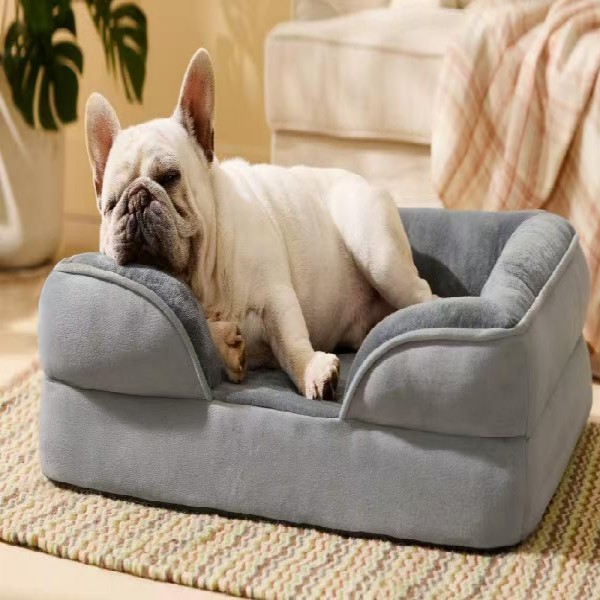
If the support core remains good but the cover fails, a replacement cover can extend the useful life of the product without replacing the whole bed.
For B2B planning, useful after-sales options include:
- replacement outer covers
- replacement waterproof liners
- spare covers
- standardised zipper layouts
- stable sizing across production runs
A premium bed becomes easier to justify when parts can be maintained independently.
When It May Not Be Worth the Extra Money
A Young, Lightweight Dog With No Support Problem
If a young, healthy, lightweight dog sleeps comfortably on a durable padded bed and the bed retains its shape, upgrading may provide little practical benefit.
A Puppy That Will Quickly Outgrow the Size
A young puppy may need several size changes before reaching adult dimensions.
Paying for a highly engineered bed in a temporary size can be poor value.
A Dog That Destroys Soft Bedding
An expensive foam bed is not good value when the dog opens it within days.
If a dog actively tears and swallows fabric or foam, the priority is safe bedding selection and chewing management—not a more expensive orthopedic label.
A Dog That Avoids Warm Foam
Some dogs consistently leave thick padded beds for cooler flooring.
A premium support core does not create value if the dog rarely uses it.
Sometimes the Money Is Better Spent Elsewhere
A bed is only one part of the resting environment.
A mobility-compromised dog may struggle more with slippery flooring, access to a sofa, stairs, or a high entrance than with the mattress itself.
A comfortable home setup may therefore require stable flooring and easier-access resting areas rather than simply buying the most expensive bed.
If the dog repeatedly tries to reach a favourite sofa, a foam dog ramp for couch may create more practical value than upgrading from one good bed to an even more expensive one.
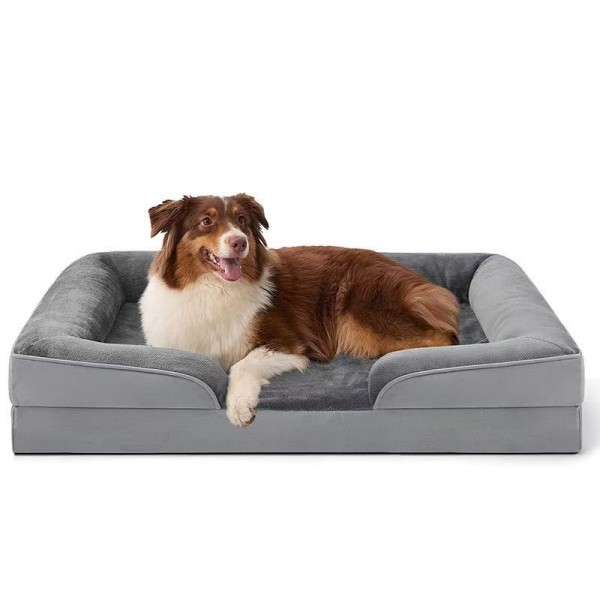
What Should a Premium Bed Actually Give You?
| Premium Feature | Why It Matters |
|---|---|
| Better support core | Less bottoming out |
| Size-specific construction | Better performance for large dogs |
| Compression recovery | Longer useful support life |
| Low-entry design | Easier access |
| Non-slip base | More stable use |
| Removable washable cover | Easier maintenance |
| Protective liner | Protects expensive foam |
| Replacement parts | Extends service life |
If the premium product does not improve these areas, the price may be buying styling rather than function.
Do Not Pay More for an Unsupported Medical Promise
An orthopedic dog bed can provide a cushioned, supportive resting surface.
It should not automatically be marketed as treating arthritis, curing hip dysplasia, or relieving chronic pain.
Dogs showing difficulty rising, stiffness, or changes in mobility may need veterinary assessment.
A bed is an environmental support product, not a substitute for diagnosis or treatment.
For B2B teams, objective advertising claims need a reasonable evidentiary basis, especially when health benefits are implied.
A stronger medical claim does not make a product better value.
Long-Term Convenience Is Part of Value
If the cover is difficult to remove, the bed is impractical to wash, or one accident ruins the foam, ownership cost increases.
Routine pet-bed cleaning should follow the product’s care instructions.
For a premium bed, I would expect an easy-to-remove cover, protected support core, durable zipper construction, and replacement parts where practical.
What I Would Test Before Paying a Premium
For pet owners:
- Does my dog actually need more support?
- Does the bed bottom out?
- Is the sleeping area large enough?
- Is the entry practical?
- Does the bed stay stable?
- Is the cover easy to remove?
- Is the foam protected?
- Does the dog actually use the bed?
For retailers:
- representative-load testing
- compression-recovery testing
- repeated wash testing
- liner leakage testing
- zipper-cycle checks
- size-specific construction checks
- sample-to-bulk QC
That is how “worth it” becomes measurable.
How Archova Approaches the Value Question
At Archova, we would not justify an orthopedic premium simply by adding thicker foam or a memory-foam label.
The premium should come from a better product system.
For private-label development, that can include:
- weight-appropriate support structures
- different internal constructions by size
- low-entry geometry
- tested floor grip
- washable covers
- protective liners
- replacement covers
- compression and recovery targets
- consistent bulk specifications
For retailers, the goal is not to create the most expensive orthopedic SKU.
It is to create a product where the extra cost is easy to explain.
A Simple Worth-It Decision
| Situation | Premium Orthopedic Bed? |
|---|---|
| Large dog flattening normal beds | More likely worth it |
| Senior dog needing supportive rest | Often worth considering |
| Daily primary bed | More likely |
| Young lightweight dog comfortable now | Not necessarily |
| Puppy rapidly outgrowing sizes | Often not yet |
| Dog destroys foam beds | Usually poor value |
| Dog avoids warm padded surfaces | Depends on design |
| Cheap beds replaced repeatedly | Premium may be better value |
| Premium only adds styling | Probably not |
FAQ
Are orthopedic dog beds worth the extra money?
They can be when the premium buys better support, longer shape retention, easier maintenance, and features that solve a real need.
Does every dog need an orthopedic dog bed?
No. A young, lightweight dog that is comfortable on a durable padded bed may not gain enough practical benefit to justify the extra cost.
Are orthopedic beds more worthwhile for large dogs?
Often, yes. Heavier dogs place more load on the support core, so weak beds can flatten faster.
Are orthopedic dog beds worth it for senior dogs?
They can be useful as part of a mobility-friendly home, especially when the bed provides stable support and easy access. They should not be treated as medical treatment.
Is a more expensive orthopedic bed always better?
No. Price alone does not tell you the foam quality, support under load, durability, or useful life.
How can I tell whether an orthopedic bed is good value?
Look at support under body weight, compression recovery, usable size, cover and liner design, replacement parts, and useful life.
Should I replace a cheap bed every year or buy one expensive bed?
Compare cost over the useful life of the product. A more expensive bed can cost less per year if it keeps its shape significantly longer.
What should retailers require from an orthopedic dog bed supplier?
Require clear internal specifications, load and recovery testing, wash testing, liner details, size-specific construction, and sample-to-bulk consistency.
Conclusion
Orthopedic dog beds are worth it when the premium pays for real performance.
For a large dog, a senior dog, or a household repeatedly replacing flattened beds, a better support system can justify a higher price.
For a young lightweight dog that already sleeps comfortably on a durable padded bed, the upgrade may be optional.
The best value decision is not “orthopedic or normal.”
It is:
What problem am I paying to solve, how well does this bed solve it, and how long will that performance last?
For retailers and importers, that is also the strongest way to build a premium range: charge more only when the product gives the market something measurable in return.
References
- Caraty et al. — Comparison of the Different Supports Used in Veterinary Medicine for Pressure Sore Prevention
- AAHA — Supporting Your Senior Pet: Veterinary Care Recommendations
- AAHA — How to Assess Your Senior Pet’s Quality of Life
- VCA — Creating a Comfortable Home for Your Mobility-Compromised Dog
- FTC — Policy Statement Regarding Advertising Substantiation
- CDC — About Cleaning and Disinfecting Pet Supplies