The “best” dog bed in the UK is not one universal shape.
A good choice depends on how your dog sleeps, how easily they get in and out, how much support they need, where the bed will sit, how often it needs cleaning, and how warm the home becomes in summer.
For retailers and importers, those same questions should guide the product range.
What UK Dog Owners Should Check First
The RSPCA recommends choosing a dog bed that is comfortable, well padded, easy to clean, and suited to how the dog rests.
Before comparing styles, check:
- usable sleeping area
- support depth
- entry height
- cleaning method
- room temperature
- sleeping style
Dogs that curl up often suit supportive sides. Dogs that stretch out may prefer a flatter mattress.
The bed should fit the dog first and the room second.
1. Best Overall: Orthopedic Bolster Bed
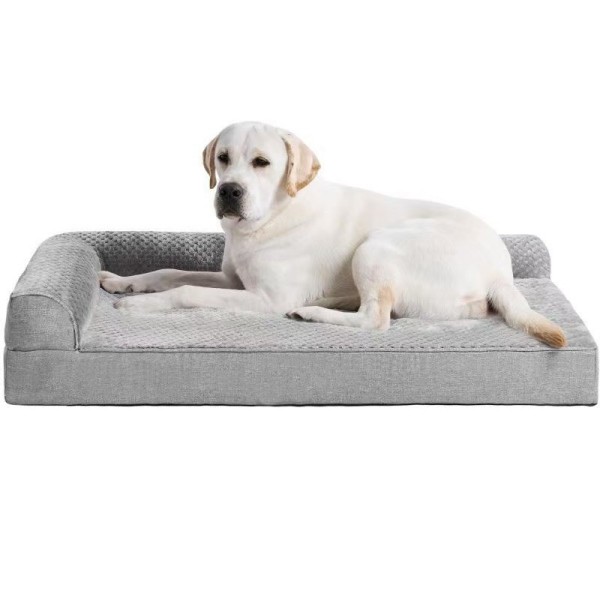
For many homes, an orthopedic bolster bed gives a strong balance of support and comfort.
The centre provides a supportive sleeping surface, while the bolsters give dogs somewhere to lean or rest their head.
An orthopedic dog bed is a practical direction when the support core is properly specified.
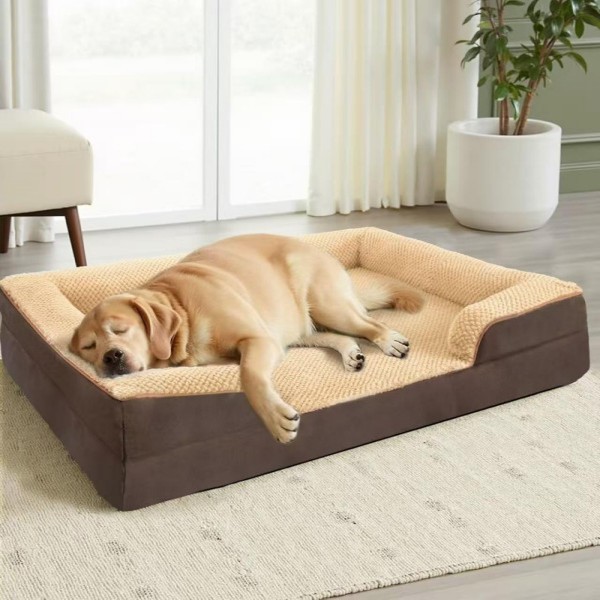
Check foam thickness, usable centre area, front-entry height, removable cover, liner protection, and floor grip.
Do not judge by outer dimensions alone. Thick bolsters can reduce the actual sleeping area significantly.
2. Best for Senior Dogs: Low-Entry Orthopedic Bed
Older dogs often need easier access more than deeper sides.
The RSPCA advises giving senior dogs a soft, cosy resting place that is easy to access.
PDSA also notes that dogs with arthritis may benefit from comfortable, supportive bedding.
For senior use, prioritise:
- low front opening
- stable support
- non-slip base
- removable cover
- protective liner
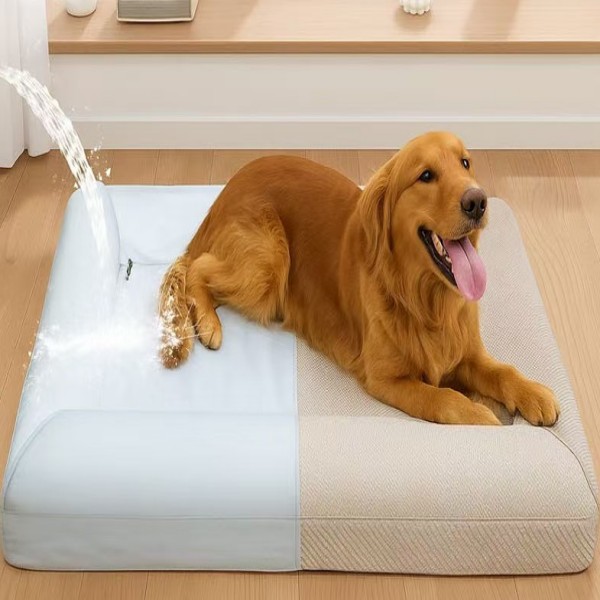
A bed can support rest and comfort, but it should not be marketed as treating arthritis or joint disease.
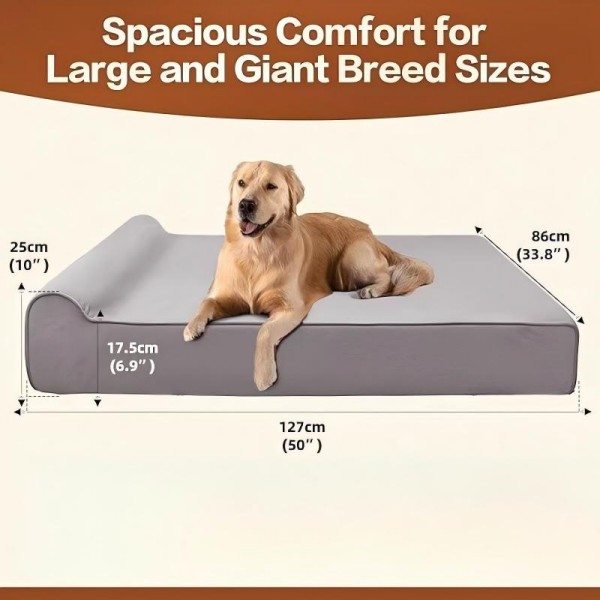
3. Best for Large Dogs: Extra-Large Orthopedic Mattress
Large dogs need more than a bigger label.
They need enough supported area to stretch out, turn, and change position without falling off the foam.
A large orthopedic dog bed should therefore be judged by usable dimensions and support depth.
For giant breeds, an extra large orthopedic dog bed needs a wider supported centre, not just larger outer dimensions.
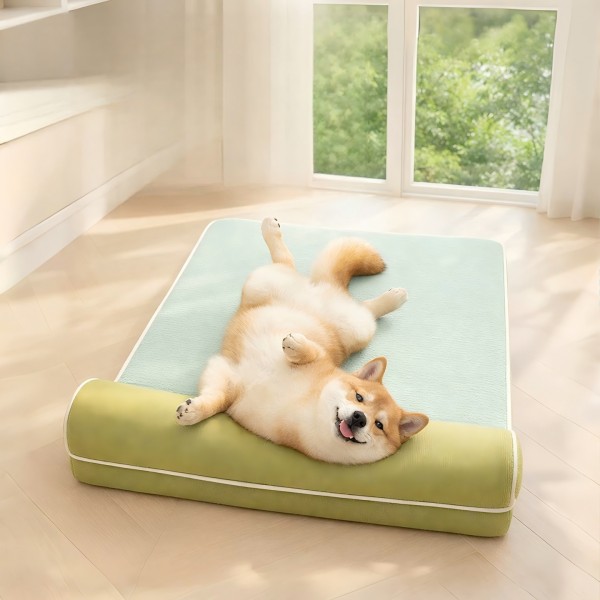
Large dogs expose thin foam and weak seams quickly.
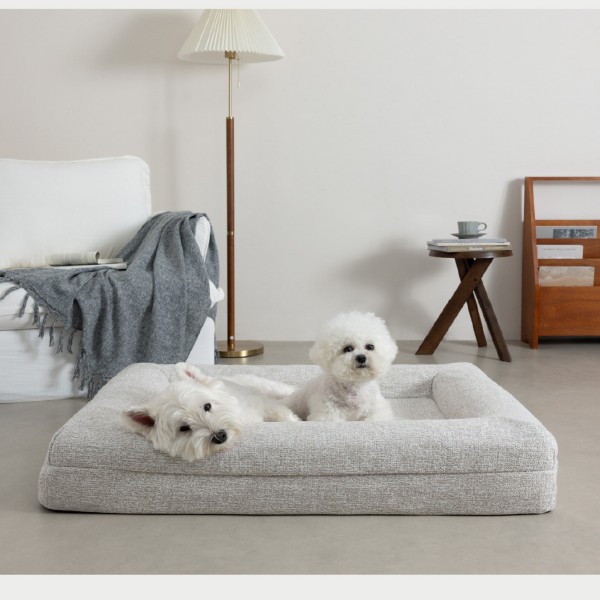
4. Best for Small Dogs: Compact Bolster Bed
Small dogs often like a contained sleeping area, but compact should not mean cramped.
The Kennel Club advises choosing a bed that is large enough for the dog to stretch out comfortably.
For smaller breeds, show:
- internal sleeping dimensions
- entry height
- bolster thickness
- cover care
A small bed should feel secure while still giving the dog room to change position.
5. Best for Crates: Flat Orthopedic Crate Mattress
A crate mattress should fit the crate floor without creating large gaps or making the usable height uncomfortable.
An orthopedic dog bed for crate works best when it combines accurate sizing, supportive foam, a removable cover, and a non-slip base.
Dogs Trust recommends providing dogs with a comfortable safe resting space.
For retailers, crate compatibility should be clearly stated rather than left for customers to guess.
6. Best for Easy Cleaning: Removable-Cover Bed With Liner
Cleaning becomes more important after the first week than it looks in product photography.
Hair, mud, saliva, and accidents make removable covers valuable.
A practical easy-clean bed should offer:
- fully removable cover
- clear washing instructions
- accessible zipper
- protective liner
- easy-clean base
A waterproof liner can protect the foam, but the whole bed should not be called waterproof unless the full construction supports that claim.
Replacement covers can also extend the useful life of the product.
7. Best for UK Summers: Cooling Orthopedic Bed
UK summers can still create uncomfortable indoor conditions.
PDSA advises providing pets with shade, airflow, fresh water, and a cool place to lie down during hot weather.
A cooling orthopedic dog bed can combine supportive structure with a cooler surface or engineered cooling layer.
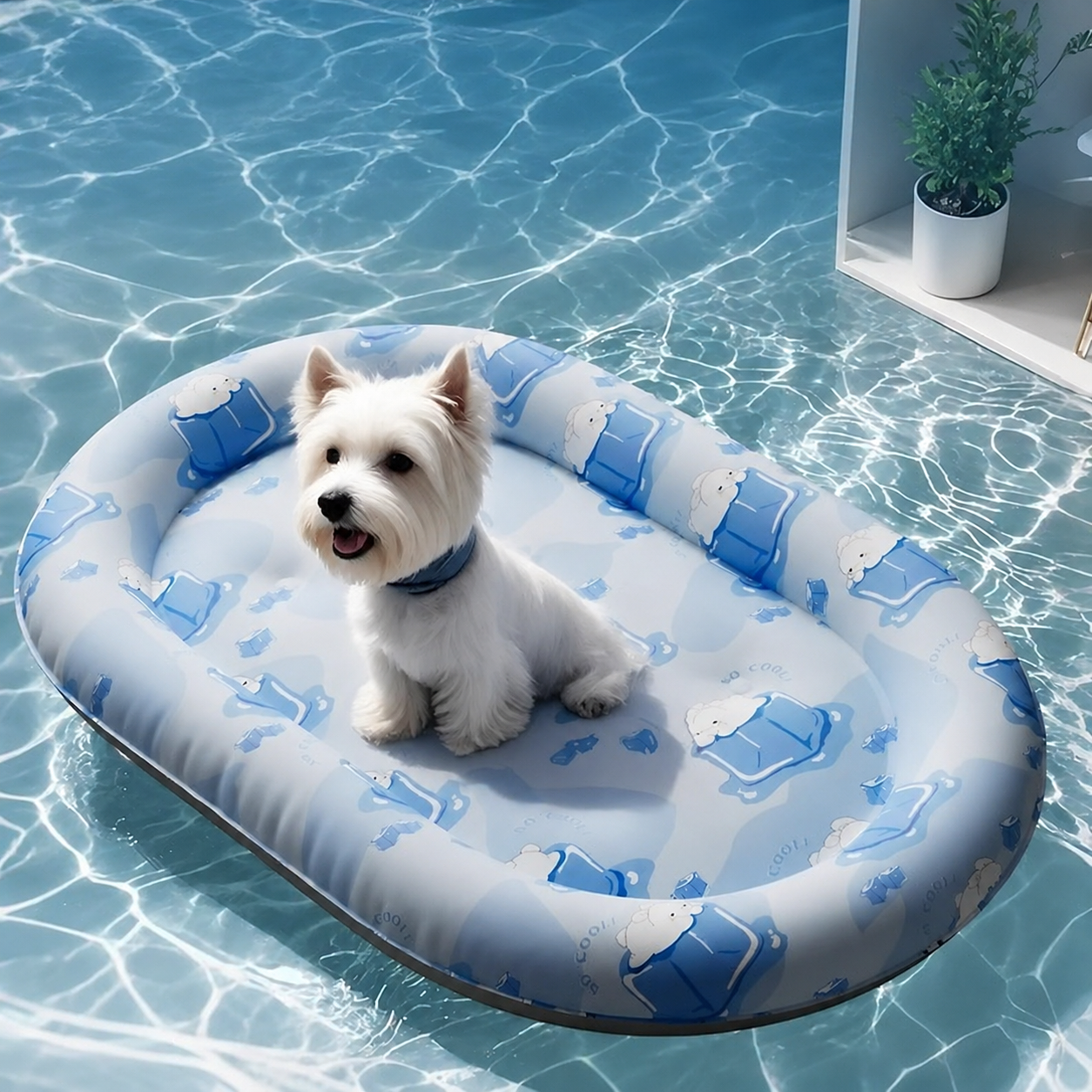
Keep cooling claims specific. Breathable fabric, mesh, cooling gel, and airflow construction are not the same thing.
A dog cooling bed can also work as a separate seasonal SKU.
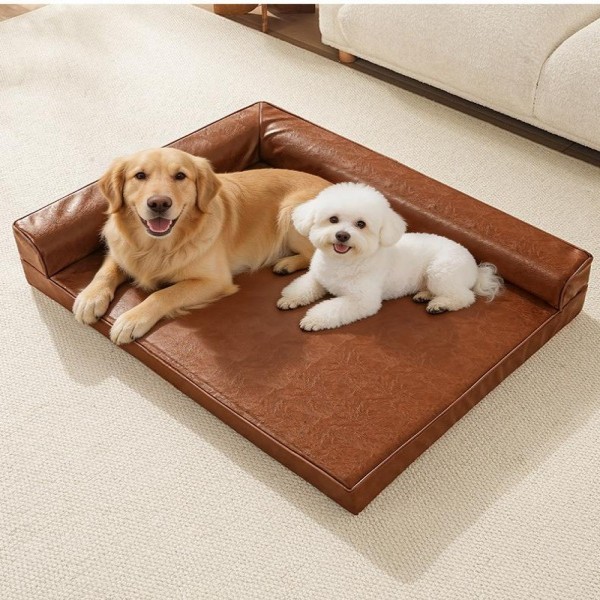
8. Best for Living Rooms: Orthopedic Dog Sofa
Some dog beds stay permanently in visible home spaces.
That makes furniture integration part of the buying decision.
An orthopedic dog sofa can combine supportive bedding with a more structured home-furniture look.
I would still prioritise usable sleeping area, stable support, easy entry, removable upholstery where practical, and floor grip.
Style should not reduce comfort.
9. Best for Puppies: Washable Practical Bed
Puppies grow quickly, may chew, and are more likely to have accidents.
That makes easy cleaning and realistic durability more important than luxury upholstery.
A puppy bed should be:
- easy to wash
- simple to replace if damaged
- appropriately sized
- free from loose parts
- comfortable without excessive height
Avoid “chew-proof” claims unless the construction genuinely supports them.
For many retailers, a practical puppy bed is a better first-stage product than an expensive permanent bed.
10. Best for Travel and Outdoor Use: Water-Resistant Portable Bed
A travel bed solves a different problem from an everyday home bed.
For camping, car travel, garden use, or short stays, portability and drying speed may matter more than thick bolsters.
The RSPCA notes that more robust, waterproof or water-resistant materials can be useful for outdoor or travel use.
A practical portable bed should be easy to carry, quick to dry, low in bulk, and large enough for normal resting posture.
This category works best as a secondary bed rather than a replacement for a supportive everyday bed.
Compare the 10 Dog Bed Types
| Bed Type | Best For | Main Buying Check |
|---|---|---|
| Orthopedic bolster | Everyday use | Support + usable centre |
| Low-entry orthopedic | Senior dogs | Access + floor grip |
| XL orthopedic mattress | Large dogs | Support depth + dimensions |
| Compact bolster | Small dogs | Internal sleeping area |
| Crate mattress | Crate use | Accurate fit + low profile |
| Easy-clean bed | Mud and accidents | Removable cover + liner |
| Cooling orthopedic | Warm weather | Real cooling structure |
| Dog sofa bed | Living rooms | Comfort + home integration |
| Puppy bed | Growing dogs | Washability |
| Portable bed | Travel/outdoor use | Water resistance + portability |
The best bed changes when the use case changes.
That is why a strong retail range needs clear differentiation instead of ten similar beds.
What UK Retailers Should Avoid
I would be cautious when:
- sizes are based only on outer dimensions
- every bed uses the same thin foam
- “orthopedic” has no structural explanation
- waterproof claims are vague
- covers cannot be removed
- senior access is ignored
- cooling claims are only marketing language
- large sizes do not scale the support core
- the product needs exaggerated health claims
The most useful range is not necessarily the largest.
It is the range where each bed solves a different resting problem.
How Archova Approaches Dog Bed Collections
Archova looks at dog beds by use scene rather than only shape.
For orthopedic beds, we focus on foam structure, usable sleeping area, entry height, cover design, liner protection, floor grip, and size planning.
For large dogs, support depth and centre dimensions matter more. For senior dogs, easier entry and stability become more important.
For warm-weather ranges, cooling functions can be added as a separate direction rather than turning every bed into a “cooling” claim.
For private-label retailers, a focused collection can start with:
- one mainstream orthopedic bolster
- one large or XL mattress
- one low-entry senior option
- one easy-clean or crate mattress
- one seasonal cooling product
That gives the range clear jobs without unnecessary SKU duplication.
FAQ
What type of dog bed is best for most dogs?
A supportive bed with enough usable space, a removable cover, stable floor contact, and an entry height suited to the dog is a strong starting point.
Are orthopedic beds only for senior dogs?
No. Adult and large dogs can also use supportive orthopedic beds. Senior dogs simply make access and support more important.
Is memory foam good for dogs?
Memory foam can provide supportive cushioning when the thickness and firmness suit the dog. It should not be treated as a medical treatment.
What is the easiest dog bed to clean?
Beds with fully removable covers and protected inner cores are usually easier to maintain than fixed upholstered beds.
Should a dog bed be waterproof?
Not every bed needs to be waterproof. A water-resistant or waterproof liner can protect the support core while keeping the outer cover comfortable.
What is best for hot UK weather?
A cooler room, airflow, shade, fresh water, and a cooler resting surface all matter. A cooling bed can be one part of that setup.
How should I choose a dog bed size?
Use the dog’s sleeping posture and the actual usable sleeping area, not just the outer dimensions.
What should retailers check when sourcing dog beds?
Check support structure, usable dimensions, entry height, cleaning, material consistency, packaging, replacement covers, and whether each SKU has a clear use case.
Conclusion
The best dog bed in the UK for 2026 depends on the dog and the home.
A senior dog may need low entry and stable support. A large dog may need deeper foam and a wider mattress. A puppy may need easy washing. A warm-weather bed may need a genuine cooling function.
For retailers, the same logic creates a stronger product range.
Choose dog beds by resting problem, body size, cleaning need, home setting, and season—not by appearance alone.
References