For many puppy homes, a playpen solves the indoor-space problem better than a crate alone.
A plastic puppy playpen can create a larger managed area for rest, toys, water, short periods of independent activity, and gradual home access. For retailers and importers, the useful question is not which pen looks best. It is which structure fits the puppy, the room, the floor, and the way the household actually uses the space.
That makes panel height, gap size, stability, door access, modularity, cleaning, and storage more important than decorative styling.
Why Plastic Playpens Work Well for Puppies
A crate is mainly a compact resting zone. A playpen gives the puppy more room to move.
A practical puppy playpen can create enough controlled space for a bed, safe toys, water, and movement without giving the puppy unrestricted access to the whole room.
A crate or playpen can support a calm safe space, but the product should not become a substitute for normal interaction, toilet breaks, exercise, and gradual access to the home.
For product planning, this gives plastic playpens a clear role: they sit between a small crate and complete free access.
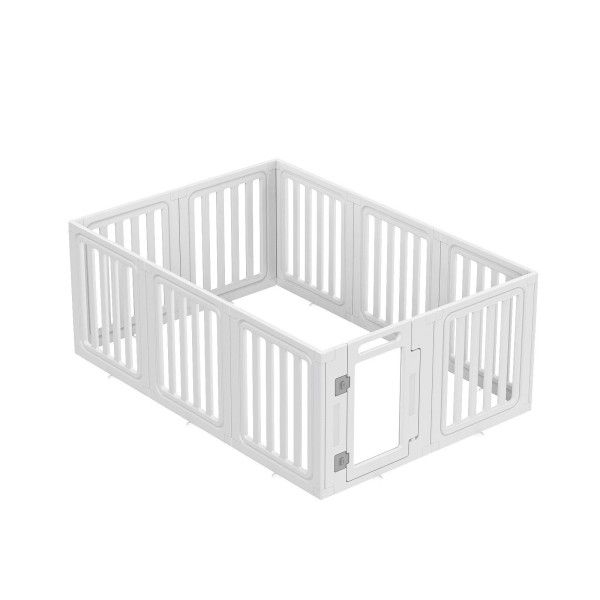
1. Best Overall: Modular Plastic Puppy Playpen
For most indoor puppy setups, modularity is the strongest feature.
A plastic modular indoor dog playpen allows the layout to change as the room, puppy, or use scene changes.
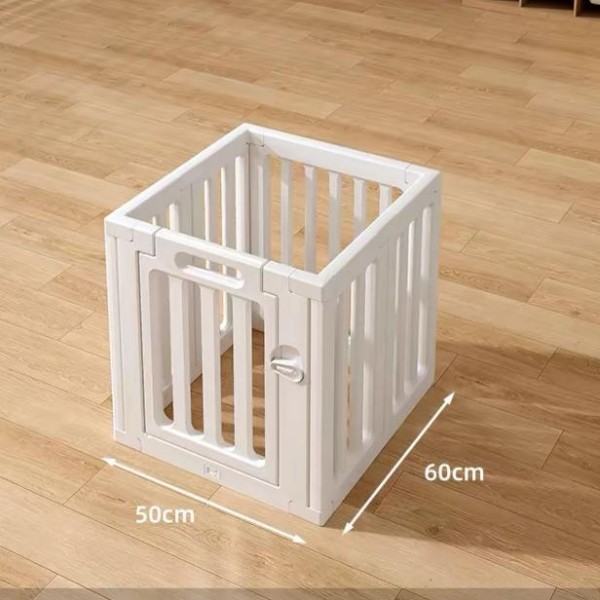
I would check:
- panel width
- panel height
- connector fit
- door-panel position
- floor contact
- expansion compatibility
- alternative layouts
For retailers, modularity creates a clearer product line because starter sets and expansion panels can be sold separately.
For pet owners, it makes the product easier to keep as the puppy grows.
2. Best for Small UK Homes: Compact Panel Layout
Small homes need containment without losing the whole room.
A compact plastic pen can work beside a sofa, kitchen wall, desk, or utility area where a large enclosure would feel intrusive.
Do not choose by panel count alone.
A six-panel pen with narrow panels may create less usable space than a four-panel pen with wider sections.
For product pages, show assembled footprint, alternative layouts, panel dimensions, door position, and folded size.
This gives pet owners a realistic idea of how the pen will fit before purchase.
3. Best for Growing Puppies: Expandable Panel System
Puppies change quickly.
A pen that works at 10 weeks may become too low or too small several months later.
A dog pen panels system lets the owner enlarge the enclosure without replacing the whole product.
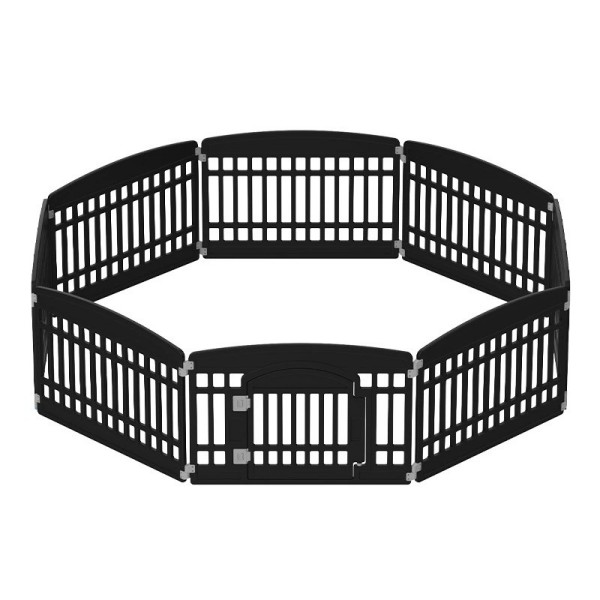
For B2B selection, verify that expansion panels remain compatible across repeat orders.
Connector geometry, panel thickness, colour, door design, and floor fittings should not change casually.
If a modular system loses compatibility after one production run, the strongest reason to buy it disappears.
4. Best for Easy Cleaning: Smooth Plastic Panel Pen
Puppy products need to tolerate regular wiping.
A plastic dog pen indoor should be easy to access from inside and around the base.
Puppy toilet training still depends on regular opportunities, supervision, and routine; indoor confinement does not replace that process.
For product development, I would check:
- whether the bottom edge traps dirt
- whether connectors remove easily
- whether the door opens wide enough
- whether textured surfaces hold hair
- whether feet or pads can be replaced
The easier the pen is to clean, the more likely it remains useful after the first few weeks.
5. Best for Modern Interiors: Clear Plastic Dog Playpen
Some pet owners want a playpen without the visual weight of solid panels.
A clear plastic dog playpen can create a lighter look in living rooms while keeping a defined boundary.
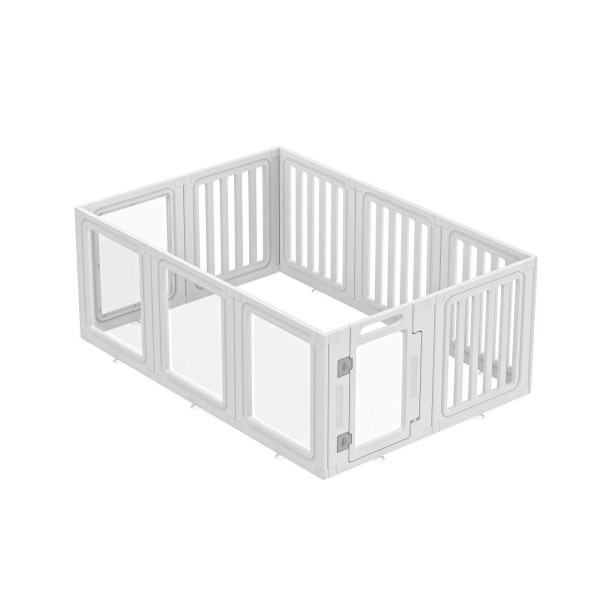
For this direction, check:
- scratch visibility
- panel thickness
- edge finish
- connector strength
- transparency after cleaning
- reflections in bright rooms
Clear panels are not automatically better. Their value comes from home integration, so scratches and clouding become more visible.
6. Best for Simple Retail Setup: 8-Panel Plastic Dog Pen
An 8 panel plastic dog pen gives retailers an easy-to-understand standard configuration.
Eight panels can support square, rectangular, or other practical layouts depending on connector design.
For pet owners, the benefit is simpler setup.
For importers, I would check whether the kit includes:
- one door panel
- complete connectors
- floor feet or pads
- assembly instructions
- spare small parts
- expansion compatibility
A complete starter kit reduces support questions after sale.
Panel Height Matters More Than Puppy Age
A small puppy does not always need a low pen.
Jumping ability, climbing behaviour, body proportions, and growth all matter.
I would compare:
- current shoulder height
- likely adult size
- jumping behaviour
- panel construction
- horizontal footholds
- nearby furniture
For product lines, offering two useful height directions can be more valuable than offering many cosmetic variations.
Gap Size Needs Puppy-Level Thinking
Puppies investigate products with their mouths and paws.
That makes panel gaps, connector openings, exposed edges, and door clearances more important than they appear in photographs.
When selecting a pen, check whether small heads, paws, collars, or jaws could enter unintended openings.
The same sizing logic applies across puppy equipment: growth and adult dimensions should influence product choice.
Simpler plastic panel geometry often makes these checks easier.
Stability Is the Main Structural Test
A puppy playpen should not slide across the room every time the puppy leans on it.
I would test:
- connector movement
- panel flex
- door-panel rigidity
- base width
- anti-slip feet
- hard-floor stability
- different layouts
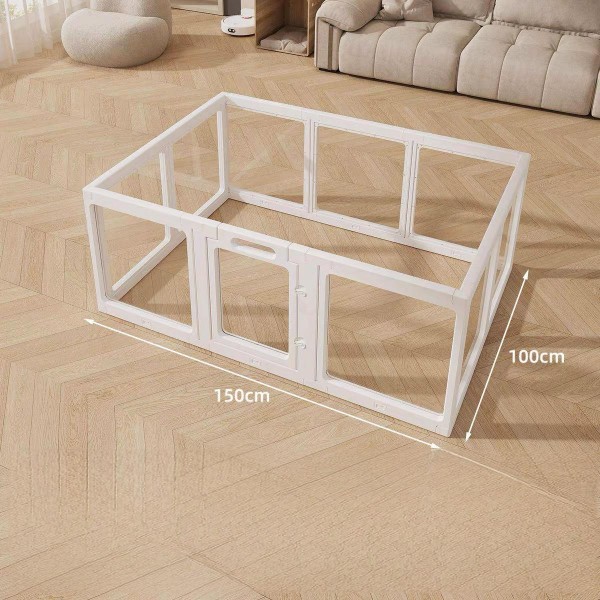
Tile, laminate, and other hard floors are common in kitchens and living rooms, so floor contact matters.
This is where practical sample testing matters more than catalogue claims.
Door Design Changes Daily Convenience
Pet owners may open the playpen dozens of times per day.
The door deserves more attention than it usually gets.
Check:
- step-over height
- latch position
- one-handed operation
- closing noise
- door swing
- puppy access to the latch
- usable doorway width
The best door balances easy access with panel stability.
Crate + Playpen Is Often the Better Puppy Setup
A crate and plastic playpen can solve different parts of the same home problem.
A crate can provide a smaller resting place. The playpen creates a larger managed area around it.
A practical arrangement can be:
open crate → puppy bed → water → safe toys → playpen boundary
This gives the household more control without expecting the puppy to spend all managed time in a crate.
For retailers, pairing these products also creates a clearer customer journey.
A Practical UK Puppy Playpen Comparison
| Product Direction | Best Fit | What I Would Check |
|---|---|---|
| Modular plastic playpen | Most puppy homes | Stability + expansion |
| Compact panel pen | Small homes | Usable footprint |
| Expansion panel system | Growing puppies | Long-term compatibility |
| Smooth plastic pen | Easy cleaning | Base and connector access |
| Clear plastic playpen | Modern interiors | Scratch resistance |
| 8-panel starter set | Simple retail choice | Complete hardware |
The best product depends on the home problem.
That is more useful than ranking pens by appearance.
What UK Retailers Should Avoid
I would be cautious when:
- panel height has no growth logic
- gaps are poorly controlled
- the pen slides on hard flooring
- connectors loosen after reconfiguration
- the door is awkward
- expansion panels are not reliably compatible
- clear panels scratch too easily
- cleaning around the base is difficult
- the product relies on “escape-proof” claims without evidence
The category works best when the structure is simple, repeatable, and easy to understand.
How Archova Approaches Plastic Puppy Playpens
At Archova, we look at plastic dog playpens as modular indoor-space systems rather than temporary puppy cages.
For product development, we focus on:
- panel size and height
- gap control
- connector stability
- door structure
- anti-slip floor contact
- expansion logic
- cleaning access
- colour and transparency
- hardware packing
- carton efficiency
A practical private-label range can start with one core panel system and create several retail directions through panel count, height, door configuration, colour, and clear or opaque sections.
That keeps compatibility under better control while giving retailers meaningful SKU differences.
FAQ
Is a plastic puppy playpen better than a crate?
They serve different jobs. A playpen gives more movement space, while a crate creates a smaller resting area. Many puppy homes benefit from using both.
How tall should a puppy playpen be?
Choose height based on current size, likely adult size, jumping ability, and climbing behaviour rather than age alone.
Are plastic playpens good for indoor use?
Yes, especially when panels are stable, easy to clean, and fitted with appropriate floor contact for hard surfaces.
Are clear plastic puppy pens practical?
They can work well in modern interiors, but scratch visibility, clouding, edge finish, and rigidity should be checked carefully.
How many panels should I choose?
Choose by usable floor area, not panel count alone.
Can I expand a plastic dog playpen later?
A true modular system should allow compatible expansion. Retailers should verify connector and panel consistency across repeat orders.
What should retailers inspect before buying in bulk?
Check panel dimensions, gaps, connectors, door operation, stability, anti-slip performance, finish, packaging, and expansion compatibility.
How can Archova support plastic playpen projects?
Archova can support panel systems, sizes, heights, door configurations, clear or opaque sections, colours, packaging, expansion sets, and private-label assortment planning.
Conclusion
The best puppy playpen in the UK for 2026 is not the one with the most panels.
It is the one that creates enough usable space, stays stable on the floor, grows with the puppy, remains easy to clean, and fits naturally into the home.
For retailers, plastic playpens become stronger when the range is built around space, height, modularity, cleaning, and expansion rather than cosmetic variation.
That creates value on both sides: pet owners get a more practical puppy setup, while retailers get a clearer and more scalable product line.
References