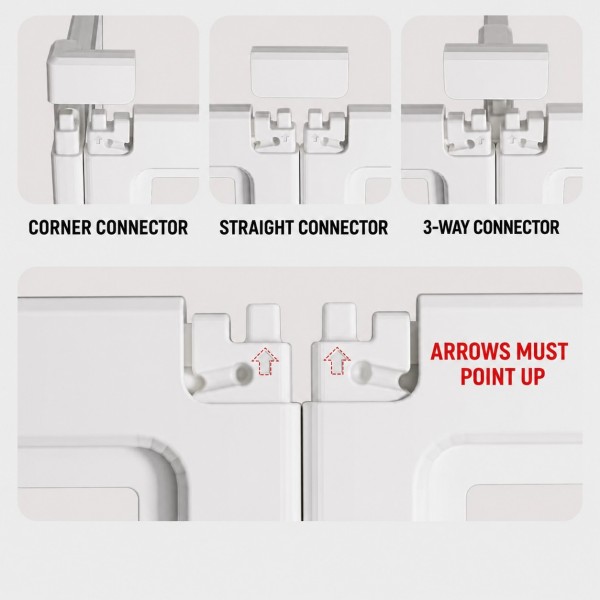
A dog playpen does not fail because it has “bad panels.” Most problems start in quieter places: the joints, the base, the door, or the small parts bag.
If you buy this category only by panel size and price, you may miss the part that later creates returns.
The First Thing I Check Is Not the Panel
When I review a modular dog playpen, I usually ignore the product photo for the first minute. I want to know what happens after the box is opened.
Can two panels connect without a fight? Does the first corner stand straight? Do the connectors feel firm, or do they already feel tired?
This sounds small, but it is not small in business. A shaky first setup makes the whole product feel cheap, even before a dog uses it.
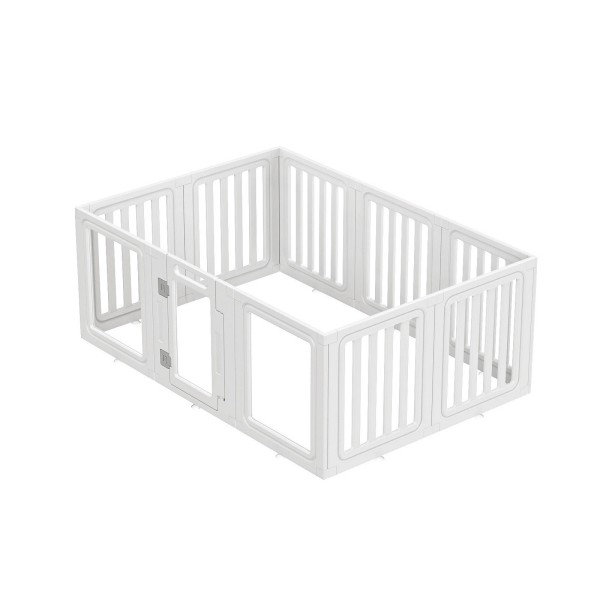
For Archova, structure starts from this first touch. A modular dog playpen should feel understandable before it tries to look premium. It also needs to support a safe retreat, gradual introduction, and the dog’s real behavior rather than force confinement.
The Base Is Where Many Buyers Get Surprised
Here is the part many buyers miss. A dog playpen can have strong panels and still move across the floor.
Smooth tile, wood, vinyl, and laminate flooring can turn a light modular dog playpen into a sliding object. Pet owners do not experience that as “lightweight convenience.” They experience that as stress.
That is why I check the base early. Anti-slip feet, suction cups, floor protectors, or a matching mat can change the whole product experience.
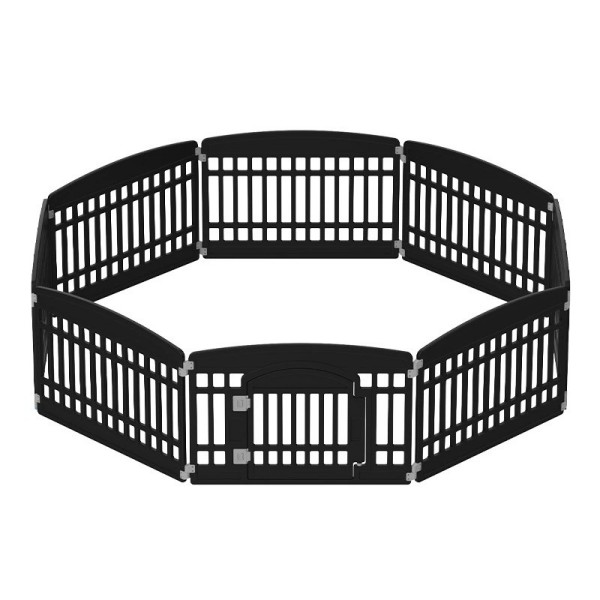
For outdoor layouts, ground stakes may help. Indoors, ground stakes mean nothing, and that is exactly why product positioning must be honest.
A good dog playpen structure does not just stand. The connected panel layout stays where people expect it to stay.
Connectors Are Not Spare Parts. They Are the Product.
A modular dog playpen lives or dies by its connectors. I know that sounds dramatic, but it is true.
If the connector is loose, the layout shakes. If the connector is hard to align, setup becomes annoying. If one connector is missing, the full dog playpen may be unusable.
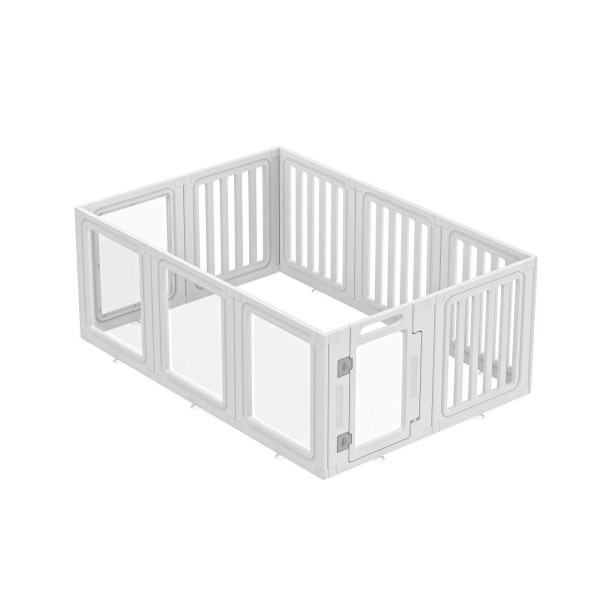
This is why I treat connector design as a margin issue. It affects setup time, support messages, replacement parts, and repeat orders.
Metal panels often use rods or hinges. Plastic, composite, and acrylic-style panels may use clips, slots, corner caps, or suction bases.
None of these systems is automatically better. The real question is whether the connector matches the material and the expected layout.
The Door Panel Shows the Real Product Level
A weak latch, sticking door, or repeated misalignment quickly makes the whole system feel cheap.
I test the door several times because feeding, cleaning, bedding, and daily access put repeated stress on the same hardware.
Panel Height Is Not a Magic Answer
Many buyers ask for taller panels because taller sounds safer. I understand that instinct.
But height without stability can create a new problem. A taller panel gives a dog more leverage when pushing against the connected layout.
A 36-inch dog playpen with stable connectors may perform better than a 48-inch dog playpen with weak corners. That is the kind of thing you only notice when you stop buying by numbers alone.
Panel height should match dog behavior, not only dog size. Jumping, pushing, climbing, chewing, and supervision all matter.
Archova reviews height with connector strength, base contact, and layout type together. That gives buyers a more realistic product decision.
Gap Spacing Matters Most for Small Dogs and Puppies
Gap spacing is easy to overlook in a catalog. In real life, small dogs notice gaps faster than adults do.
A paw can slip through. A nose can push into a lower opening. A puppy can find the weakest point near the floor.
For metal panels, bar spacing deserves careful review. For plastic or composite panels, connector gaps and bottom clearance deserve attention.
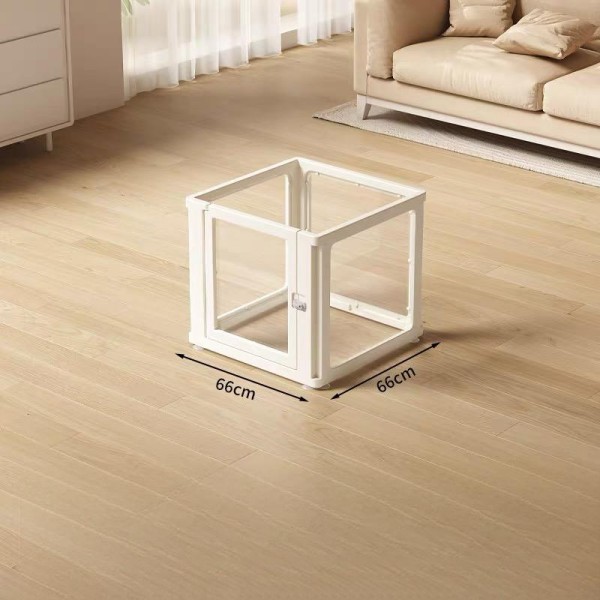
For transparent panels, corner gaps can be the hidden issue. A clean look should not hide a poor safety detail.
I would rather lose one overly risky design than sell a product that creates avoidable worry.
Cleaning Starts With Structure
Cleaning begins with shape, not just material. Deep grooves, rough lower edges, and complex connector pockets can hold hair, dirt, and odor.
An easy-clean claim is more believable when smooth panels, accessible joints, and compatible mats work together.
Packaging Is the First Structure Test
A modular dog playpen may have panels, rods, clips, suction cups, caps, door hardware, and add-on parts. That is a lot of small failure points.
One missing connector can stop the whole dog playpen from being assembled. One bent rod can make the layout feel wrong.
This is why I do not leave packaging to the last step. The packaging is the first structure test, before the product reaches the floor.
Good packaging separates panels, protects corners, labels connector bags, and gives spare parts where needed.
For private label buyers, this also protects brand trust. A nice logo cannot fix a box that opens into confusion.
Different Materials Need Different Structure Logic
Metal, plastic, composite, acrylic-style, and woven panels should not share one structure rule.
Metal emphasizes strength and visibility. Plastic and composite need good connector stiffness and base support. Acrylic-style panels need honest scratch expectations and strong corners. Woven details are better for home-style positioning than heavy containment.
A Better Structure Framework
I do not like long inspection sheets that nobody uses. For dog playpen structure, this shorter framework works better.
| Structure Area | My First Question | Why It Matters |
|---|---|---|
| Panel body | Does it bend, gap, or feel flimsy? | Pet safety and perceived value |
| Connector system | Can panels join without frustration? | Setup, reviews, support cost |
| Door panel | Does the latch still align after repeated use? | Daily trust |
| Base support | Does the layout slide on common floors? | Floor protection and stability |
| Small parts | Are connectors packed clearly? | Fewer missing-part claims |
| Expansion | Can add-on panels match the first set? | Repeat sales and line growth |
This is not about making the article look technical. This is the minimum structure thinking I would want before placing an order.
Structure Can Create a Product Line, Not Just One SKU
A weak dog playpen structure sells once, then creates service work.
A strong modular structure can grow. Add-on panels, spare connectors, door panels, floor mats, suction bases, and ground stakes can all become part of the offer.
That is where the category becomes more interesting. The buyer is no longer selling a box of panels. The buyer is selling a flexible pet space system.
For a home-focused line, you may choose clean panels, soft colors, anti-slip support, and matching mats.
For a service-space line, you may focus on stronger connectors, easy cleaning, spare parts, and quick setup.
Archova’s role is to help buyers make that product-line decision early. Finished product line selection and practical private label should support the structure, not cover for weak structure.
What I Would Avoid
I would avoid any dog playpen system where the structure depends too much on the photo.
If the product has no clear base support, be careful. If the connector system looks different in every picture, be careful.
If add-on panels are not compatible with the first set, be careful. That mistake can kill repeat buying.
If the product claims indoor and outdoor use without explaining floor support or ground support, I would slow down.
Flexibility is valuable only when the connected panel layout stays stable. Otherwise, flexibility becomes frustration.
Where Archova Fits In
Archova works in modern pet living spaces, so dog playpen structure cannot be treated as hardware only.
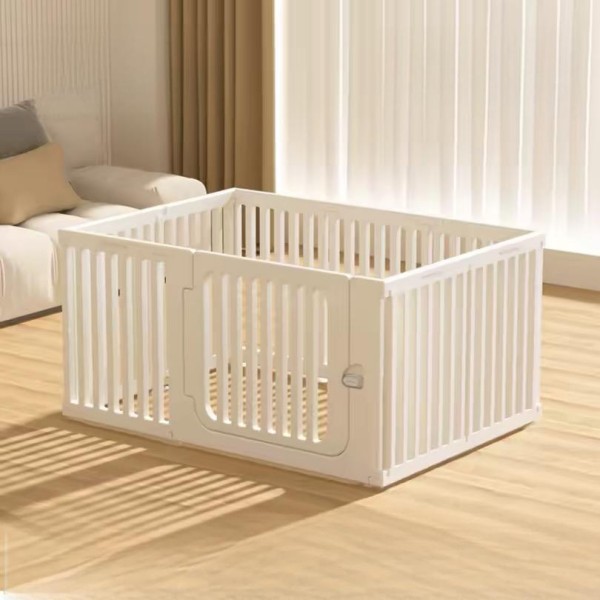
We look at how the connected panel layout will sit in a room, how pet owners will clean it, how the door panel will be used, and how small parts will arrive.
For indoor home products, smooth edges, floor protection, easy setup, and clean appearance matter more.
For stronger use scenes, connector strength, latch stability, material choice, and ground support move up the list.
For private label projects, I would usually start with practical changes first: color, packaging, part labels, instruction design, add-on panels, and accessory bundles.
That keeps the first order focused. It also gives your market enough difference without turning one test order into a complicated development project.
When a Dog Playpen Structure Is Worth Adding
A dog playpen structure is worth adding when the connected layout is easy to assemble, stable after setup, safe for pets, and simple to explain.
If the product only looks good in a room photo, that is not enough. Photos do not answer support emails. Product structure does.
The best modular dog playpen systems give buyers a clean first experience, reduce missing-part risk, and leave room for add-on sales.
That is the kind of structure worth building around. Not because it is flashy, but because it works after the box is opened.
FAQ
What is the most important part of dog playpen structure?
Connectors, base support, and door quality usually tell you more than panel size alone.
Why does a dog playpen slide?
Smooth floors, lightweight panels, weak base support, or an open layout can all contribute.
Are taller panels always safer?
No. Height helps only when the base and connectors are strong enough for the dog’s behavior.
What material is best?
There is no single best material. The right choice depends on behavior, room scene, cleaning, and market position.
What should buyers check before ordering?
Panel stiffness, gaps, connector fit, door latch, base support, small-part packing, and add-on compatibility.
Can a modular system support repeat sales?
Yes. Add-on panels, spare connectors, mats, door panels, and compatible accessories can extend the line.
Conclusion
Dog playpen structure is a system problem, not a panel problem. Connectors, base contact, door hardware, gaps, cleaning access, small parts, and packaging all affect how the product feels after the box is opened.
For your range, choose the use scene first and make every structural detail support that promise.
References