To be honest, cats make this comparison very real.
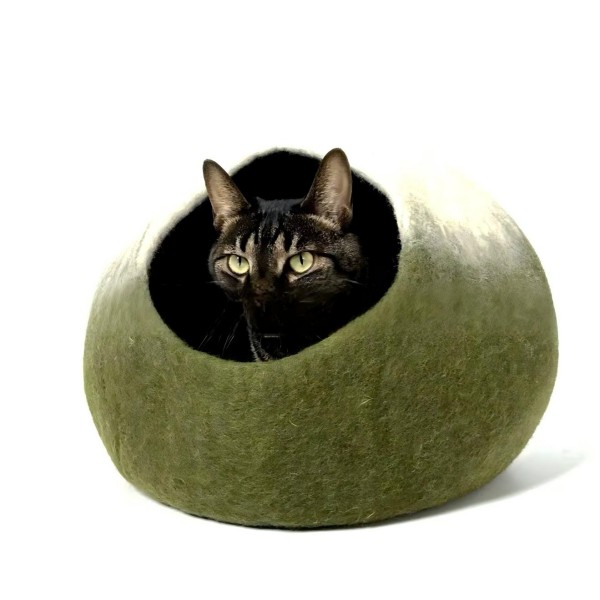
You can prepare a beautiful felt cat cave, and the cat may still jump into the cardboard box beside it. That does not mean the felt cave is wrong. It means cardboard touches a very basic cat habit: hiding, scratching, biting, and claiming a small space.
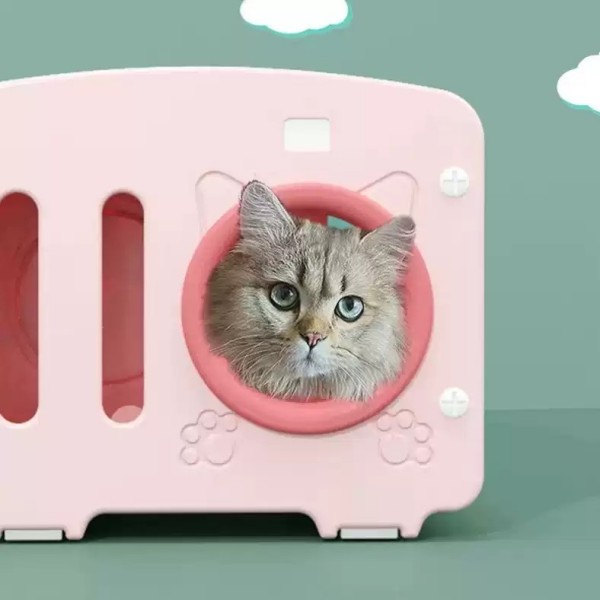
But a cardboard cat house and a felt cat cave should not be treated as the same product. One is closer to a play-and-scratch hideaway. The other is closer to a warm resting bed.
Cardboard Gets Attention Fast
Cardboard has a behavior advantage. Many cats already use cardboard as both a hiding material and a scratching surface.
It feels familiar. It has texture. It makes a little sound when scratched. The cat can bite the edge, rub against it, hide inside it, or destroy it without thinking too much.
This is why cardboard cat houses often work quickly. They do not need much explanation at home. The cat sees a box-like space and investigates.
For active cats, kittens, and cats that love scratching, cardboard can be very useful. It gives them something to use, damage, and claim.
Felt Works More Quietly
A felt cat cave does not always win the first five minutes. It wins when the cat wants a calm, warm, private place to rest.
That is a different value.
A good felt cave gives the cat a soft enclosed space. It reduces visual exposure and holds warmth better than an open cardboard structure. It also looks more settled in a living room, bedroom, or apartment cat corner.
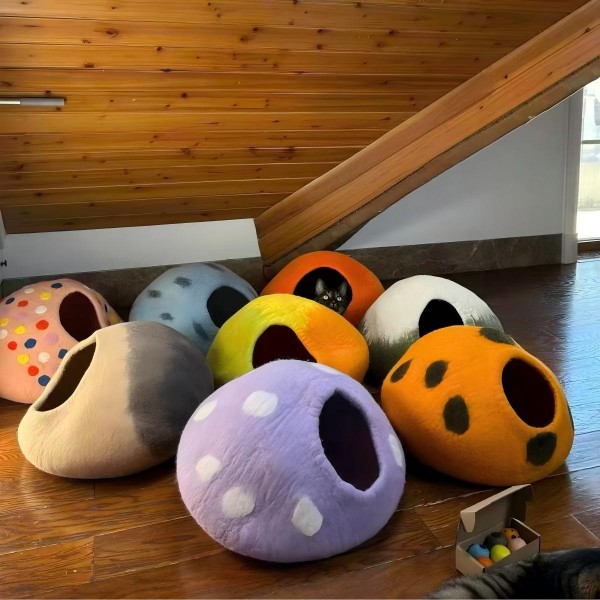
I would choose felt when you want the product to feel like a real cat bed, not just a temporary play object.
Do Not Force These Two Products Into One Role
This is where many product ranges get confused.
A cardboard cat house is not mainly a cozy bed. It may become a nap spot, but its stronger value is play, scratching, hiding, and low-pressure fun.
A felt cat cave is not mainly a scratcher. It may survive some kneading, but its stronger value is comfort, privacy, warmth, and daily resting.
If you expect cardboard to behave like long-term furniture, you may be disappointed. If you expect felt to behave like a scratch toy, you are asking the wrong thing from the material.
The Cat’s Habit Should Decide First
I would start with the cat.
If the cat loves boxes, paper bags, tunnels, and scratchers, a cardboard cat house has a high chance of quick interest. It gives the cat something to explore and attack.
If the cat hides under chairs, curls inside laundry baskets, or sleeps in quiet corners, a felt cave may fit better. That cat is not just playing. It is looking for cover.
For homes with more than one cat, I would be careful with any single-entry hideaway because each cat benefits from access to its own safe resting options. One cat can block the entrance and make another cat feel trapped. A good hideaway should feel safe, not like a corner with no escape.
Cardboard Is Meant to Be Used Up
Cardboard does not need to last forever to have value.
Sometimes the destruction is the point. A cat scratches it, chews it, tears the edge, and makes it its own. For some pet owners, that is exactly why they buy it.
But cardboard also has clear limits. It can shed pieces, absorb moisture, hold odor, bend out of shape, and look messy after heavy use.
I would not position cardboard as a premium long-term sleeping product. I would position it as a replaceable enrichment item.
Felt Should Feel More Finished
A felt cat cave has to earn its higher-quality feeling.
The entrance should stay open. The body should not collapse too easily. The inner space should allow the cat to enter, turn, curl, and leave comfortably.
The felt should not have a strong smell. The edge should feel clean. The cave should recover after shipping and not arrive looking crushed.
This is where felt products succeed or fail. A felt cave is simple in appearance, but the shape control matters a lot.
Home Style Is a Real Difference
Cardboard can be fun, but it usually looks temporary.
That can work for seasonal designs, playful cat corners, kitten zones, or scratcher collections. A printed cardboard house can even become a cute short-term display item.
Felt looks calmer. It fits modern homes better, especially when the color is neutral and the shape is clean.
If your audience cares about home appearance, felt caves have stronger furniture value. If your audience wants low-cost cat fun, cardboard houses can move faster.
Cleaning Is Where the Difference Becomes Obvious
Cardboard is easy until it gets dirty.
Once it absorbs moisture, vomit, odor, or heavy dirt, you usually replace it. That is not a weakness if the product is positioned correctly.
Felt lasts longer, but it asks for more careful care. It may need vacuuming, spot cleaning, reshaping, and proper drying. It should not be treated like a washable plush cushion unless the structure is designed for that.
So I would not say felt is always easier. Felt is more lasting. Cardboard is more replaceable.
A Practical Comparison
| What You Need | Better Choice |
|---|---|
| Fast cat interest | Cardboard cat house |
| Scratching and play | Cardboard cat house |
| Lower-risk trial item | Cardboard cat house |
| Warmer resting space | Felt cat cave |
| Better home appearance | Felt cat cave |
| Longer-term bed value | Felt cat cave |
| Seasonal or novelty design | Cardboard cat house |
| Modern cat comfort range | Felt cat cave |
I would not use this as a strict rule. I would use it to avoid mixing up two very different product roles.
My Product View
If your product range is mainly about cat play and enrichment, cardboard makes sense. It is easy to understand, easy to replace, and close to what cats naturally like.
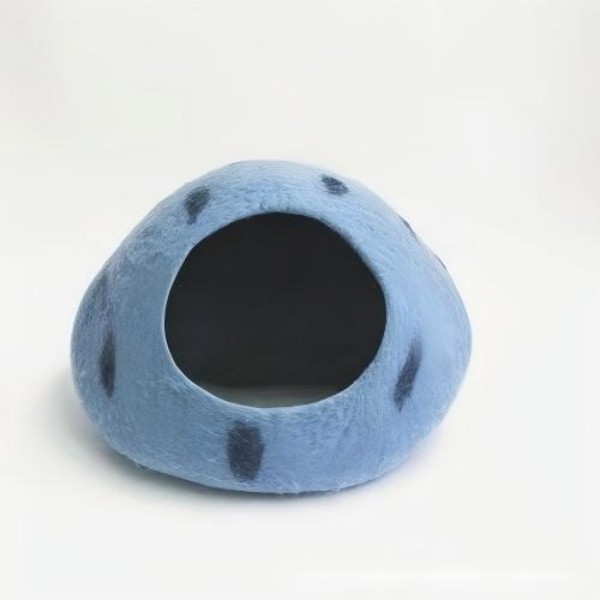
If your product range is about cat comfort and home furniture, felt makes more sense. It gives warmth, shape, privacy, and a cleaner room presence.
The stronger approach is not choosing one and rejecting the other. The stronger approach is giving each one a clear job.
Cardboard can be the fun, scratchable, temporary hideaway. Felt can be the calm, warm, long-term resting cave.
How Archova Would Look at This Category
For Archova, I would not treat these two products as duplicates.
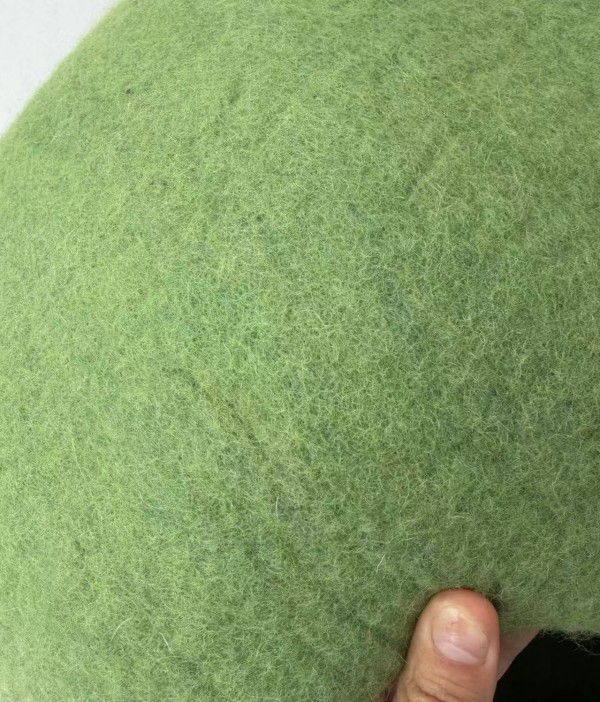
For felt cat caves, we would look at felt thickness, entrance size, shape recovery, inner space, edge finishing, odor control, and packaging compression. The cave has to arrive with form and stay useful after the first few days.
For cardboard cat houses, the product questions are different. We would look at corrugated strength, folding structure, scratch surface, print direction, replaceability, and whether the design is meant for play, hiding, or scratching.
The first selection should stay simple. One cozy felt cave for rest. One cardboard house for play and scratching. That is easier for pet owners to understand and easier for the product range to grow.
When to Choose Felt
Choose felt when you want a cat product that feels warmer, quieter, and more home-friendly.
It works well for apartment cats, colder rooms, shy cats, minimalist interiors, and pet owners who want something nicer than a box on the floor.
I would be careful with felt if the cat is a heavy scratcher or if the product cannot keep its shape after shipping.
When to Choose Cardboard
Choose cardboard when you want quick engagement, scratching value, lower price pressure, and a product that cats can destroy without ruining the whole experience.
It works well for kittens, active cats, seasonal designs, play corners, and enrichment collections.
I would be careful with cardboard if your audience expects a long-lasting bed or a clean furniture look.
Conclusion
A cardboard cat house may win curiosity faster.
A felt cat cave usually wins as a more finished resting product.
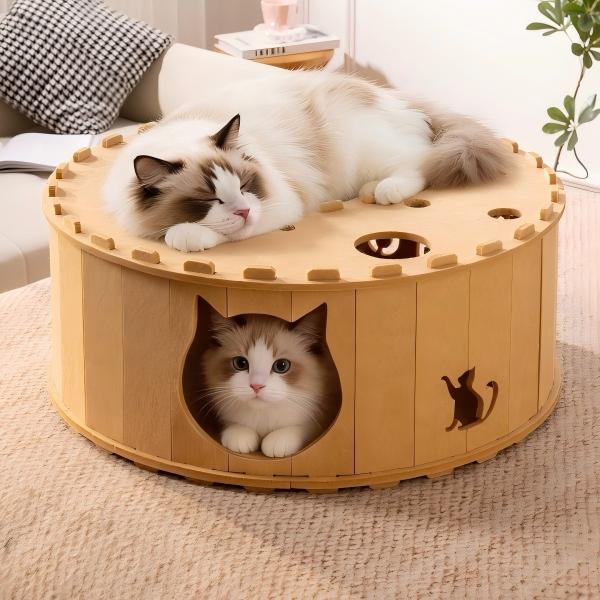
They both have value, but they should not be sold as the same answer. Cardboard is for play, scratching, and temporary hiding. Felt is for warmth, privacy, and long-term comfort.
If your range can include both, give them different jobs. That is how the category becomes clearer and more useful.
FAQ
Is a felt cat cave better than a cardboard cat house?
Felt is stronger for warmth, privacy, and longer-term resting. Cardboard is stronger for quick engagement, scratching, and replaceable enrichment.
Why do cats like cardboard houses?
Cardboard combines texture, hiding space, and a surface many cats are willing to scratch.
Are cardboard houses good for sleeping?
They can become nap spots, but their stronger role is usually play, scratching, and temporary hiding.
Are felt cat caves worth it?
They can be when the cat likes enclosed resting spaces and the cave has a stable shape and practical entrance.
Which is easier to clean?
Cardboard is normally replaced when badly soiled. Felt lasts longer but needs vacuuming, spot cleaning, and shape care.
Should a range include both?
Yes, if they have clearly different jobs: cardboard for play and scratching, felt for calmer long-term resting.
References