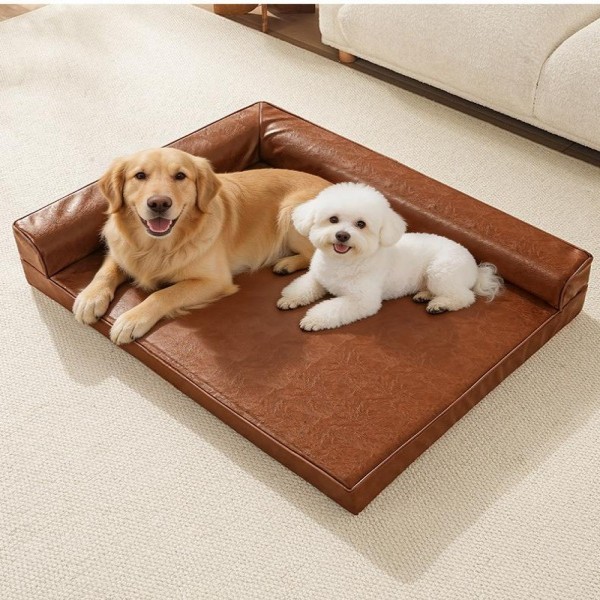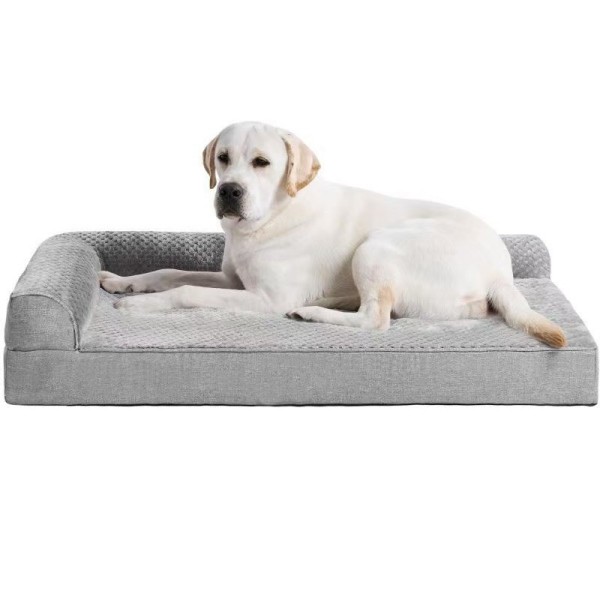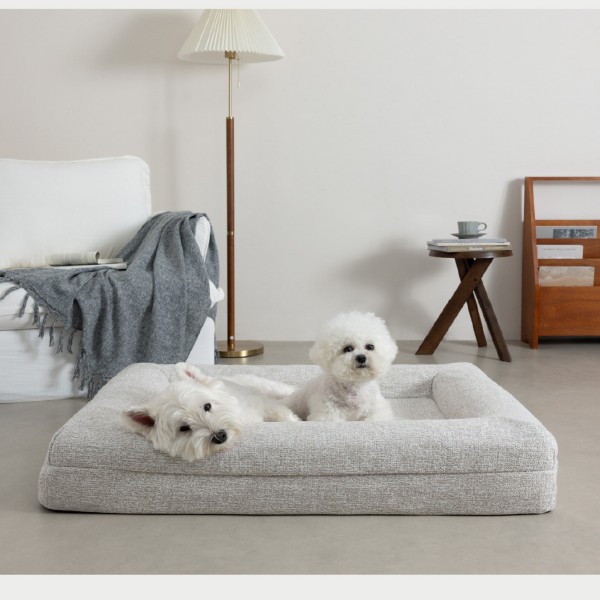
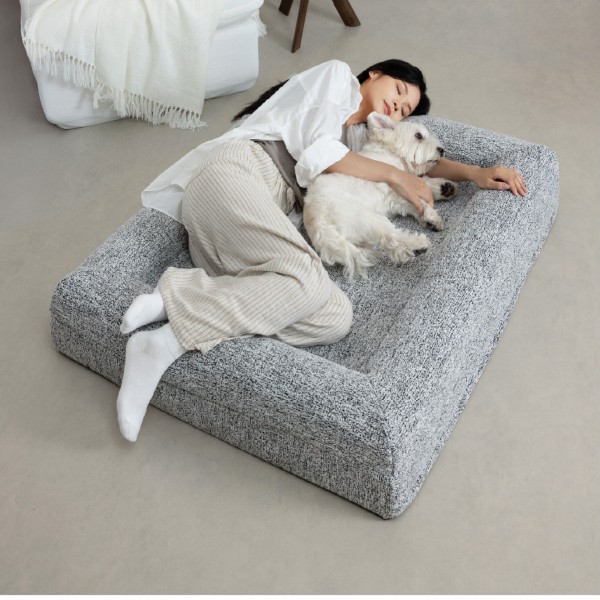
A durable dog crate pad should do more than survive a few washes.
It should fit the crate correctly, stay flat, provide enough cushioning, resist normal digging and nesting, protect the support core, and remain easy to clean.
That is also why “durable” should not be confused with “chew-proof.” A dog that actively tears bedding can still damage tough materials, and exposed foam or fabric pieces can become an ingestion risk.
For retailers and importers, the best crate pad is the one that balances comfort, fit, cleaning, safety, and repeat-use durability.
Start With the Fit
A crate pad is useful only when it fits the usable floor area.
A dog crate should give the dog enough room to stand, turn, lie down, and stretch comfortably. Crate sizing should be based on usable internal space, not on the outside furniture dimensions.
The pad should fit without:
- curling up the sides
- blocking the door
- bunching under the dog
- leaving large exposed gaps
- forcing the dog partly onto the tray
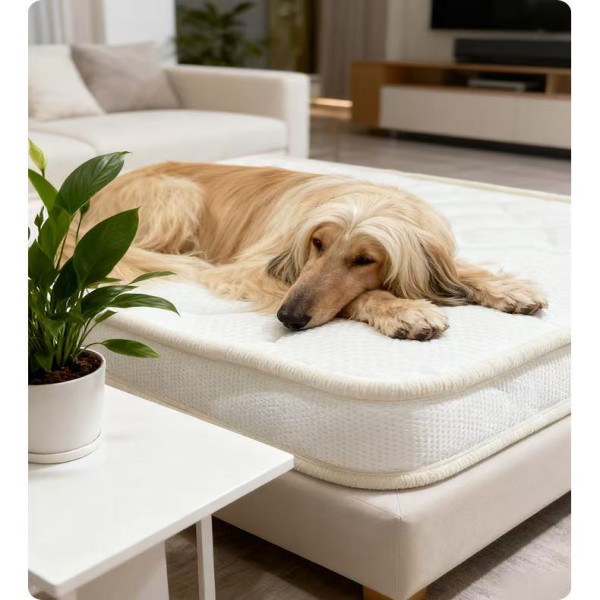
For B2B product pages, show pad dimensions and compatible internal crate dimensions separately.
A “36-inch pad” will not automatically fit every 36-inch crate because tray and frame dimensions vary.
Low Profile Is Often Better Than a Thick Bed
A crate pad has a different job from a large living-room bed.
Too much thickness can reduce headroom and make the crate feel tighter.
A practical orthopedic dog bed for crate should provide cushioning without turning the crate into a deep sofa.
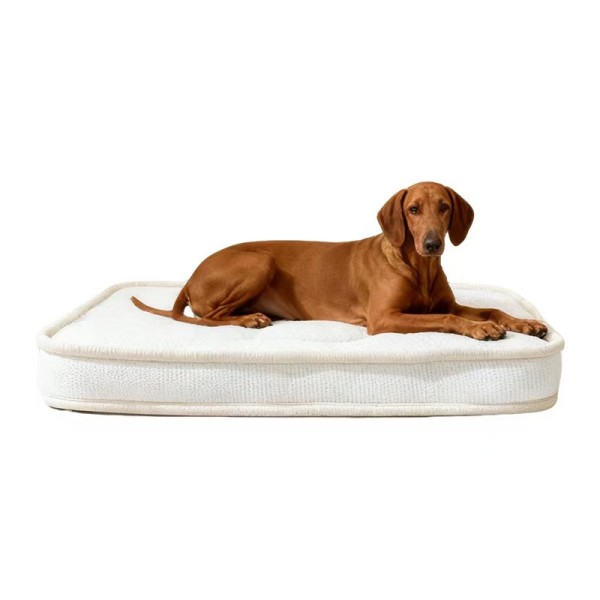
I would judge thickness together with:
- dog body weight
- foam firmness
- crate height
- floor hardness
- sleeping style
- age and mobility
The useful question is not “How thick is the pad?”
It is how much cushioning remains underneath the dog after body weight is applied.
Durability Starts at the Edges
Most crate pads do not fail in the middle first.
The vulnerable points are usually exposed corners, piping, zipper ends, labels, weak seams, and fabric that can be lifted away from the crate tray.
Recent owner discussions repeatedly show destruction beginning when a dog gets hold of an edge or corner.
For a more durable pad, I would look for:
- minimal loose fabric
- recessed or protected zipper placement
- reinforced seams
- tighter outer fabric
- fewer decorative edges
- a pad that stays flat on the tray
For B2B sample testing, inspect corners after repeated washing and bending, not only after static load testing.
Durable Does Not Mean Indestructible
Chewing is normal behaviour for many puppies and adult dogs. Destructive chewing can involve cushions, fabrics, and other household items.
A damaged crate pad becomes a safety issue if the dog can access:
- foam chunks
- loose fibre
- zipper parts
- backing material
- fabric strips
I would avoid “indestructible,” “chew-proof,” or “perfect for every puppy” claims unless the product evidence can support them.
If a dog actively tears and swallows bedding, do not leave a damaged pad available unsupervised. The chewing behaviour and crate setup need attention rather than simply a thicker soft pad.
A Crate Pad Supports Comfort, Not Crate Training
A crate should become a comfortable resting place, not a punishment area.
A correctly introduced crate can include comfortable bedding, water, and suitable enrichment.
The pad helps with the physical surface.
It does not fix distress about confinement, insufficient crate training, boredom, or excessive crate time.
For retailers, that means the product story should remain realistic: better resting comfort inside a correctly used crate.
Washability Is Part of Durability
A pad that survives scratching but deforms after five washes is not durable.
Crate bedding often needs frequent cleaning because hair, dirt, water, and accidents are concentrated in a small space.
A washable soft-pet-item structure is therefore one of the most important long-term features.
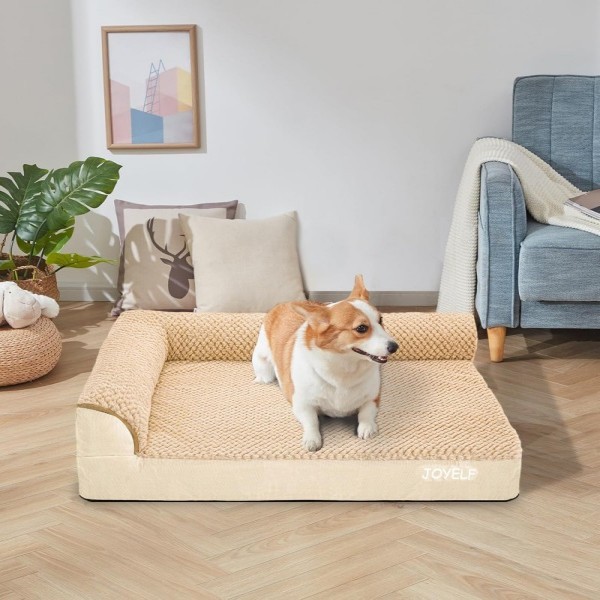
I would check:
- whether the whole pad or only the cover is washable
- zipper length
- shrinkage
- seam distortion
- drying method
- foam recovery
- replacement-cover availability
For B2B buyers, the approved sample should actually be washed, dried, and reassembled before production approval.
“Washable” is not enough information by itself.
Protect the Support Core From Moisture
A durable outer textile cannot save the product if urine reaches absorbent foam.
A practical crate pad often benefits from this structure:
washable outer cover → waterproof or water-resistant liner → support core
This is especially useful for puppies, senior dogs, travel use, and occasional accidents.
The claim still needs precision.
A waterproof liner does not mean the entire pad is waterproof.
The outer fabric, zipper, seams, and bottom surface may behave differently.
For product pages, specify exactly which layer provides moisture protection.
The Pad Should Stay Flat
A pad that slides, folds, or bunches becomes easier for the dog to grab and less comfortable to lie on.
The bottom surface therefore matters.
I would check:
- anti-slip texture
- tray compatibility
- whether the pad shifts when the dog turns
- whether corners lift after washing
- whether the backing stiffens or cracks
For a modular plastic dog crate furniture system, pad dimensions can be planned together with the internal floor module.
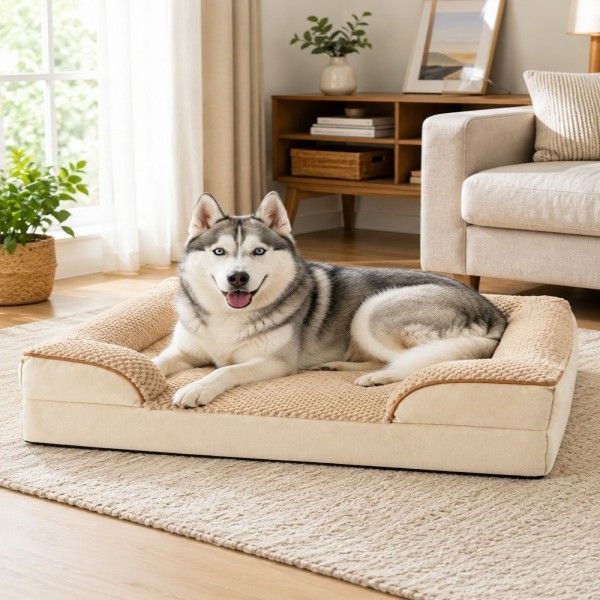
For private-label development, that creates a stronger system: the crate and pad are designed to work together rather than being approximately compatible.
Senior Dogs Need More Than a Thin Mat
A thin mat may be easy to wash and difficult to destroy, but it may offer limited cushioning for an older or heavier dog.
Dogs with reduced mobility may benefit from a stable resting surface that is easier to use. Supportive bedding and nonslip surroundings can be part of a more accessible home setup.
For a senior crate pad, I would prioritise:
- enough support depth
- stable firmness
- low profile
- non-slip bottom
- protected core
- easy cleaning
The goal is cushioning without creating a deep, unstable surface.
Exact Fit Can Reduce Edge Exposure
Excess space around a pad gives the dog more opportunity to lift and pull at the edges.
That is one reason exact interior dimensions matter.
For custom dog crate furniture, the pad specification can be developed together with internal length, width, door clearance, ventilation, tray design, and adult dog size.
For retailers, this creates a stronger private-label proposition than a generic pad that only approximately fits the crate.
Crate Pad vs Blanket vs Full Dog Bed
These products solve different needs.
| Product | Best Use | Main Trade-Off |
|---|---|---|
| Thin crate mat | Light cushioning | Less support |
| Durable crate pad | Everyday crate use | Needs correct fit |
| Orthopedic crate pad | Senior/heavier dogs | Higher cost |
| Blanket | Easy washing/nesting | Can bunch or be chewed |
| Full bolster bed | Open-room resting | Often too bulky |
| Cooling mat | Warm-weather surface | Limited cushioning |
The better choice depends on the dog.
A puppy that destroys every soft surface may need a different setup from a senior dog that needs more cushioning.
What I Would Avoid
I would be cautious when:
- corners lift easily
- the zipper is exposed
- the pad is too large for the tray
- the product claims to be indestructible
- foam is easy to access
- “waterproof” does not specify which layer
- the pad cannot be cleaned realistically
- the backing slides on the tray
- the pad is so thick that it reduces useful crate space
Durability is a balance.
The pad still has to function as a comfortable resting surface.
How Archova Approaches Durable Crate Pads
At Archova, we would start with the crate interior and the dog using it.
For the pad itself, we focus on:
- exact usable dimensions
- low-profile support
- edge construction
- zipper protection
- cover durability
- moisture protection
- floor grip
- washability
- compression recovery
For puppy ranges, edge access and cleaning become more important.
For senior-dog ranges, support depth and stability matter more.
For private-label projects, the pad can also be coordinated with crate dimensions, fabrics, colours, care labels, replacement covers, and packaging.
The goal is not to promise that no dog can destroy the pad.
It is to make the pad harder to damage in normal use, easier to maintain, and better matched to the crate and the dog.
FAQ
What makes a dog crate pad durable?
Durability comes from strong outer fabric, reinforced seams, protected edges, secure zippers, stable backing, wash resistance, and a support core that keeps its shape.
Are durable crate pads chew-proof?
No crate pad should automatically be assumed chew-proof. Dogs that actively tear bedding can damage very tough materials.
How thick should a crate pad be?
Thickness should match the dog’s weight and support needs without reducing useful crate space. Foam firmness matters as much as thickness.
Should a crate pad fit tightly?
It should fit the usable floor area closely enough to stay flat without curling up the sides or blocking the door.
Are orthopedic crate pads good for senior dogs?
They can provide more cushioning and support when the pad remains stable, low-profile, easy to clean, and appropriate for the dog.
What if my puppy destroys every crate bed?
Do not leave a damaged pad where the puppy can ingest pieces. Address the chewing behaviour and reconsider the bedding setup rather than relying on an “indestructible” claim.
Should a crate pad be waterproof?
A protective liner can be useful, especially for puppies or senior dogs. Check whether the liner, cover, or whole product is actually water-resistant.
What should retailers test before sourcing crate pads?
Check fit, edge lifting, seam strength, zipper access, wash shrinkage, liner performance, foam recovery, floor grip, and sample-to-bulk consistency.
Conclusion
A durable dog crate pad is not simply a tougher piece of fabric.
The best products combine correct fit, enough cushioning, protected edges, washable construction, moisture protection, stable floor contact, and support that survives repeated use.
For pet owners, that creates a crate surface that is easier to live with.
For retailers and importers, it creates something more valuable than an exaggerated “chew-proof” promise: a crate pad with clear specifications, realistic durability, and a defined use case.
References