You can start crate training as soon as your puppy comes home, which for many puppies is around eight weeks old.
But “start crate training” should not mean shutting an eight-week-old puppy inside for long periods on the first night. The useful first goal is simpler: make the crate feel familiar, comfortable, and easy to enter voluntarily.
For pet owners, that reduces resistance later. For retailers and importers, it also changes what a good puppy setup should include: correct growth sizing, quiet hardware, easy cleaning, enough ventilation, and a playpen or gate option when a crate alone is too restrictive.
Eight Weeks Is a Common Starting Point, Not a Deadline
Puppy training can begin from the time the puppy arrives home. Early puppy training does not need to wait until formal classes.
That makes roughly eight weeks a common starting point because this is when many puppies first move into their new homes.
The more important question is whether the puppy can explore the crate without being pressured.
During the first stage, I would value:
- open-door access
- comfortable bedding
- short calm experiences
- food or treats associated with the space
- easy exit
- a location near normal household activity
The puppy should learn what the crate is before being expected to tolerate longer closed-door periods.
The First Goal Is Familiarity, Not Confinement
A crate is most useful when the puppy chooses to enter it as a resting place.
A positive crate introduction starts with short sessions and an open door rather than immediate confinement.
For an eight-week-old puppy, useful early signs are simple:
- the puppy approaches the crate willingly
- enters for food or toys
- settles briefly inside
- does not panic when the door moves
- can relax while the owner remains nearby
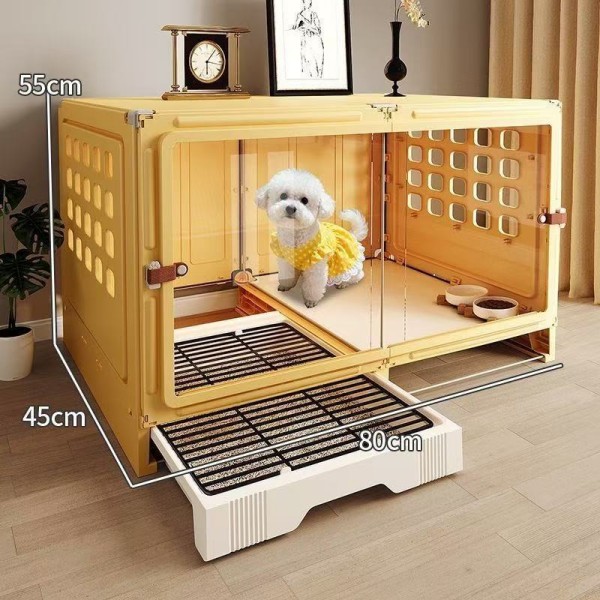
For B2B buyers, this is why smooth doors, quiet latches, stable panels, and a non-threatening entrance are real product features.
A noisy or unstable crate makes the first experience harder than it needs to be.
A Playpen Can Be More Useful in the Earliest Weeks
Very young puppies need sleep, but they also need room to move, drink, play, and toilet frequently.
That is where a plastic puppy pen can be more practical than relying on a crate for every managed moment.
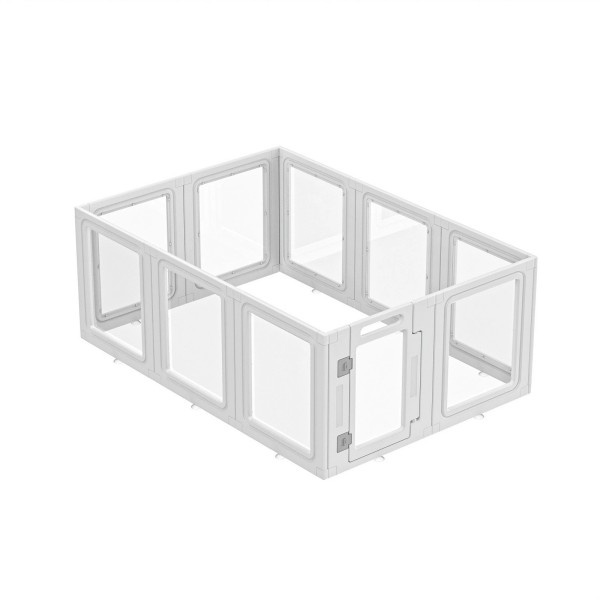
A playpen can hold an open crate or bed, water, safe toys, and a larger movement area.
The crate remains the resting zone while the pen provides controlled space around it.
This crate-plus-pen layout is especially useful while the puppy is still learning to settle with a closed door.
For retailers, that creates a stronger puppy category than presenting crate and playpen as competing products.
Do Not Turn the First Night Into a Test
The first night is often difficult because the puppy has just lost familiar smells, littermates, and routine.
A gradual crate introduction is more useful than treating the first night as a pass-or-fail test.
If the puppy settles more easily with the crate near the bed or the owner nearby, that can be a practical transition.
If closing the door consistently produces escalating crying, frantic scratching, or panic, I would not treat that as something the puppy must simply “get over.”
A larger dog pen indoor can provide more room at night while the crate remains open as an optional resting space.
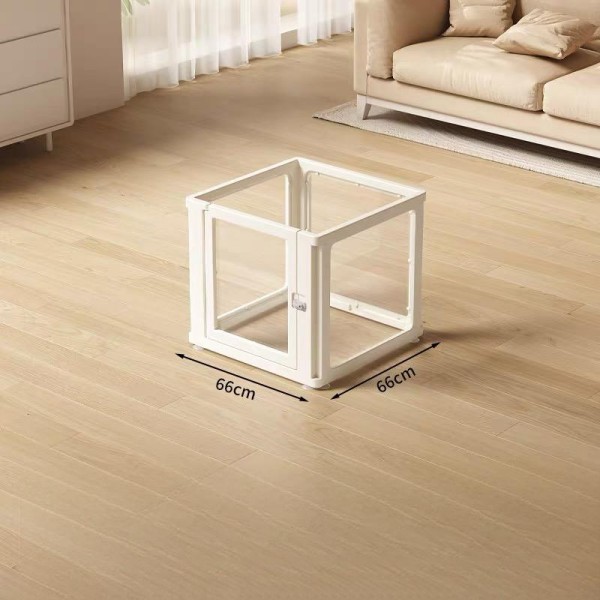
The goal is a puppy that becomes comfortable with confinement gradually, not one that learns the crate predicts distress.
Night-Time Crate Use Has to Match Toilet Needs
Young puppies cannot be treated like adult dogs that can comfortably wait for long periods.
Crate use may support a wider house-training routine, but it does not remove the need for frequent toilet opportunities.
For the product setup, that means:
- the crate should open quickly
- the route to the toilet area should be simple
- bedding should remove easily
- the base should be easy to clean
- the crate should not be trapped behind furniture
For retailers, “easy clean” should include fast access to the sleeping area, not just a wipeable surface.
Buy for Growth, Not Only for the Eight-Week-Old Puppy
A common mistake is buying a crate that fits perfectly on day one.
Puppies grow fast.
A correctly sized crate should allow the dog to stand, turn, lie down, and stretch naturally. When buying for a puppy, future adult size also matters.
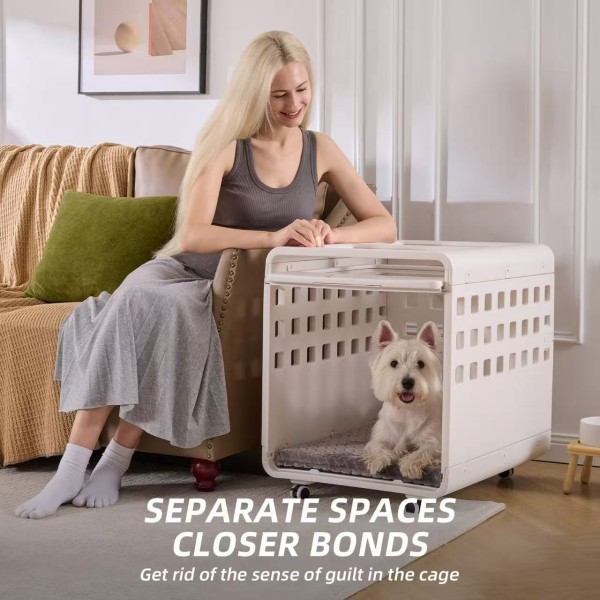
For a breed that will remain compact, small dog crate furniture may remain practical long term.
I would show:
- current internal dimensions
- adult-use dimensions
- divider compatibility where relevant
- maximum practical dog size
- door dimensions
For larger breeds, buying only for puppy size usually means replacing the crate sooner than expected.
Furniture Crates Are Often Better as a Longer-Term Product
Furniture-style crates can integrate well into a living room, but a very young puppy may still chew, scratch, have accidents, and outgrow early dimensions quickly.
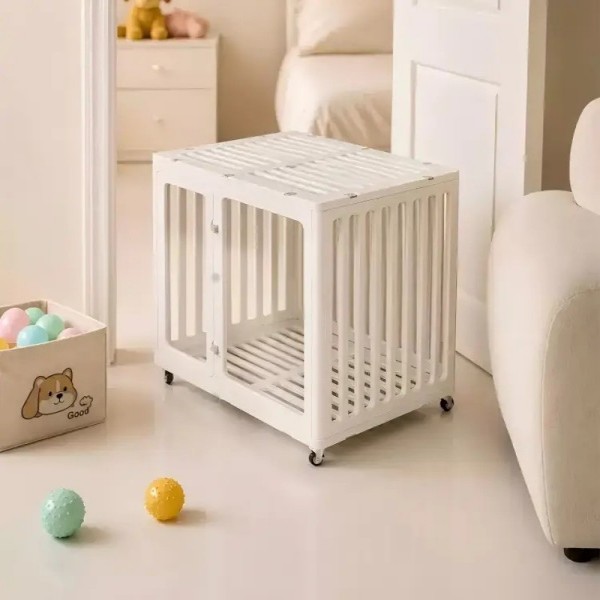
A plastic dog crate furniture direction can be useful when cleanability and home integration need to work together.
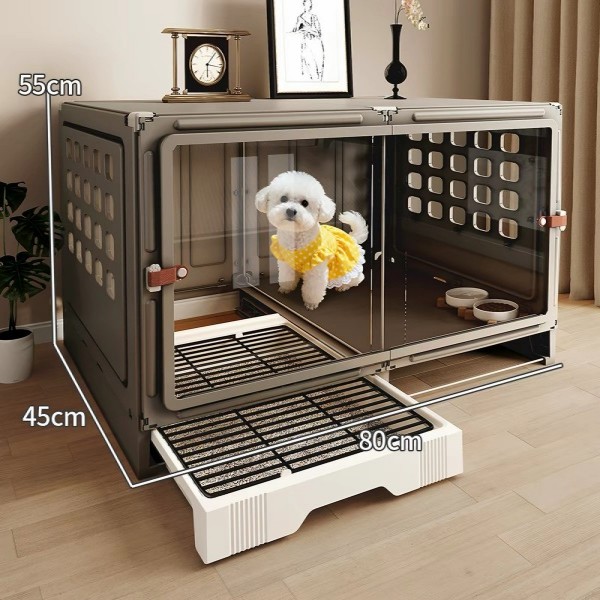
For very young puppies, I would judge permanent furniture crates on:
- easy-clean surfaces
- edge resistance
- replaceable components
- adult-size internal space
- ventilation
- door hardware
- floor protection
A premium furniture finish is less valuable if the puppy outgrows the usable interior within weeks.
For B2B assortment planning, early-stage puppy containment and longer-term furniture crates can be separate SKUs.
Crate Location Changes the Puppy’s Response
A crate hidden in an isolated room can feel very different from one near normal family activity.
A good location is usually:
- away from direct heat
- away from draughts
- away from constant foot traffic
- close enough to the household for the puppy to settle
- easy to reach for toilet breaks
The crate can move later as the puppy becomes more comfortable.
For product design, compact footprints, quiet doors, and furniture-compatible shapes matter because the crate has to fit real rooms.
Use a Gate When the Real Problem Is Room Access
Crate training should not become the default answer for every puppy-management problem.
Sometimes the household only needs to stop the puppy entering a kitchen, hallway, stair area, or another room.
A plastic freestanding pet gate can solve that problem with less restriction.
| Home Need | Better Product |
|---|---|
| Quiet resting space | Crate |
| Larger controlled puppy zone | Playpen |
| Limit access to one room | Freestanding gate |
| Longer-term visible home integration | Furniture crate |
| Early night-time larger space | Playpen + open crate |
For B2B buyers, this is a better puppy product strategy than expecting one crate to solve every indoor-management problem.
Signs the Training Is Moving Too Fast
The puppy’s response matters more than the calendar.
I would slow down if closing the door repeatedly causes:
- escalating whining
- frantic scratching
- repeated escape attempts
- refusal to enter later
- inability to settle even when the owner remains close
Reward-based crate training should progress at the individual dog’s pace.
A crate should support a calm routine. It should not require the owner to overpower persistent distress.
If severe distress continues, the issue may need veterinary or qualified behaviour support rather than a stronger crate.
What I Would Avoid in a Puppy Crate
I would be cautious when:
- the internal size only fits the puppy’s current body
- the door closes loudly
- the crate shifts when the puppy pushes against it
- gaps are too large for a small puppy
- cleaning requires major disassembly
- exposed edges invite chewing
- ventilation is poor
- the design assumes long confinement
- product copy promises to “stop separation anxiety”
These details matter more than decorative features in the first months.
How Archova Approaches Puppy Crate and Pen Products
At Archova, we would separate early puppy management from long-term crate furniture.
For early puppy setups, the priorities are:
- safe gap control
- stable panels
- easy-clean surfaces
- simple doors
- modular playpen space
- growth planning
- compact packaging
For longer-term crate furniture, we add adult-size internal dimensions, home integration, quieter hardware, replaceable parts, and coordinated finishes.
For private-label retailers, crate, playpen, and gate products can be designed as one indoor puppy system rather than three isolated categories.
That gives pet owners a clearer progression as the puppy grows.
FAQ
What age can you start crate training a puppy?
You can start when the puppy comes home, commonly around eight weeks old. Begin with short, positive, open-door experiences.
Should an eight-week-old puppy sleep in a crate on the first night?
A crate can be part of the first-night setup, but the puppy should not be expected to tolerate long closed-door periods immediately. A nearby crate or playpen may be more practical.
Is eight weeks too young for crate training?
No. It is not too young for positive crate introduction. The important part is keeping the experience gradual.
Is a playpen better than a crate for a young puppy?
It can be. A playpen gives more room for movement, water, toys, and an open resting crate.
How big should a puppy crate be?
The puppy should be able to stand, turn around, lie down, and stretch comfortably. Also plan for adult size.
Can crate training help toilet training?
It can support a wider routine, but young puppies still need frequent toilet opportunities and supervision.
How long does crate training take?
There is no fixed timeline. Some puppies become comfortable quickly, while others need several weeks or longer.
What should retailers check when sourcing puppy crates?
Check internal dimensions, gap size, growth planning, ventilation, door noise, latch operation, cleaning access, stability, packaging, and compatibility with playpen or gate products.
Conclusion
The best age to start crate training is when the puppy comes home, often around eight weeks.
But the first goal is not long confinement.
It is to make the crate a familiar resting space, then increase closed-door time only as the puppy becomes comfortable.
For pet owners, this makes crate training easier to live with.
For retailers and importers, it creates a better product strategy: use crates for rest, playpens for larger puppy zones, gates for room boundaries, and longer-term furniture crates once growth and home placement are clearer.
References