The right dog bed is not the softest, thickest, or most expensive one.
A good choice matches how the dog sleeps, how much support the body needs, how easily the dog can get in and out, how the bed will be cleaned, and where it will sit in the home.
For retailers and importers, those same questions should shape the product range. A strong collection solves different resting problems instead of repeating one cushion in different colours.
Start With Sleeping Style
Sleeping style is the fastest way to narrow the bed shape.
A dog that curls tightly often benefits from side support. A dog that stretches out needs more flat surface. A dog that leans against furniture may prefer a bolster. A dog that seeks cool tile may reject a deep plush bed in warm weather.
A practical orthopedic dog bed should therefore be selected around real resting behaviour rather than breed labels alone.
| Sleeping Pattern | Better Bed Direction | Main Check |
|---|---|---|
| Curls tightly | Bolster or nest bed | Usable centre area |
| Stretches fully | Flat mattress | Length and width |
| Leans against sides | Sofa/bolster bed | Side stability |
| Seeks cool floors | Cooling bed or mat | Surface temperature |
| Senior with slower movement | Low-entry bed | Access + floor grip |
This is more useful than choosing by appearance.
Measure Usable Sleeping Area
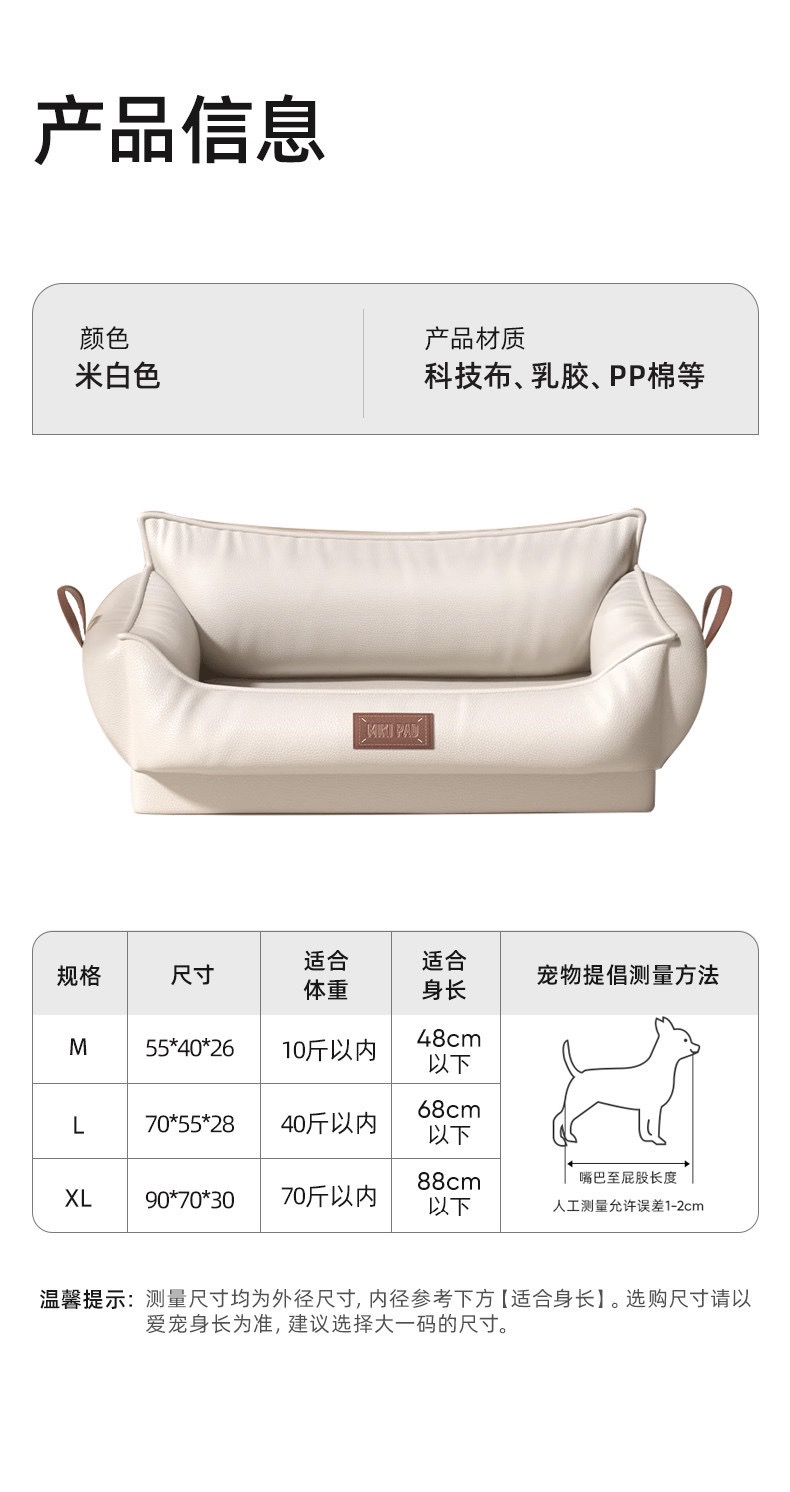
One of the most common mistakes is buying from outside dimensions.
A bed should let the dog lie comfortably in natural sleeping positions, including stretching out.
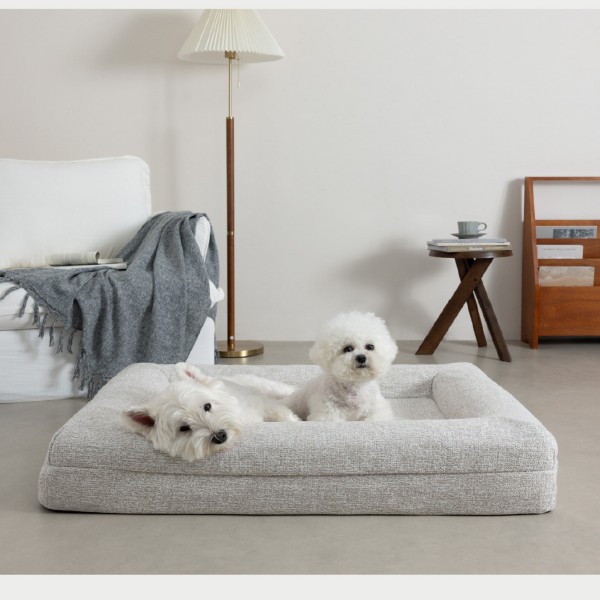
For bolster beds, thick sides can remove a surprising amount of sleeping space.
I would show external dimensions, internal sleeping dimensions, bolster depth, and entry width.
For retailers, this reduces size-related returns. For pet owners, it makes different bed shapes easier to compare.
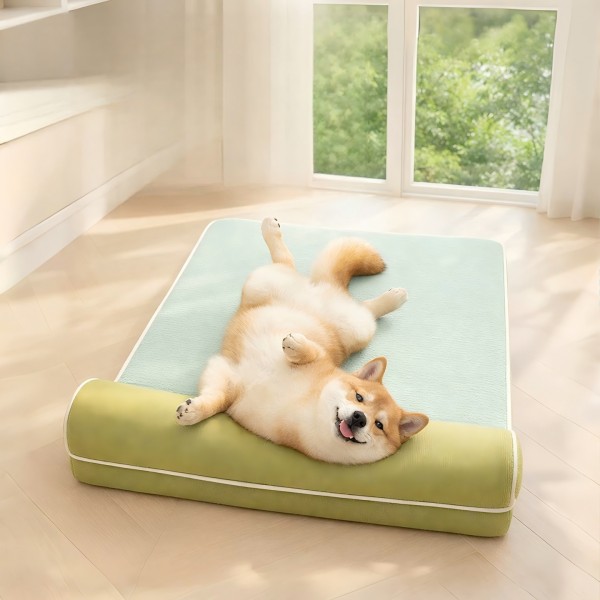
Breed labels such as “Labrador size” are not precise enough. Dogs of the same breed can differ in body length, weight, age, and resting style.
Match Support to Body Weight
Softness and support are different.
A bed can feel soft to the hand while allowing a heavier dog to sink almost to the floor.
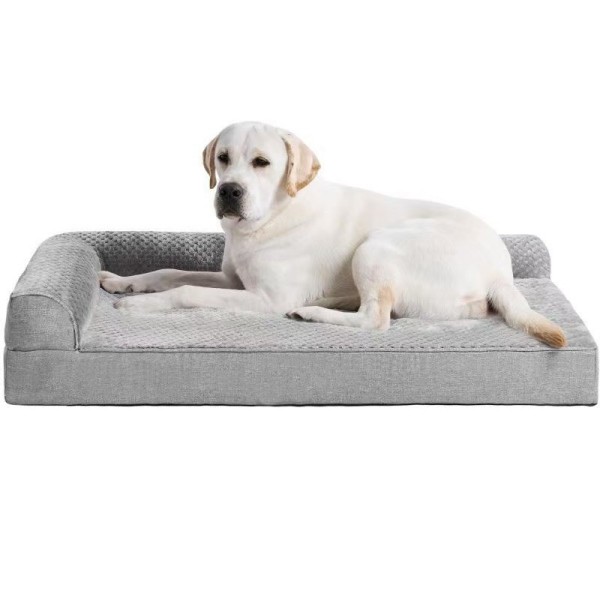
A flat orthopedic dog mattress is easier to evaluate because the support core is the main product.
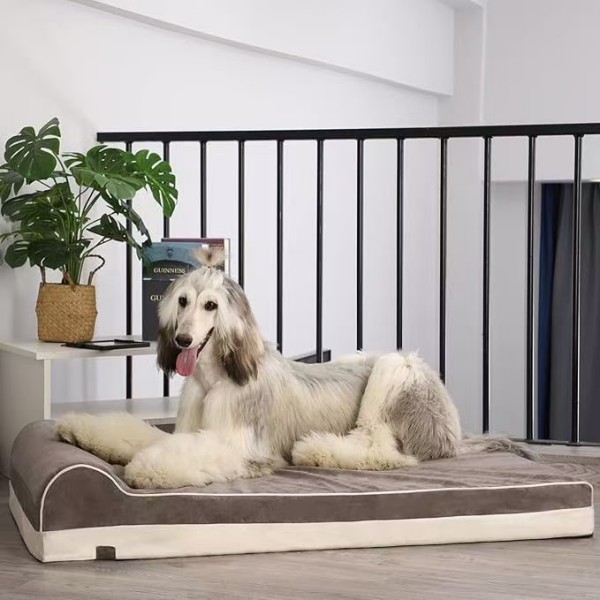
For supportive beds, I would check:
- support material
- support depth
- firmness under load
- recovery after compression
- permanent centre sagging
- whether larger sizes scale the core
The useful question is not “How thick is the foam?” It is how much support remains underneath the dog after body weight is applied.
For B2B sourcing, weak support can quickly turn a premium bed into a return problem.
Senior Dogs Need Easier Access
Older dogs change the buying priorities.
A supportive bed can still be inconvenient if the front bolster is high or the base slides on hard flooring.
A senior-friendly setup combines orthopedic bedding, easier access, and nonslip surroundings.
I would look for low entry, stable support, a non-slip base, enough turning space, a removable cover, and moisture protection.
A low step dog stairs for senior dogs can also fit a wider senior-friendly room setup where raised furniture is involved.
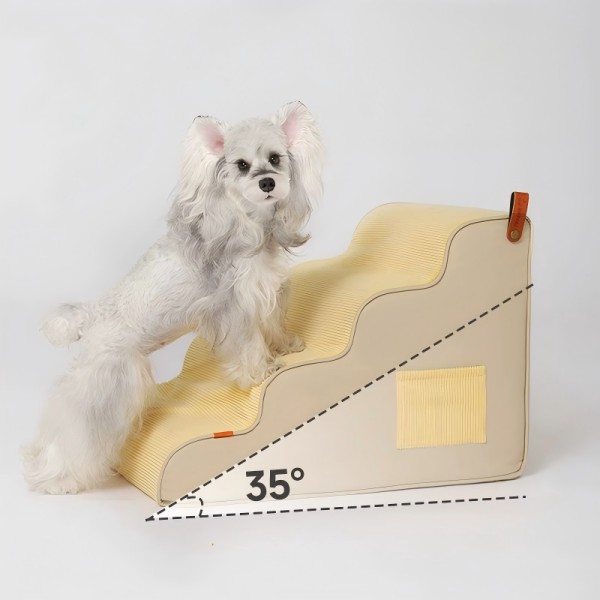
New stiffness, difficulty rising, or reduced mobility is not simply a bed-selection issue. Mobility changes can accompany osteoarthritis and deserve veterinary attention.
Choose Bolsters for Behaviour, Not Styling
Bolsters add useful side and head support, but they reduce flat sleeping area.
A dog that likes leaning may use them constantly. A dog that sleeps with legs extended may find the same structure restrictive.
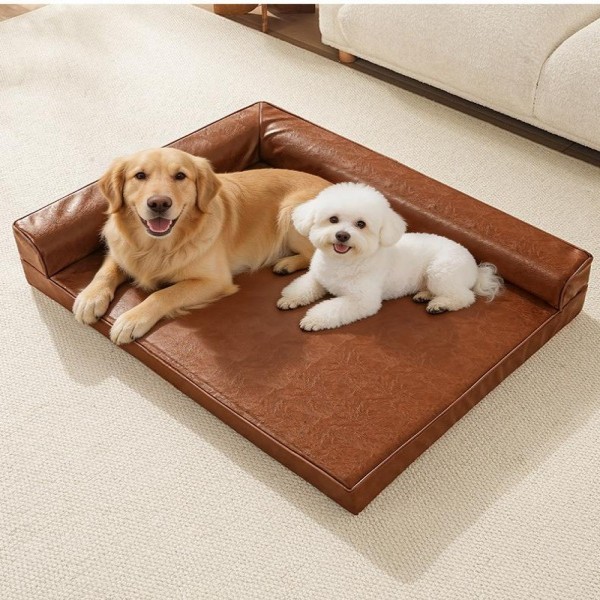
An orthopedic dog sofa works best when the bolster design matches the dog’s resting habits and still leaves a practical front entrance.
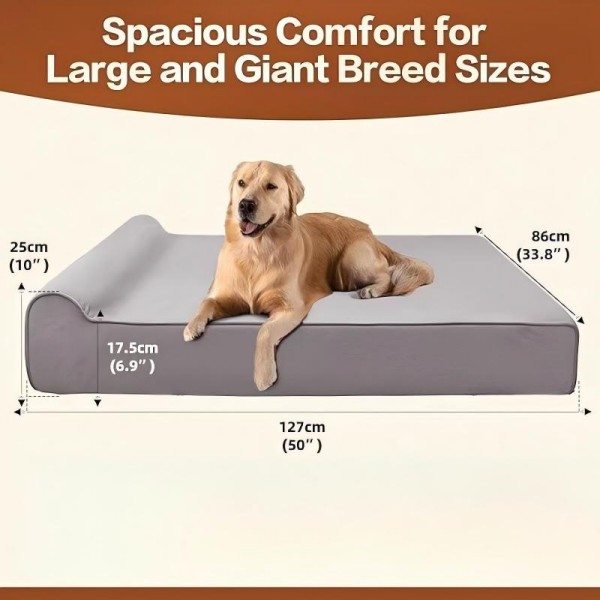
For product development, full bolsters, three-sided sofas, low-entry beds, and flat mattresses should be treated as different use cases.
Cleaning Should Be Judged Before Purchase
A comfortable bed becomes frustrating if it is difficult to clean.
Recent owner feedback repeatedly shows a gap between “removable cover” and a cover that is actually easy to remove, wash, dry, and reinstall.
For large or bolster beds, check zipper length, the number of separate inserts, machine-wash instructions, drying method, and replacement-cover availability.
Routine pet-bed cleaning should follow the material and care instructions.
For B2B buyers, I would physically remove and reinstall the sample cover before bulk approval.
Protect the Support Core
Foam becomes much harder to manage when liquid reaches the core.
A practical supportive bed often separates:
- washable outer cover
- protective liner
- dry support core
Do not confuse a waterproof liner with a fully waterproof bed.
The cover, zipper, seams, bolsters, and base may have different moisture resistance. Product pages should state exactly which layer is waterproof or water-resistant.
Floor Grip Matters
A bed that moves on tile or laminate can feel unstable even when the mattress is good.
This matters more for large dogs, senior dogs, dogs that push against bolsters, and lightweight beds on hard floors.
A non-slip base should be tested on realistic flooring.
For retailers, this is a small construction detail with a large effect on satisfaction.
Warm-Weather Comfort May Need a Different Product
Some dogs leave plush beds when rooms become warm.
A dog cooling bed can provide a more supportive warm-weather option.
For dogs that mainly want a cooler contact surface, a cooling mat for dogs may be enough.
Keep the claims clear: breathable fabric is not automatically active cooling, cooling gel is different from phase-change material, and a cooling mat offers less cushioning than a structured bed.
Chewing and Digging Change the Material Choice
A dog that scratches or digs before lying down places different stress on a bed from a dog that settles quietly.
Puppies and some adult dogs may also chew fabric. Destructive chewing can damage household and pet items.
For these dogs, I would look at tighter woven fabric, reinforced seams, protected zipper placement, and replaceable covers.
Avoid “indestructible” or “chew-proof” claims unless the evidence supports them.
Placement Can Decide Whether the Dog Uses the Bed
Even a correctly selected bed can be ignored in the wrong location.
A safe resting space should allow the dog to settle without constant disturbance.
For many homes, two locations work well: one near normal family activity and one quieter option.
For retailers, this creates a secondary-bed use case without relying only on premium upgrades.
What I Would Avoid
I would be cautious when:
- only outside dimensions are shown
- “orthopedic” has no support specification
- XL uses the same thin core as small sizes
- the cover is removable only in theory
- the foam has no moisture protection
- the base slides easily
- high bolsters make access awkward
- cooling claims have no clear mechanism
- the bed shape does not match sleeping style
These details often decide whether the bed remains useful after the first few weeks.
How I Would Build a Dog Bed Range
| Product Direction | Best Fit | Commercial Role |
|---|---|---|
| Basic padded bed | Young/lightweight dogs | Entry price |
| Bolster bed | Curlers and leaners | Mainstream comfort |
| Orthopedic mattress | Larger/support-focused dogs | Functional upgrade |
| Low-entry bed | Senior dogs | Mobility-friendly |
| Orthopedic sofa | Living rooms | Premium home line |
| Cooling bed | Warm seasons | Seasonal function |
| Cooling mat | Cooler surface only | Lightweight add-on |
This creates a price ladder and a use-case ladder at the same time.
How Archova Approaches Dog Bed Selection
At Archova, we start with the use scene before the fabric.
For support-focused beds, we review core material, depth, weight response, usable area, compression recovery, and floor grip.
For senior-oriented products, we add low entry, easier turning, removable covers, and moisture protection.
For sofa-style beds, we balance bolster support with actual sleeping area and home integration.
For warm-weather ranges, cooling remains a separate function instead of turning every bed into a “cooling” SKU.
For private-label development, we can adjust size, support structure, fabric, bolster design, entry height, liners, colours, replacement covers, and packaging.
The goal is not to make one bed work for every dog. It is to make each bed easy to understand and easy to choose.
FAQ
What is the most important thing when choosing a dog bed?
Start with sleeping style and usable size, then check support, access, cleaning, and floor stability.
How do I know what size dog bed to buy?
Measure the dog in a natural sleeping position and compare that with the usable sleeping area, not just the outside dimensions.
Does every dog need an orthopedic bed?
No. Young, healthy, lightweight dogs may be comfortable on simpler padded beds. Orthopedic construction becomes more useful when support needs increase.
Is a very soft dog bed better?
Not necessarily. A soft bed can still bottom out under body weight. Useful support matters more than hand-feel alone.
Should a dog bed have a removable cover?
For long-term home use, a genuinely easy-to-remove washable cover is a major practical advantage.
Is a waterproof dog bed necessary?
Not always. A protective liner can keep the support core dry while allowing a comfortable washable outer cover.
What is best for a dog that gets hot?
A lighter bed, cooling bed, or cooling mat may suit the dog better depending on how much support is needed.
What should retailers check before sourcing dog beds?
Check usable dimensions, support under load, cover removal, liner construction, floor grip, seams, zipper placement, care instructions, packaging, and sample-to-bulk consistency.
Conclusion
Choosing a dog bed is easier when you stop comparing labels and start comparing real use.
Watch how the dog sleeps. Measure the usable space. Match support to body weight. Keep access practical. Check whether the cover is genuinely easy to wash. Protect the core from moisture. Make sure the bed stays stable.
For pet owners, those details decide whether the dog actually uses the bed.
For retailers and importers, they decide whether the product becomes a repeatable, well-positioned SKU—or another bed that looks good online and disappoints at home.
References