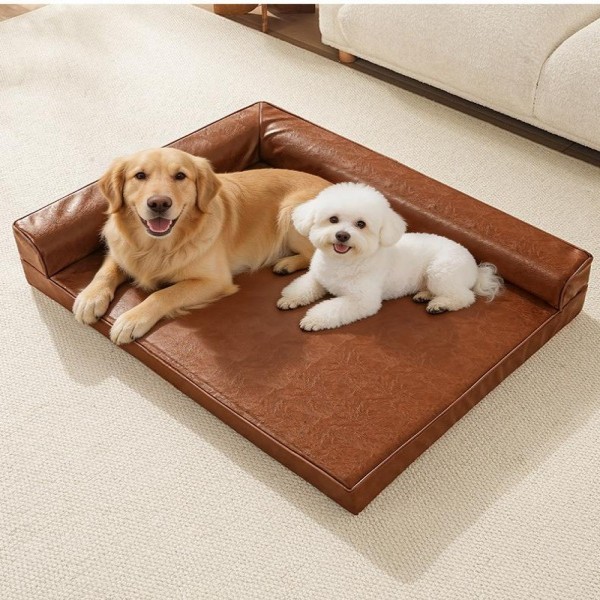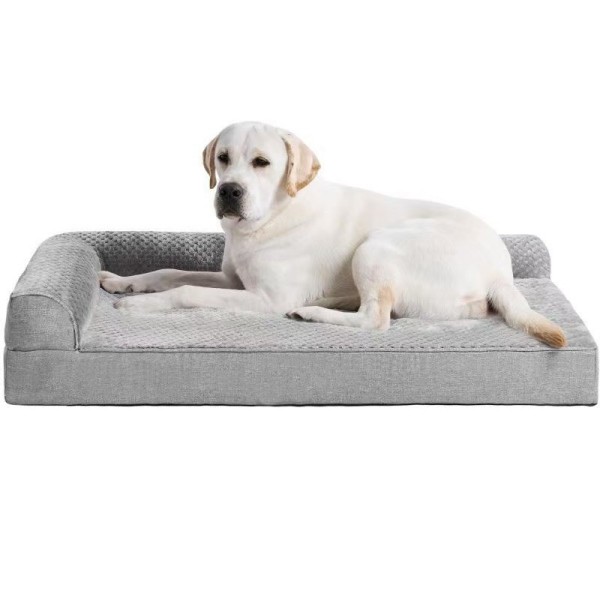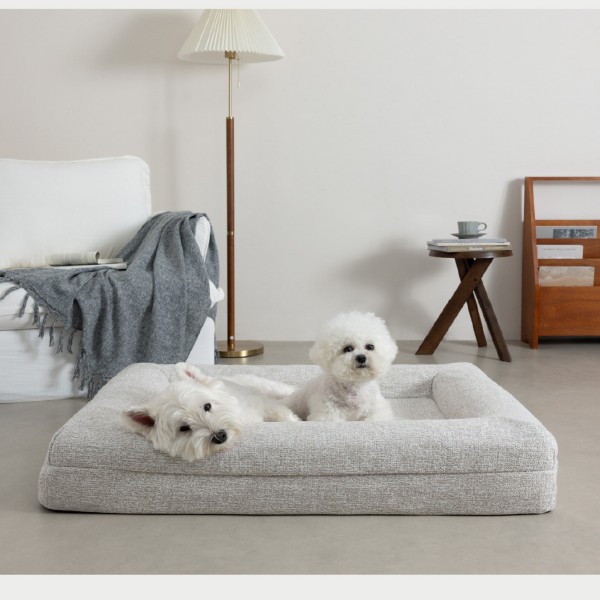
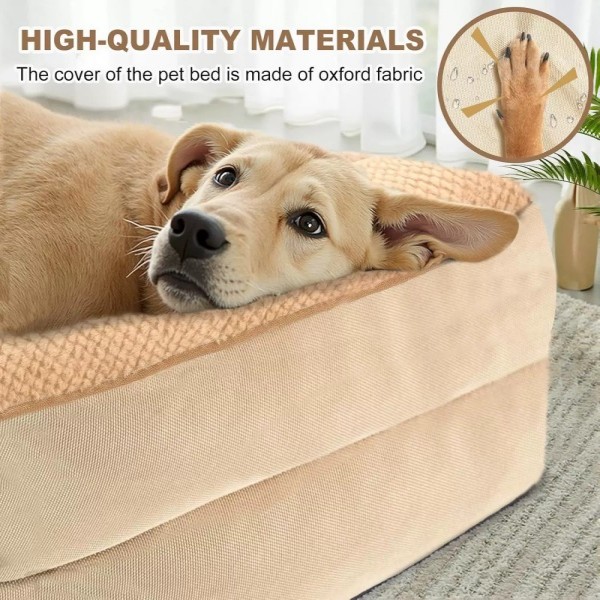
Choosing a dog bed for two or more dogs is not simply about buying the largest size available.
The better decision starts with how the dogs actually rest together. Some dogs choose close contact. Others share a home comfortably but prefer separate sleeping spaces. Size, age, body weight, mobility, temperature preference, and competition over favourite resting spots can all change the right setup.
For retailers and importers, multi-dog homes are not just an XL opportunity. They are a reason to build a coordinated bed system.
A shared bed works best when the dogs naturally choose the same resting space.
If one dog regularly moves away when the other approaches, or they routinely sleep in different areas, one large bed creates unnecessary compromise.
A practical multi-dog home should provide comfortable, quiet resting places that do not force dogs to compete for one preferred surface.
I would use three possible setups:
- one large shared bed for dogs that consistently sleep together
- separate beds when the dogs have different needs
- individual beds plus one shared bed for maximum flexibility
The third option is often the strongest because sharing remains optional.
A shared bed makes sense when both dogs have similar support needs and compatible sleeping habits.
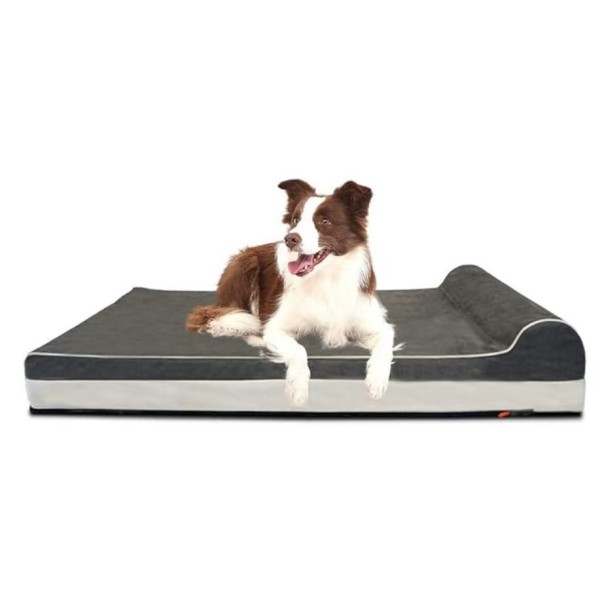
An extra large orthopedic dog bed can work well, but the important measurement is the usable centre area, not the outside dimensions.
For two dogs, I would check:
- combined resting length
- usable sleeping dimensions
- support depth
- edge stability
- entry width
- whether both dogs can leave easily
For B2B buyers, an XL SKU can serve multi-dog homes, giant breeds, and sprawlers—if the support structure is strong enough.
Separate Beds Are Better When the Dogs Need Different Support
A small young dog and a heavy senior dog should not be forced into the same mattress specification.
The smaller dog may be comfortable on a softer bed. The older or heavier dog may need a large orthopedic dog bed with deeper support and easier access.
Differences in age, body weight, mobility, sleeping posture, coat thickness, and temperature preference can make one shared bed a compromise for both dogs.
For retailers, coordinated beds in the same fabric family can solve this without making the room look mismatched.
Resting Spaces Can Become Valuable Resources
A bed is not neutral if one dog strongly prefers it.
Dogs can guard valued items or locations, including beds. Possessive or resource-guarding behaviour is one reason I would not market multi-dog bedding as “two dogs, one bed” by default.
If one dog repeatedly displaces the other, blocks access, stiffens when approached, or claims the same resting spot, adding more size does not solve the issue.
The better product response is more resting options.
Combined Load Changes the Support Requirement
Two medium dogs can load a mattress as heavily as one giant dog.
That changes how the support core should be specified.
A shared orthopedic dog mattress should be checked for:
- centre compression under combined weight
- recovery after both dogs leave
- edge collapse
- support consistency across the full surface
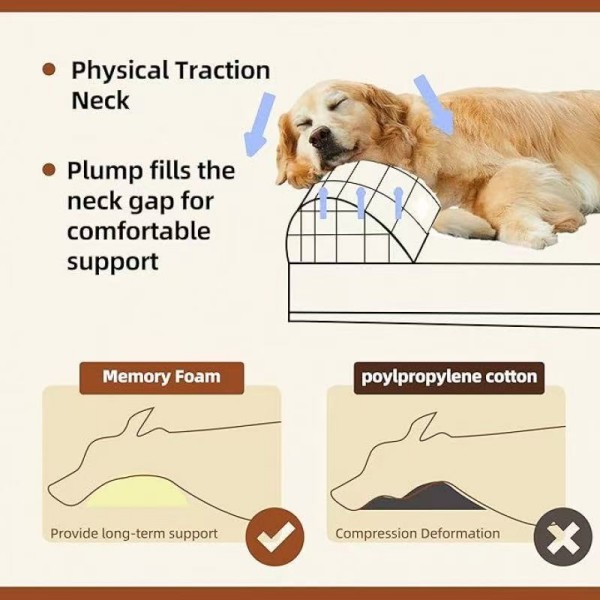
- foam depth in the largest size

If an XL product is positioned for multi-dog use, the internal support should reflect that positioning.
A bigger cover over the same thin core is not enough.
Mixed-Age Homes Need Different Entry Heights
Multi-dog homes often include a younger dog and an older dog.
A senior dog may need a lower entry, more stable support, and better floor grip. Supportive orthopedic bedding and nonslip surfaces can make the home easier for mobility-compromised pets.
An orthopedic dog bed for the older dog should therefore be judged as a complete structure.
I would prioritise low entry, stable support, non-skid floor contact, enough turning room, a removable cover, and moisture protection.
A younger dog may happily climb into a deep bolster bed. The senior dog may not.
Sleeping Style Changes the Required Size
Two curled sleepers and two side sleepers need very different footprints.
| Resting Pattern | Better Product Direction | Main Check |
|---|---|---|
| Both curl together | XL bolster bed | Centre area |
| Both stretch out | Wide mattress | Flat usable width |
| One curls, one stretches | Open oversized mattress | Flexible surface |
| One likes side support | Orthopedic sofa | Bolster + low entry |
| Dogs often separate | Two beds | Individual fit |
| Senior + younger dog | Separate structures | Access + firmness |
For retailers, sleeping style is more useful than breed-only sizing because it explains why one design fits better.
With two dogs on the same surface, entry geometry matters.
A deep four-sided bolster can create a bottleneck where one dog has to climb over the other.
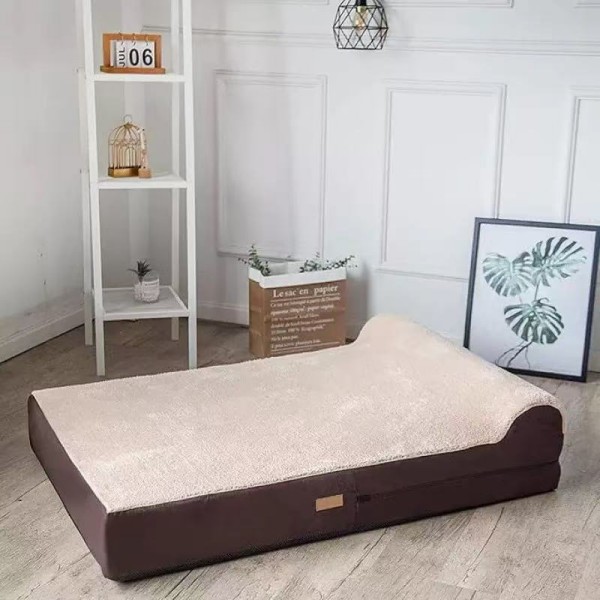
An orthopedic dog sofa can still work for multi-dog use if the front opening is wide and low enough.
For shared beds, I would avoid narrow front gaps and very high bolsters.
A wide entrance gives either dog more freedom to leave without disturbing the other.
Cleaning Becomes a Product-Design Issue
Multi-dog homes put more hair, dirt, saliva, odour, and moisture onto the same sleeping surface.
A shared XL bed therefore needs a cleaning structure that is genuinely practical.
I would prioritise:
- fully removable cover
- large accessible zipper
- protected foam core
- washable outer textile
- replacement-cover availability
- clear care instructions
Routine pet-supply cleaning should follow the material and care instructions.
The key B2B question is not just “Is the cover removable?”
It is how difficult is it to remove, wash, dry, and reinstall on a very large bed?
A technically removable cover can still create a poor user experience if reassembly is awkward.
Waterproof Claims Need More Precision
A shared bed receives more use and more chances for wet paws or accidents.
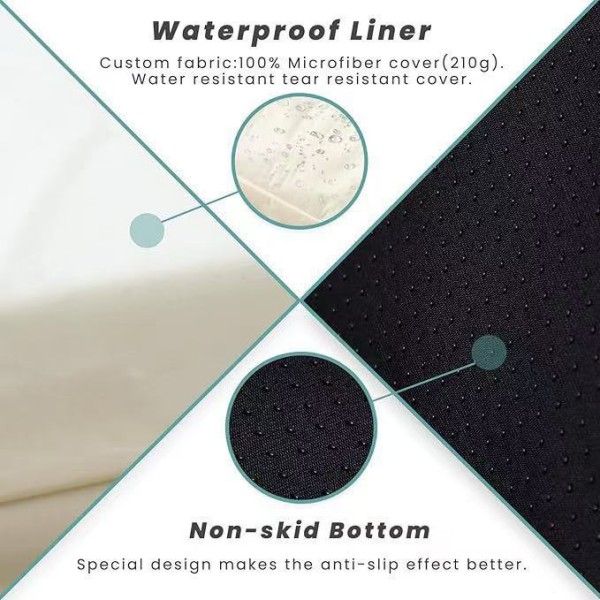
A protective liner can be valuable, especially when one dog is senior.
But “waterproof bed” is too broad if only the inner liner resists moisture.
For Archova, I would separate the claims:
- washable outer cover
- waterproof or water-resistant liner
- protected foam core
- moisture-resistant base where applicable
That creates clearer expectations and fewer complaints.
Different Temperature Preferences Need Different Options
Two dogs in the same home may not want the same sleeping temperature.
A thick-coated dog may leave a plush bed during warm weather while a short-coated dog still prefers padded sides.
A cooling orthopedic dog bed can provide a second resting option without replacing the main support bed.
This is another reason a bed system often works better than one universal shared bed.
Choose one shared bed when:
- the dogs voluntarily sleep together
- body sizes are reasonably compatible
- support needs are similar
- neither dog guards the space
- the bed has enough usable area
- both dogs can enter and leave easily
Choose separate beds when:
- one dog regularly moves away
- body sizes differ significantly
- one dog is senior or mobility-limited
- temperature preferences differ
- one dog protects favourite resting spots
- different firmness is needed
In many homes, the best answer is individual beds plus one optional shared bed.
What a Strong Multi-Dog Range Should Include
| Product Direction | Household Need | Commercial Role |
|---|---|---|
| XL orthopedic bed | Dogs that sleep together | Shared premium SKU |
| Wide orthopedic mattress | Two stretch-out sleepers | Shared functional bed |
| Large individual bed | Different body sizes | Individual support |
| Low-entry senior bed | Mixed-age household | Senior solution |
| Cooling bed | Different heat preferences | Seasonal second bed |
| Replacement cover | High-use household | After-sales add-on |
This gives each SKU a clear job instead of simply labelling the largest bed “multi-dog.”
How Archova Approaches Multi-Dog Bed Planning
At Archova, we would start with the household configuration rather than the phrase “for two dogs.”
For shared beds, we focus on usable width, combined load, support depth, entry width, edge stability, cover design, and cleaning practicality.
For mixed-age homes, we separate senior access from younger-dog comfort.
For mixed-size homes, we look at whether one shared product creates too much compromise and whether two coordinated beds make more sense.
For private-label ranges, the same fabric and colour family can be used across standard orthopedic beds, large and XL beds, flat mattresses, low-entry senior beds, cooling beds, and replacement covers.
That gives the home a coordinated look without forcing every dog onto the same sleeping surface.
FAQ
Yes, when they naturally choose to rest together and the bed gives both enough usable space, support, and easy access.
Should each dog still have its own bed?
In many multi-dog homes, yes. Individual resting options reduce competition and allow different support or temperature preferences.
Measure the dogs in their normal shared sleeping position and compare that with the usable centre area, not the outside dimensions.
Is one XL bed better than two normal beds?
Not automatically. Separate beds are usually better when the dogs differ in size, age, mobility, firmness preference, or resting behaviour.
Combined load, support depth, usable surface area, wide entry, edge stability, and compression recovery.
What if one dog is senior?
Give the senior dog easy access, stable support, nonslip floor contact, and a personal resting option even if the dogs sometimes share.
Why are washable covers more important for multi-dog homes?
The bed collects more hair, dirt, moisture, and odour. A genuinely easy-to-remove cover makes long-term ownership much more practical.
What should retailers check before sourcing multi-dog beds?
Check usable dimensions, combined-load performance, foam recovery, entry width, cover removal, liner construction, seam strength, packaging, and replacement-cover availability.
Conclusion
Choosing a dog bed for more than one dog starts with one decision: should these dogs actually share the same resting surface?
If they do, the bed needs enough usable area, support for the combined load, easy entry, and a cleaning structure that works at XL scale.
If they do not, two coordinated beds are usually the better product.
For retailers and importers, the real multi-dog opportunity is not one oversized SKU. It is a product system built around shared rest, individual support, senior access, seasonal comfort, and easy maintenance.
References