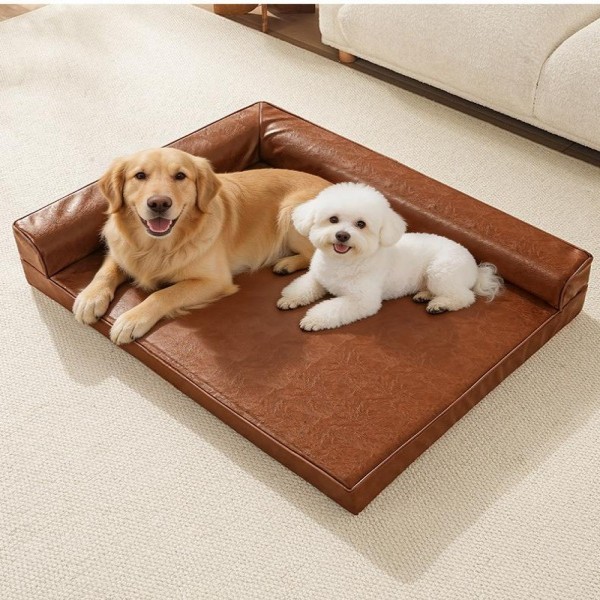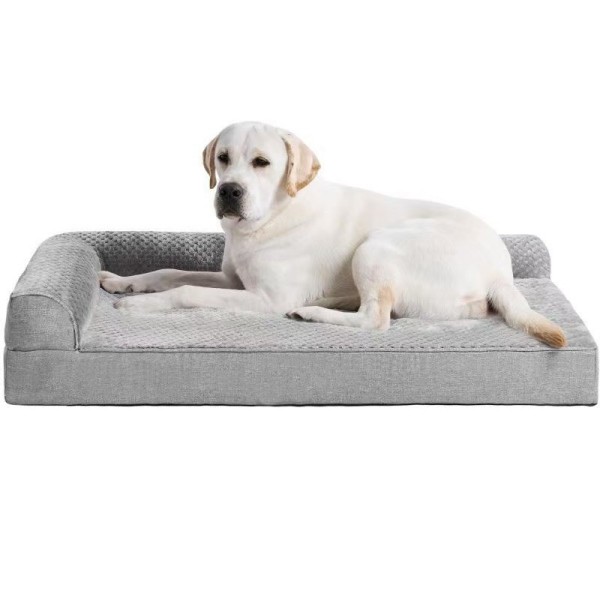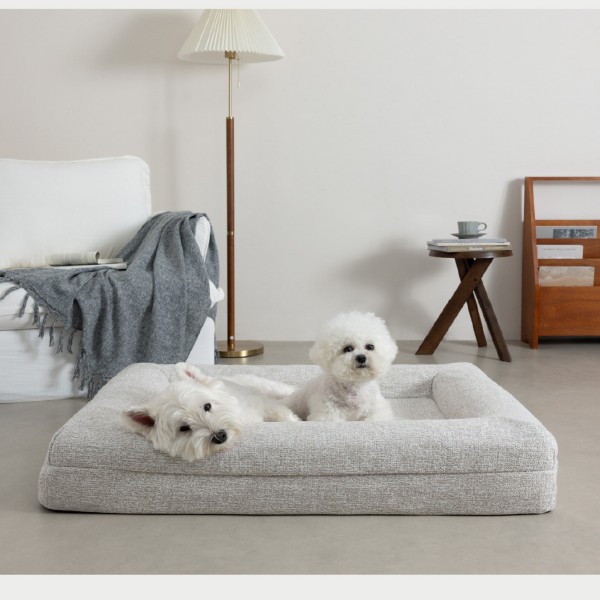
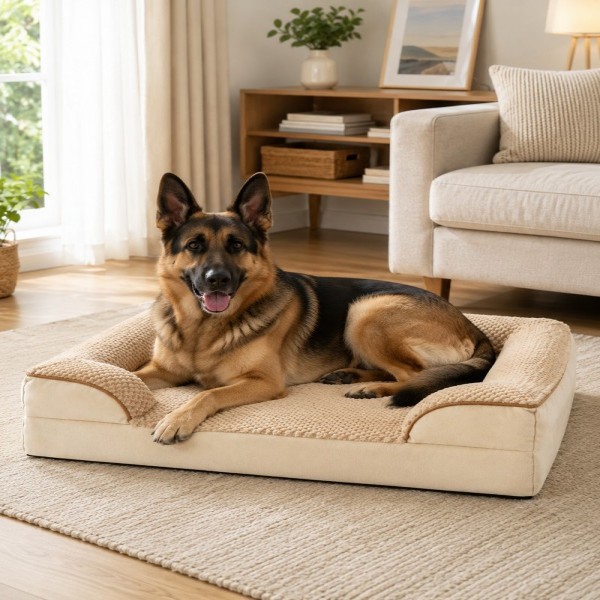
A senior dog bed should make resting and getting up easier, not simply feel softer.
The best choice usually combines stable support, low entry, enough usable sleeping space, good floor grip, manageable temperature, and a cleaning structure that still works when accidents happen. For retailers and importers, those same details decide whether a “senior” bed solves a real problem or just adds another label to an ordinary cushion.
Start With the Dog’s Current Movement
Do not choose by age alone.
A senior dog that still moves easily may use the same bed shape it has always preferred. Another may begin hesitating before lying down, circling longer, avoiding high furniture, or struggling to rise from a soft surface.
Changes such as difficulty rising, stiffness, altered gait, or reluctance to use stairs can occur with osteoarthritis and other mobility problems.
For a dog that is slower to rise, I would prioritise a stable orthopedic dog mattress over a very deep, loose-fill cushion.
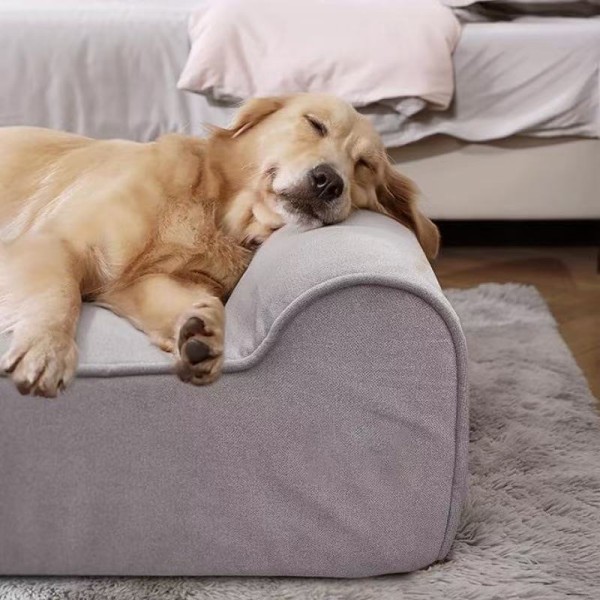
The goal is not medical treatment. It is to create a resting surface that is easier to use.
Softer Is Not Always Better
Very soft beds can look comfortable but become unstable when the dog tries to stand.
If the body sinks deeply into loose filling or low-resistance foam, the dog may have to climb out of the bed rather than simply rise from it.
I would check:
- how far the torso sinks
- whether the dog reaches the hard floor underneath
- whether the foam recovers after use
- whether the centre remains level
- whether the dog can plant its feet securely when standing
A senior bed should cushion the body without trapping it.
For B2B sourcing, foam density, layer construction, recovery, and size-specific support matter more than a vague “memory foam” claim.
Low Entry Can Matter as Much as the Mattress
A thick support core is not useful if the dog has to climb over a high front wall.
For mobility-compromised dogs, beds that are easy to access and do not require climbing over a high edge can fit the home better.
| Senior Dog Need | Better Bed Direction | Main Check |
|---|---|---|
| Slow rising | Firm supportive mattress | Stability |
| Likes head support | Three-sided bolster | Low front entry |
| Limited mobility | Flat or recessed bed | Minimal step-over |
| Large/heavy senior | Deeper orthopedic core | Bottoming-out resistance |
| Warm sleeper | Cooler surface + support | Heat retention |
| Occasional accidents | Protected core | Cover + liner |
Floor Grip Is Part of the Bed
Hardwood, laminate, and tile can make movement more difficult for dogs with reduced traction. A bed that slides while the dog steps on or off it creates another stability problem.
A senior-friendly setup often includes nonslip flooring, orthopedic bedding, and other mobility accommodations.
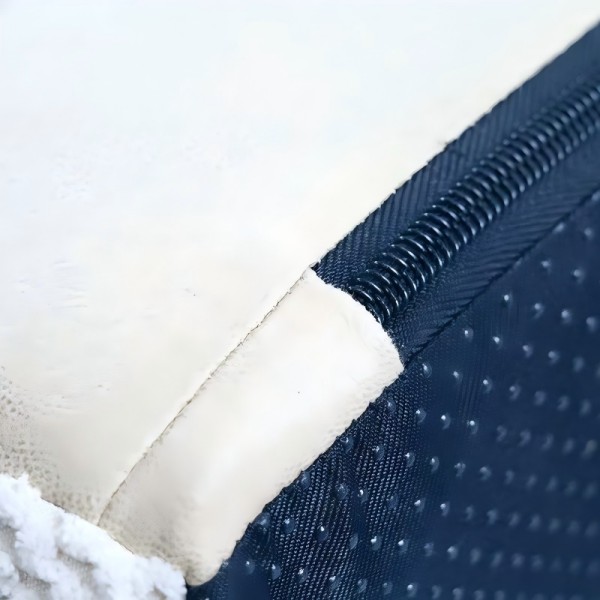
For the bed itself, I would check anti-slip base coverage, grip on hard flooring, and whether the bed shifts when the dog pushes against a bolster.
Size the Usable Sleeping Area
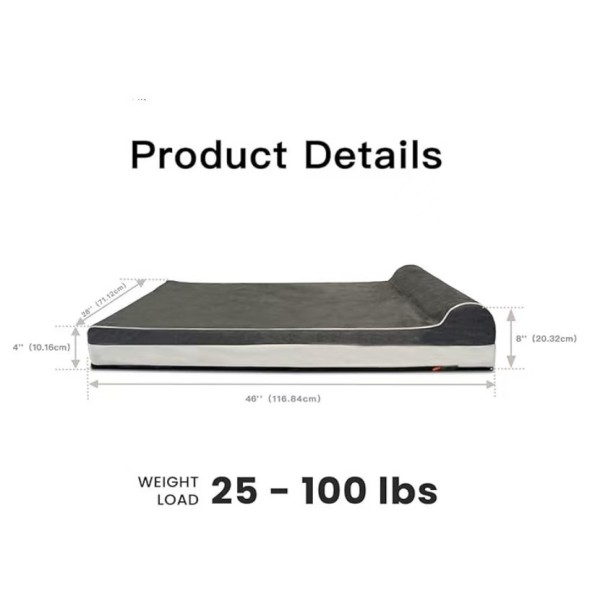
A bed with thick bolsters can lose a large percentage of its nominal size.
For senior products, I would show:
- external dimensions
- internal sleeping dimensions
- front-entry width
- bolster height
- support-core thickness
The dog should be able to lie on its side, curl, turn, and reposition without repeatedly hitting the edge.
Breed-only labels are not enough.
Cleaning Is a Core Senior-Bed Feature
Older dogs may experience urinary or fecal accidents more often, and senior-care guidance recognises the value of washable or waterproof bedding protection.
A practical senior bed usually works best as three layers:
- removable washable outer cover
- protective waterproof or water-resistant liner
- support core that stays dry
The important B2B test is not whether the specification says “removable cover.”
Physically remove it. A technically washable bed can still create complaints if the zipper is too short or reassembly is difficult.
Routine pet-supply cleaning should follow the material and care instructions.
Waterproof Does Not Mean the Whole Bed Is Waterproof
A waterproof liner can protect the foam while the outer textile still absorbs liquid.
Zippers, seams, bolster fillings, and bottom panels may also have different moisture resistance.
For a senior bed, I would describe each layer separately:
- washable outer cover
- waterproof or water-resistant inner liner
- protected foam
- moisture-resistant base, if applicable
That is more useful than a blanket “waterproof dog bed” claim.
Bolsters Should Help, Not Trap
Some senior dogs use a bolster as a headrest or side support. Others prefer lying flat.
For a senior-oriented bolster design, I would prefer one wide low entry, stable side support, and enough flat centre area.
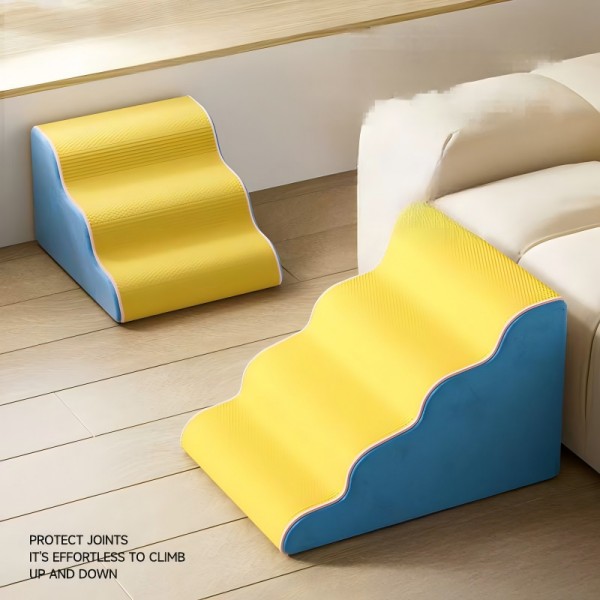
If the dog struggles with sofa access elsewhere in the home, a foam dog ramp for couch can support the wider resting environment.
Stairs Can Work When the Dog Still Handles Steps Well
Not every older dog needs a ramp.
Some still use short, shallow steps comfortably.
A high density foam dog stairs design can provide a lighter indoor option where the dog needs help reaching a sofa or higher resting area.
For senior use, I would check step height, step depth, foam stability, cover traction, and base grip.
If the dog already struggles with steps, a ramp or floor-level resting option may fit better.
Temperature Matters More Than Many Bed Guides Admit
Some senior dogs prefer cool hard flooring even when a padded bed is available.
The bed may simply retain too much heat.
A mobility-focused home setup should consider bedding that does not retain excessive heat, especially in warmer rooms or climates.
For a dog that wants a cooler contact surface but does not need another thick bed, a non gel cooling mat for dogs can be a separate seasonal option.
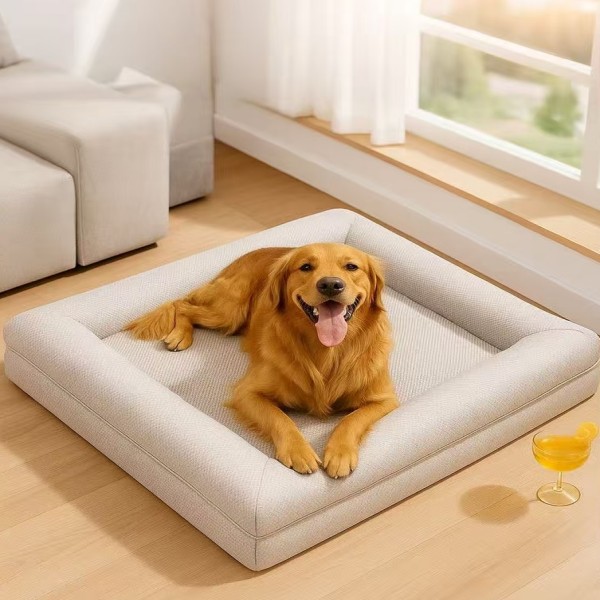
I would not call ordinary breathable fabric “active cooling.” Cooling claims should match the actual material or mechanism.
What I Would Avoid
I would be cautious when:
- the bed is very soft but has little support
- the front entry is unnecessarily high
- only external dimensions are shown
- the base slides on hard floors
- the cover is difficult to remove
- the foam has no moisture protection
- the bed retains too much heat
- “orthopedic” has no material specification
- product copy claims to treat arthritis or pain
How I Would Build a Senior Dog Range
| Product Direction | Best Fit | Commercial Role |
|---|---|---|
| Flat orthopedic mattress | Slower rising | Core support SKU |
| Low-entry bolster bed | Head support + easy access | Main senior bed |
| Deeper mattress | Heavy senior dogs | Large-dog support |
| Waterproof liner option | Accident-prone dogs | Functional upgrade |
| Cooling mat | Warm sleepers | Seasonal add-on |
| Foam ramp | Sofa access | Mobility accessory |
| Stable foam stairs | Short-height access | Mobility accessory |
For retailers, this creates a useful senior-living assortment.
How Archova Approaches Senior Dog Resting Products
At Archova, we would start with the dog’s movement pattern rather than the word “senior.”
For the bed itself, we focus on support depth, firmness under load, usable sleeping area, low entry, floor grip, removable covers, and moisture protection.
For warm-weather use, cooling surfaces remain a separate function.
For the surrounding home, ramps and stable foam stairs can create easier access to sofas or other resting areas where appropriate.
For private-label development, we can adjust support structure, dimensions, entry height, cover fabric, liners, anti-slip bases, colours, replacement covers, and packaging.
The goal is not to make the bed feel more medical. It is to make it easier for an older dog to use every day.
FAQ
What type of bed is best for a senior dog?
A stable, supportive bed with enough usable space, low entry, good floor grip, and a washable cover is a strong starting point.
Does every senior dog need an orthopedic bed?
Not every dog needs the same structure. The more important question is whether the bed provides stable support without bottoming out or making it difficult to rise.
Is memory foam good for senior dogs?
It can be, but memory foam alone does not guarantee a good bed. Firmness, density, thickness, recovery, and body weight all matter.
Should a senior dog bed be firm or soft?
It should provide cushioning without becoming so soft that the dog sinks deeply or struggles to stand.
Are bolsters good for older dogs?
They can be useful for dogs that rest against a side, but the bed should still have a wide, low entry.
Should a senior dog bed be waterproof?
A protective liner is often useful, especially when accidents occur. Check exactly which layer is waterproof or water-resistant.
What if my senior dog sleeps on the cool floor instead?
Temperature may be part of the preference. Consider a cooler resting surface while still providing an easy-to-use supportive option.
What should retailers check before sourcing senior dog beds?
Check support under load, usable dimensions, entry height, floor grip, cover removal, liner construction, heat retention, compression recovery, packaging, and sample-to-bulk consistency.
Conclusion
Choosing a dog bed for a senior dog is not about finding the thickest orthopedic mattress.
It is about reducing the small physical obstacles that make resting harder: deep sinking, high entries, slippery floors, trapped heat, difficult cleaning, and poorly protected foam.
For pet owners, the right bed should be easier to enter, easier to rise from, and easier to maintain.
For retailers and importers, the strongest senior-dog range combines stable bedding with practical access and mobility products—without turning comfort claims into medical promises.
References
- AAHA — Supporting Your Senior Pet: Veterinary Care Recommendations
- AAHA — How to Assess Your Senior Pet’s Quality of Life
- AAHA — Senior Care Kits
- Cornell University — Osteoarthritis
- VCA — Creating a Comfortable Home for Your Mobility-Compromised Dog
- CDC — About Cleaning and Disinfecting Pet Supplies