
The cheapest quotation is rarely the cheapest supplier.
For pet furniture importers, the better comparison is total supply risk: specification control, sample-to-bulk consistency, quality management, packaging, lead time, compliance support, communication, and after-sales response.
If two suppliers quote different prices, first make sure they are quoting the same product.
Make Every Quotation Comparable
A low price may simply reflect a different specification.
This happens when foam density, board thickness, panel size, fabric weight, connector material, hardware finish, packaging, or accessories are not locked into the RFQ.
Two suppliers may both quote dog crate furniture. One may include thicker panels, stronger door hardware, better carton protection, and individually packed fittings. The other may quote a visually similar product with cheaper components.

Before comparing price, give every supplier the same specification sheet. Include dimensions, tolerances, materials, color references, accessories, labeling, packaging, inspection expectations, and target quantity.
The first useful question is not “What is your best price?” It is “Are all suppliers quoting the same product?”
Compare Specification Control
A supplier becomes valuable when the approved specification survives bulk production.
A polished sample is not enough. Bulk problems often appear as changed filling, thinner material, different color, weaker hardware, or altered packaging.
I would ask how the supplier controls:
- approved materials and sub-suppliers
- drawings and BOM revisions
- color and fabric references
- approved samples
- change authorization
- in-process checks
- final inspection records
A formal quality management system can be a useful signal because ISO 9001 focuses on consistent processes. It is still not proof that your specific order will be correct.
If every answer is “no problem,” but nobody can explain how the requirement is controlled, I would treat that as a risk.
Test Sample-to-Bulk Consistency
The sample should become a production standard, not a showroom piece.
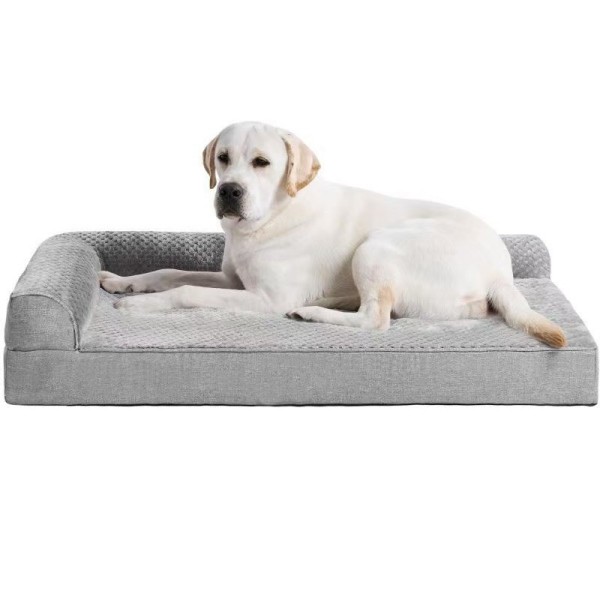
For an orthopedic dog bed, record foam structure, dimensions, firmness direction, usable sleeping area, fabric, zipper construction, liner, stitching, non-skid bottom, labels, and packed condition.

Use the approved sample, signed specification, or golden sample during pre-shipment inspection.
This catches subtle quality drift. A product may still look similar while foam, material thickness, connector fit, stitching, or carton protection has changed enough to create returns later.
For repeat orders, the supplier should not change a material or construction detail without written approval.
Compare QC Systems, Not QC Claims
“Strict QC” is not a useful comparison by itself.
Ask what is inspected, at which production stage, how results are recorded, and what happens when defects exceed the agreed limit.
For batch inspection, ISO 2859-1:2026 defines acceptance sampling plans for inspection by attributes. You do not need to turn every order into a standards exercise, but you do need an agreed inspection method.
For a plastic modular indoor dog playpen, inspection may include panel dimensions, gap consistency, connector fit, latch operation, sharp edges, base stability, surface defects, accessory count, and carton condition.
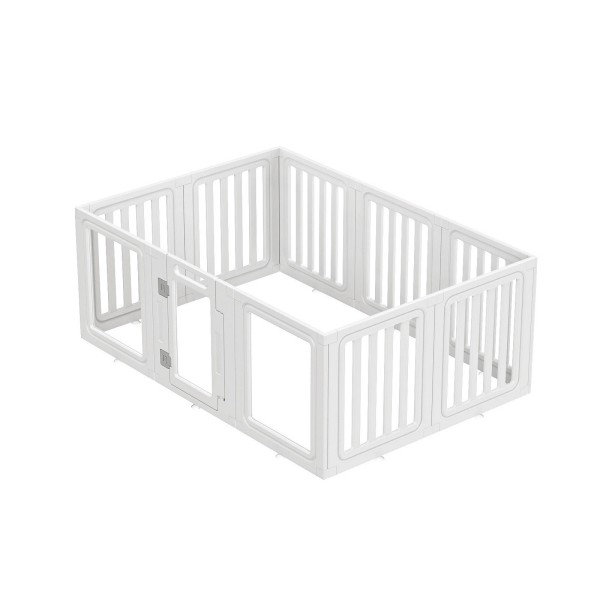
The supplier that defines inspection points, records defects, and corrects root causes is usually easier to scale with than one relying on final visual checking alone.
Packaging Changes the Real Cost
Pet furniture is often bulky, dimensional, or sensitive to pressure.
That makes packaging part of the product cost.
A supplier may save a few dollars and create larger losses through scratched panels, crushed corners, bent frames, deformed soft products, missing fittings, or oversized cartons.
When comparing suppliers, ask for:
- carton dimensions and gross weight
- inner and corner protection
- hardware packing
- carton marking
- loading method
- replacement-parts packing
For modular cat wall furniture, packaging must protect visible surfaces while keeping brackets, screws, and mounting parts organized.
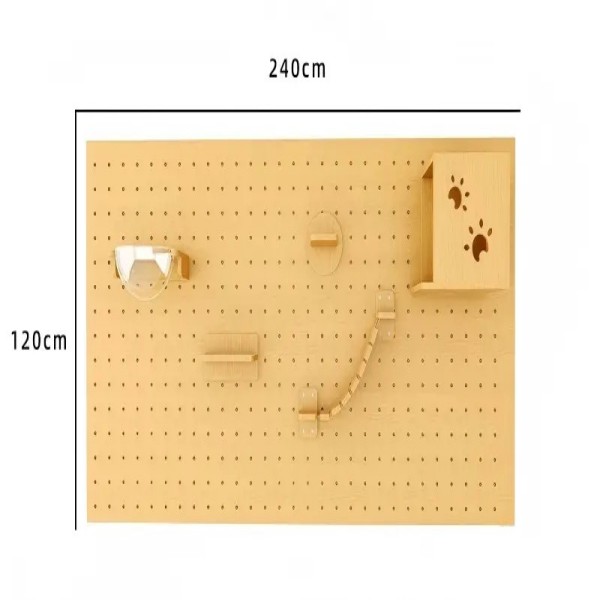
A slightly higher unit price can still create a lower landed loss rate if the cartons arrive intact and the hardware is complete.
Compare Lead Time by Process
“30 days” means little until you know what starts the clock.
Ask whether lead time begins after deposit, artwork approval, material confirmation, packaging approval, or final sample approval.
Then separate material preparation, production, customization, inspection, rework buffer, and export preparation.
I prefer realistic milestones over the shortest promise.
A late shipment becomes expensive when it creates stockouts, missed promotions, emergency freight, or retailer penalties.
Communication Is a Commercial Control
Good English alone does not equal good supplier communication.
Compare how accurately the supplier handles technical questions, revisions, problems, and written confirmation.
Useful signals include:
- specific answers rather than vague agreement
- updated drawings after changes
- access to production or technical staff
- early reporting of problems
- clear written responsibilities
- no silent material substitutions
One expensive failure is agreement in chat with no update to the production specification.
Put important changes into the PO, specification sheet, drawing, packaging file, or approved sample record.
Compare Compliance Support
The importer remains responsible for understanding destination-market rules.
U.S. Customs and Border Protection emphasizes importer responsibility and reasonable care. A supplier should therefore be judged partly on whether it can provide accurate descriptions, material information, country-of-origin details, commercial documents, and supporting records.
For products subject to U.S. Consumer Product Safety Commission certification, importers may also need certificate data and electronic filing. CPSC states that its eFiling requirements for covered imported consumer products are now in effect.
Do not assume every pet product has the same regulatory requirements. The supplier does not replace your compliance adviser, but poor documentation creates risk.
Compare Incoterms and Landed Cost Correctly
FOB, EXW, FCA, DDP, and other trade terms are not interchangeable prices.
Incoterms rules clarify specified tasks, costs, and risks between seller and buyer. They do not tell you which supplier is economically better.
Compare landed cost using the same basis:
- product price
- tooling and setup
- custom packaging
- inland transport
- export charges
- freight and insurance
- duties and taxes
- brokerage
- inspection
- storage
- damage allowance
- replacement cost
A small unit-price saving disappears quickly if the carton becomes oversized or defects require replacements.
Use a Supplier Scorecard
A simple scorecard forces you to compare risk consistently.
| Supplier Signal | What It Tells You | What I Would Verify |
|---|---|---|
| Specification control | Ability to reproduce the same product | BOM, drawings, approved sample |
| Sample-to-bulk consistency | Production discipline | Material lock and change approval |
| QC system | Defect prevention and detection | Inspection records and corrective action |
| Packaging execution | Damage and freight risk | Carton size and protection |
| Lead-time control | Replenishment reliability | Milestones and material lead time |
| Communication | Execution accuracy | Written confirmation and escalation |
| Compliance support | Documentation readiness | Material records and certificates if applicable |
| After-sales response | Cost of solving problems | Replacement and root-cause process |
| Price | Direct factory cost | Same spec and trade term |
I would never let price carry the highest weight automatically.
For a first order, product conformity and problem response are often more important than squeezing the last percentage point from the quotation.
Compare Product Judgment
A strong supplier should sometimes challenge your request.
If you ask for a foam stair that is too steep, a carton that will not protect the product, or an unstable enclosure layout, useful pushback is a positive sign.
A foam dog stairs supplier should be able to discuss total height, step height, tread depth, foam firmness, bottom grip, fabric, packed recovery, and target furniture height.
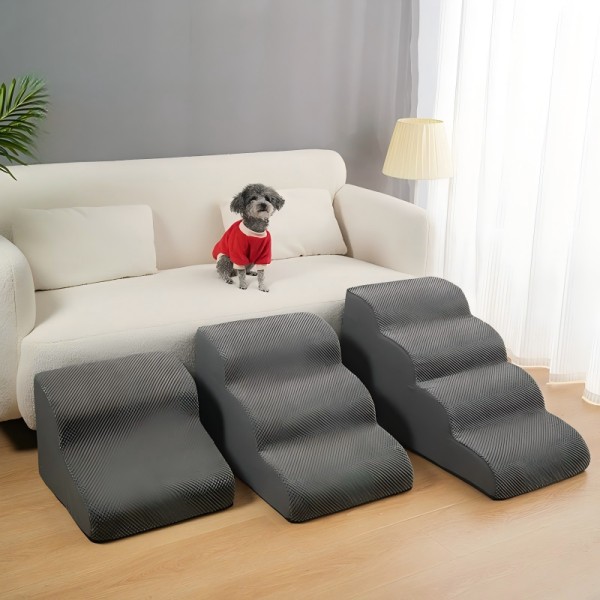
A supplier that only follows instructions may manufacture your mistake perfectly.
Category experience should help identify that mistake before production.
Risk Before Margin: Watch Problem Response
Every supplier eventually faces a defect, delay, material shortage, packaging issue, or shipping mistake.
The comparison becomes clearer when something goes wrong.
Ask whether the supplier:
- reports the problem early
- separates affected units
- identifies the cause
- documents rework
- prepares replacement parts
- prevents the same issue next time
A supplier that hides problems until final inspection creates uncertainty. A supplier that reports issues early gives you options.
That difference can be worth more than a lower quotation.
How Archova Approaches Supplier Comparison
At Archova, we look at pet products as systems rather than isolated SKUs.
For crate furniture, that means panel structure, usable inner space, hardware, ventilation, cleaning access, assembly, and packaging. For orthopedic beds, it means foam structure, usable area, cover and liner construction, non-skid performance, and care wording.
For playpens, we look at panel stiffness, gaps, connectors, latches, floor contact, accessories, and small-part packing. For cat wall furniture, we look at load-bearing structure, mounting parts, usable surfaces, finish, and packaging protection.
The goal is not to win every order by being the lowest quote.
The goal is to make the approved product easier to reproduce, inspect, ship, sell, and reorder.
When a Higher-Priced Supplier Is Better
A higher quotation can be rational when it buys measurable value:
- more stable materials
- better sample-to-bulk consistency
- stronger packaging
- clearer QC records
- lower defect risk
- better technical communication
- faster corrective action
- better documentation
- more reliable replenishment
The difference must be real, not explained with vague words like “premium.”
Ask the supplier to show what the price difference buys.
FAQ
What should I compare first?
Start with the specification. Make sure every supplier is quoting the same materials, dimensions, accessories, packaging, quantity, and trade term.
Is the lowest price usually the best deal?
No. A lower quote can create higher inspection, damage, return, rework, freight, or replacement costs.
How can I reduce sample-to-bulk differences?
Lock the specification, keep an approved sample, require written approval for changes, and inspect production against those standards.
Should I require ISO 9001?
It can be a useful signal of a structured quality management system, but certification alone does not guarantee your order.
How should I compare QC?
Compare inspection stages, defect standards, records, acceptance criteria, and corrective actions.
Why include packaging in supplier evaluation?
Packaging affects freight, damage, returns, customer experience, and replacement cost.
How important are Incoterms?
Very important. Compare suppliers on the same trade term or rebuild each quote into landed cost.
What is the strongest sign of a long-term supplier?
Consistency: the supplier repeatedly delivers the approved product, communicates changes, follows realistic schedules, and solves problems without repeating them.
Conclusion
Price is one line in a supplier comparison. It should not be the whole decision.
The better supplier is the one that can hold your specification, reproduce the approved sample, control defects, protect the product in transit, communicate changes, support documentation, and solve problems before they reach your market.
For pet furniture, that reliability is part of the product.
References
- ISO — ISO 9001:2015 Quality Management Systems
- ISO — ISO 9001: What Does It Mean in the Supply Chain?
- ISO — ISO 2859-1:2026 Sampling Procedures for Inspection by Attributes
- U.S. International Trade Administration — Know Your Incoterms
- U.S. Customs and Border Protection — Reasonable Care
- U.S. Consumer Product Safety Commission — eFiling