Cat wall shelves solve a simple home problem: cats need places to climb, observe, rest, and move, but many homes do not have room for another large floor product.
For retailers and importers, that makes wall-mounted cat furniture more than décor. It can become a modular product line built around small-space living, indoor enrichment, and repeat expansion.
Why Cat Wall Shelves Fit Small Homes
Apartments, bedrooms, studios, and compact living rooms usually have more unused wall area than unused floor area.
That is where cat wall shelves have a clear advantage. They add usable cat territory without the permanent footprint of a large freestanding structure.
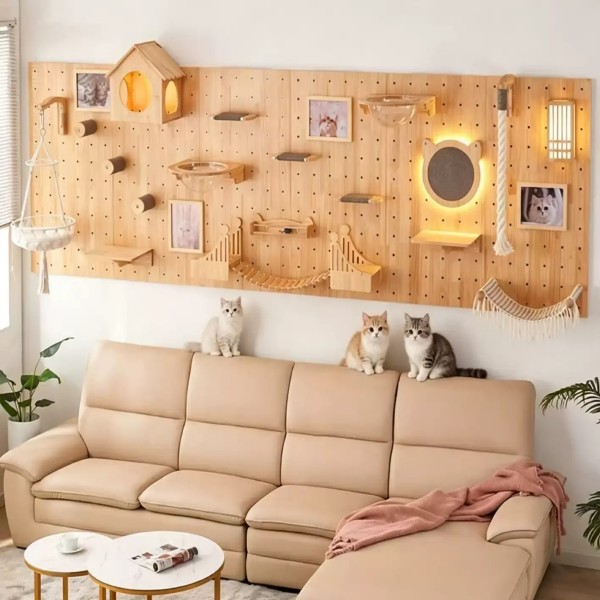
The idea also matches normal feline behavior. FelineVMA notes that vertical space is important in indoor environments because elevated options increase usable space and allow cats to climb, observe, and retreat.
For pet owners, the benefit is simple: more cat space without making the room feel more crowded.
The Product Is Really About Vertical Territory
One shelf is not a complete cat environment.
A better system creates a route: lower entry points, intermediate steps, resting platforms, observation areas, and optional hideaway or scratching elements.
FelineVMA also states that indoor-only cats should have access to safe territory with vertical space.
That is why I would not build a retail range around random shelves. A connected cat climbing wall shelves system is easier to understand when each component has a role.
Start With a Starter Set
Too many individual SKUs can make this category difficult to buy.
For a first retail range, I would use a small number of clear sets:
- compact apartment starter set
- standard climbing and resting set
- large-cat set
- expansion shelf pack
- optional hideaway module
A starter set reduces the first buying decision. Pet owners see one complete layout instead of trying to design the wall from separate pieces.
Modularity Can Create Repeat Sales
A one-piece product is usually sold once. A modular wall system can grow.
A modular cat wall furniture line can allow the retailer to sell an initial set, then compatible add-ons later.
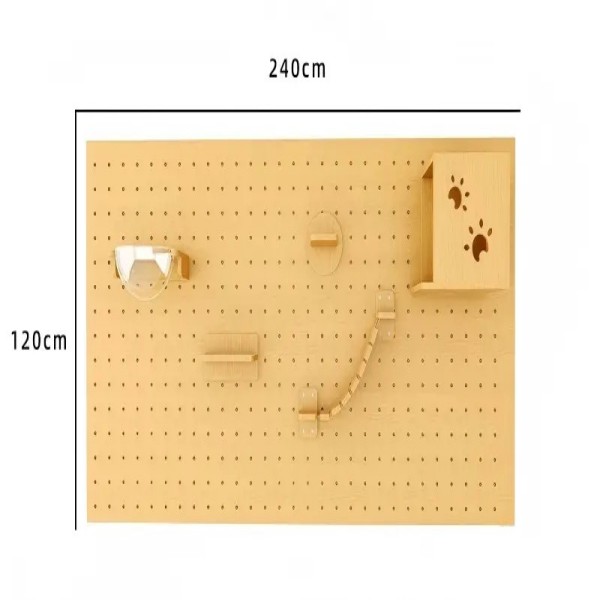
For that model to work, compatibility must stay consistent. Shelf dimensions, mounting points, hardware, finishes, and accessory interfaces should not change casually between production runs.
I would treat compatibility as part of the specification, not just a marketing claim.
Small-Space Does Not Mean Small Cat
A compact apartment may still have a large cat.
Do not reduce shelf depth or resting area only to make the product look visually lighter. Cats still need enough room to land, turn, sit, and rest.
Retail product information should show:
- usable shelf width and depth
- recommended spacing
- intended cat size or use scene
- mounting method
- included hardware
- wall requirements
- load guidance when available
The product should save room around the cat, not take usable room away from the cat.
Route Design Matters More Than Shelf Count
Six shelves do not automatically make a good climbing wall.
Check how the cat enters the system, how far it must jump, whether there are dead ends, and whether the highest area has enough resting space.
Cats Protection recommends cat-friendly shelves and climbing opportunities for indoor cats.
The practical product lesson is to create movement options rather than dramatic jumps.
For older or less agile cats, lower routes can be more appropriate. FelineVMA guidance for cats with chronic pain includes steps or ramps to resting places and favorite perches.
Multi-Cat Homes Need More Than One Good Perch
Vertical products become even more useful in multi-cat homes.
The Ohio State Indoor Pet Initiative notes that indoor cats may compete over resources including perches and safe observation areas.
That means one desirable top shelf can become a bottleneck.
For multi-cat sets, I would consider more than one resting platform, alternative routes, and enough spacing for cats to avoid forced close contact.
This creates a useful retail distinction between a basic apartment set and a multi-cat set.
Home Style Matters Because the Product Stays Visible
Wall-mounted cat products are difficult to hide after installation.
That makes finish, shape, hardware visibility, and proportions commercially important.
Modern cat wall shelves work best when the system looks intentional in the room.
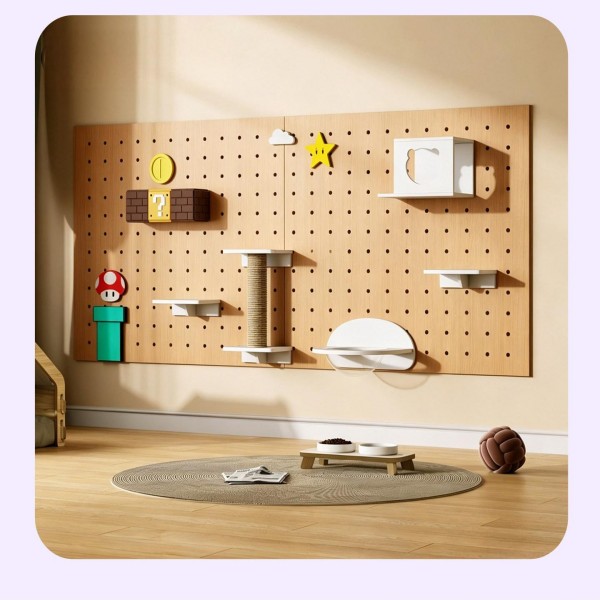
For a first range, I would keep colors controlled. Neutral wood tones, white, black, and other home-friendly finishes are easier to combine than many unrelated colors.
Installation Is the Main Risk
Wall-mounted furniture creates a responsibility that floor products do not.
A shelf may look strong but still fail if the wall, anchor, bracket, or installation method is wrong.
For B2B selection, I would check:
- bracket thickness and geometry
- screw and anchor specification
- mounting-hole position
- shelf-to-bracket connection
- included hardware
- installation instructions
- warnings for unsuitable wall conditions
Drywall, masonry, wood framing, and other surfaces should not all receive the same installation promise.
Clear installation guidance reduces misuse and support questions.
Hardware Is Part of the Product
A missing screw can stop the whole installation.
For wall mounted cat furniture, I would pack mounting parts by module or installation step.
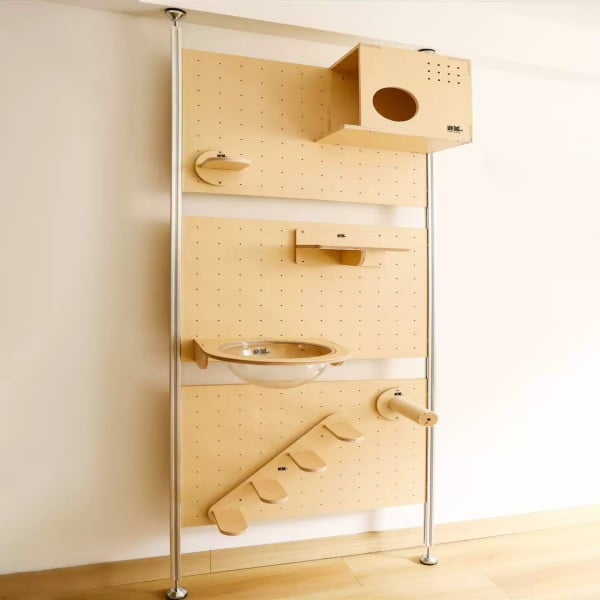
Small labeled bags are easier to understand than one mixed hardware pouch. Spare pieces can also reduce unnecessary replacement requests.
Packaging Must Protect Finish and Geometry
Cat wall furniture often includes flat panels, brackets, finished edges, and multiple hardware packs.
Visible surfaces need scratch protection. Corners need impact protection. Longer shelves should not move enough inside the carton to damage one another.
Packaging also affects freight. A modular system may pack efficiently, but only when parts are organized well.
I would request packed dimensions and weight before approving the final set structure.
A Better Retail Product-Line Structure
| Product Direction | Best Fit | What I Would Check |
|---|---|---|
| Apartment starter set | One-cat small homes | Compact route, simple installation |
| Standard wall set | Mainstream indoor use | Balanced climbing and resting areas |
| Large-cat set | Bigger or heavier cats | Shelf depth, structure, mounting |
| Multi-cat set | Shared indoor territory | Multiple routes and resting platforms |
| Expansion pack | Existing system owners | Compatibility and finish consistency |
| Hideaway module | Cats that seek cover | Entry size, stability, cleanability |
This is easier to merchandise than twelve shelves with similar names.
It also gives retailers clearer room scenes for photography and advertising.
How Archova Approaches Cat Wall Furniture
Archova treats cat wall products as a modular indoor-living system rather than isolated shelves.
We look at usable platform size, route logic, mounting structure, hardware, finish, packaging, and expansion compatibility together.
For a first private-label order, a practical range can use a compact starter set, a fuller wall set, and one or two expansion options.
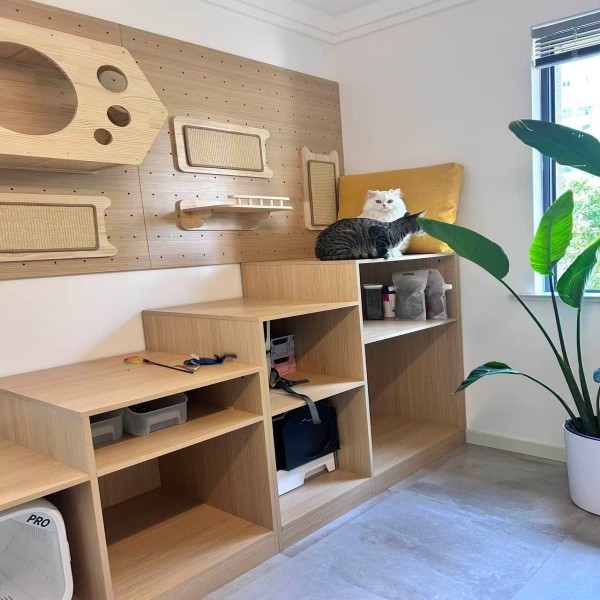
Private-label changes can begin with finish direction, set composition, labels, instructions, carton presentation, and module grouping before deeper structural development.
The goal is to make the line easy to buy, install, expand, and reorder.
When Cat Wall Shelves Are Worth Adding
This category makes sense when your market includes apartment living, indoor cats, modern interiors, or pet owners who prefer using wall space instead of adding another large floor product.
It becomes stronger when the line offers a clear starter-to-expansion path.
I would be careful when mounting instructions are weak, shelf depth is too small, hardware changes between production runs, packaging does not protect visible surfaces, or load guidance is unclear.
A space-saving product should reduce complexity in the home, not move that complexity into installation.
FAQ
Are cat wall shelves good for small apartments?
Yes. They use vertical wall space rather than adding another large floor footprint.
How many shelves should a starter set include?
There is no universal number. The better question is whether the set creates a usable route with entry, climbing, resting, and observation points.
Are wall shelves suitable for large cats?
They can be, but shelf depth, support structure, mounting hardware, and wall conditions must match the intended use.
What should retailers check before sourcing?
Check platform dimensions, route design, brackets, hardware, installation instructions, finish consistency, packaging, and expansion compatibility.
Can cat wall furniture work in multi-cat homes?
Yes, especially when the layout provides multiple routes and more than one desirable resting or observation area.
What makes a modular system commercially useful?
A starter set can lead to expansion packs and compatible modules, creating a product ecosystem rather than isolated shelves.
How does Archova support cat wall shelf projects?
Archova can support set planning, platform sizes, modular layouts, material and finish direction, mounting hardware, packaging, instructions, and private-label development.
Conclusion
Cat wall shelves earn their place when they solve two problems at once: they give cats more vertical territory and give pet owners a way to use the room more efficiently.
For retailers, the strongest opportunity is not one shelf. It is a clear system with starter sets, compatible expansion, reliable mounting, and room-friendly design.
That is how wall-mounted cat furniture becomes a product line instead of a collection of parts.
References