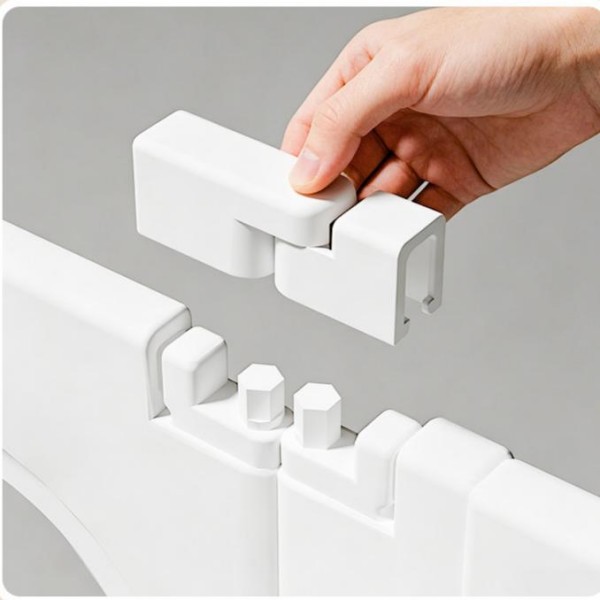
To connect dog pen panels, place two panels side by side, align the connection holes or panel edges, then insert the rod, clip, hinge, or slot connector.
Lock each joint before adding the next panel. After the connected panel layout is complete, check the corners, door panel, and base support.
The modular dog playpen should not wobble, slide, pinch, or open when the dog pushes the panels lightly. The enclosure should also be introduced gradually and used as a safe management space rather than punishment. For pet owners, this is an assembly step. For B2B buyers, this is a product quality test.
Choose the Layout Before Connecting the Panels
Choose the final shape before assembly. Square and rectangular layouts are usually easier to stabilize indoors; L-shapes can fit walls or furniture; long divider layouts may need extra base or wall support.
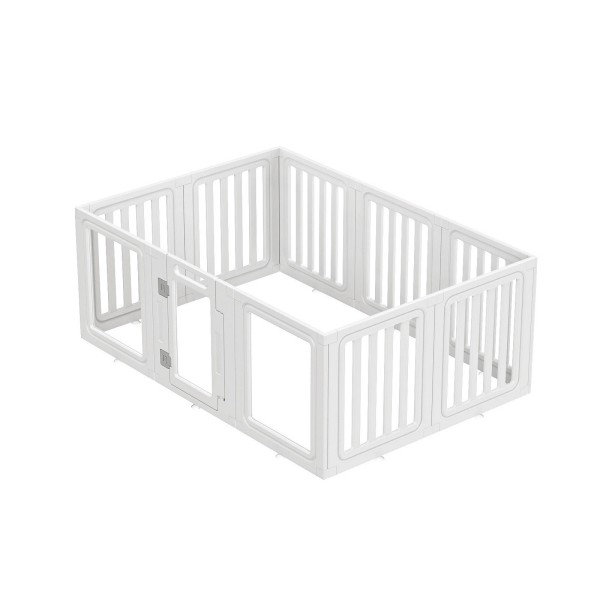
Show real layout options on product pages so pet owners can understand the modular value before purchase.
Align the First Two Panels Carefully
The first connection affects the rest of the modular dog playpen. If the first two panels are not aligned, the full layout may feel unstable.
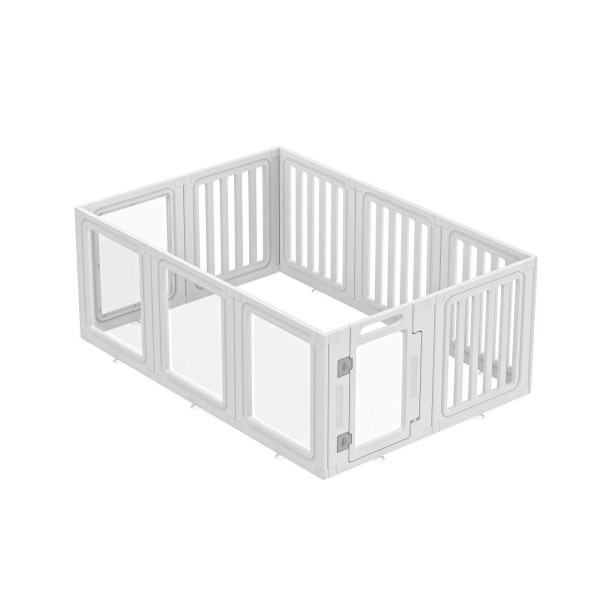
For metal dog playpen panels, line up the hinge loops or side rings. Then insert the rod from top to bottom.
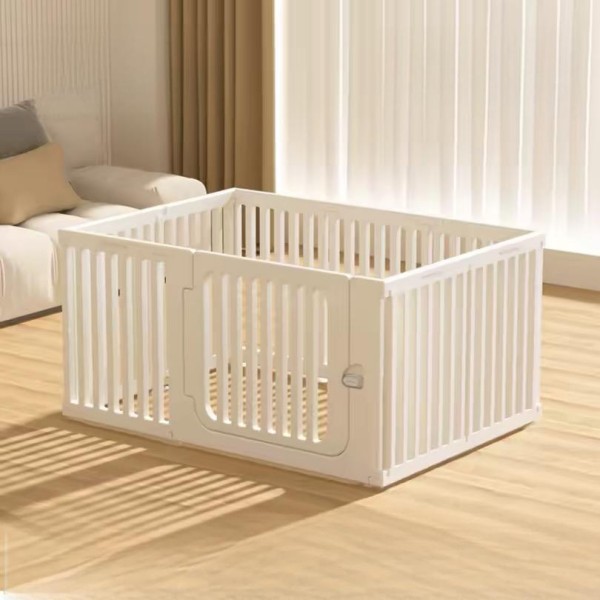
For plastic or composite dog playpen panels, slide both panel edges fully into the connector. The bottom edge should sit evenly inside the connector.
For acrylic or transparent dog playpen panels, keep the corner straight before tightening the connector. Small angle errors look more obvious on clear panels.
This step matters because many assembly complaints begin here. The product may seem weak, while the real issue is poor alignment.
Lock Each Joint Before Adding More Panels
Do not build the full dog playpen first and check the joints later. Lock each connection as the layout grows.
If the dog playpen uses rods, each rod should pass through every loop smoothly. If one loop is missed, that corner may twist.
If the panel system uses clips, each clip should close firmly without forcing. A forced clip may crack or loosen after repeated use.
If the panel system uses slot connectors, the panel edge should not sit halfway inside the groove. A loose slot can make the connected panel layout shake.
For B2B buyers, this is an important inspection point. A good connector should feel secure, but not difficult.
Place the Door Panel Where Daily Use Makes Sense
The door panel should not be placed randomly. The door position should match how pet owners feed, clean, and enter the dog playpen area. A positive, reward-based introduction helps the enclosure become familiar instead of something the dog is forced into.
For feeding and cleaning, the door panel should face the room opening. For a puppy area, the door should be easy for the owner to reach.
For retail pages and private label packaging, show the door panel clearly. Buyers want to know whether the dog playpen is easy to enter, clean, and use with bowls or mats.
A weak door latch can make the whole modular dog playpen feel cheap. A smooth door panel makes the panel system feel more reliable.
Archova pays close attention to door access in modular indoor dog playpens. The door panel is often the part people touch most.
Stabilize the Base After the Panels Are Connected
After all dog playpen panels are connected, check the base. Push the connected panel layout gently from several sides.
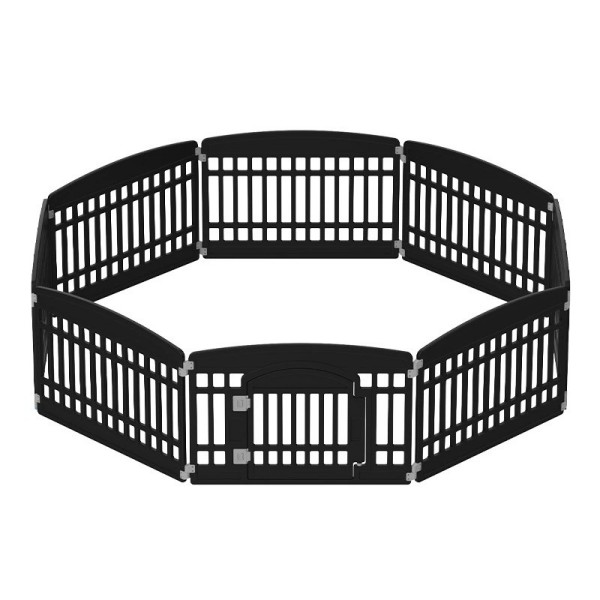
If the modular dog playpen slides on tile or wood floors, anti-slip feet, suction cups, or floor protectors may help. If the layout is used outdoors, ground stakes may be needed.
Suction cups can work well on smooth floors. They usually do not work well on carpet, rough floors, or dusty surfaces.
For an open divider layout, extra support is often needed. Closed shapes usually feel more stable than long straight layouts.
This is where many low-cost dog playpen systems fail. The panels connect, but the full structure still does not feel safe.
Check Gaps, Sharp Points, and Loose Parts
After assembly, inspect every joint, cap, corner, and gap. Open and close the door several times and confirm the latch still aligns.
If add-on panels are part of the system, test one during sampling so expansion compatibility is verified before bulk orders.
Common Connection Types for Dog Playpen Panels
Different systems use rods, hinges, clips, slots, suction bases, or ground stakes.
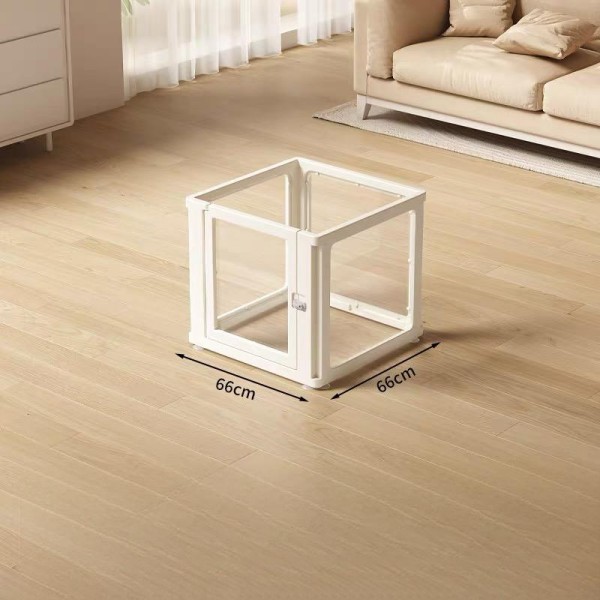
| Connection Type | Common Use | What to Check |
|---|---|---|
| Drop-in rods | Metal panels | Alignment and bending |
| Hinges | Foldable systems | Loose swing and fold stability |
| Plastic clips | Lightweight panels | Grip and cracking |
| Slot connectors | Plastic/composite | Full insertion and fit |
| Suction bases | Smooth indoor floors | Floor match and suction |
| Ground stakes | Outdoor grass | Stable placement |
The best connection type is the one that matches the material, layout, and use scene.
Why the Connection System Affects Product Value
A modular dog playpen is only as strong as the connection system that holds the layout together. Difficult alignment, loose joints, or hard-to-replace connectors quickly become support problems.
For B2B buyers, connector quality affects setup, reviews, spare-part demand, and repeat sales. It should be treated as part of the product, not as a small accessory.
What Pet Owners Really Care About
Pet owners want easy setup, stable panels, a reliable door, and a layout that stays where it was placed.
They also need the enclosure to match the dog. A dog that panics, climbs, chews, or repeatedly tries to escape may need a different containment and behavior plan rather than simply more panels.
What B2B Buyers Should Check Before Ordering
Before ordering, check whether panels connect smoothly, whether add-on panels remain compatible, whether the door uses the same joint logic, and whether spare connectors are available.
Small-part packing matters too. One missing connector can stop the full system from being assembled.
How to Position Modular Dog Playpens in Your Product Line
A reliable modular dog playpen can be sold as a flexible pet-space system rather than only as a fence.
Home buyers value adjustable layouts; service spaces value quick setup and cleaning; private-label sellers can extend the line with add-on panels, spare connectors, mats, and floor pads.
When This Product Direction Is Worth Adding
Add modular dog playpens when the system is easy to assemble, stable after setup, safe for the intended dogs, and expandable without confusion.
Be careful when the connector is weak, hard to replace, or inconsistent across panel versions. Connection quality protects both the end user and your margin.
FAQ
How do you connect dog pen panels?
Align two panels, insert or lock the correct rod, clip, hinge, or slot connector, and secure each joint before adding the next panel.
Why does a modular playpen feel unstable?
Loose connectors, poor angle control, weak base support, or an unsuitable floor surface are common causes.
Can panels form different shapes?
Yes, when the connector system supports the required angles. Closed shapes are usually easier to stabilize than long open dividers.
Are suction cups useful?
They can help on clean, smooth floors. Carpet, rough surfaces, dust, and outdoor ground reduce their usefulness.
Can extra panels be added later?
Yes, when height, width, connector type, and production version remain compatible.
What should B2B buyers check?
Connector fit, door latch, base stability, panel gaps, spare parts, add-on compatibility, packaging, and instruction clarity.
References