Small homes do not need more bulky pet products. They need dog crate furniture that gives the dog a calm resting space while keeping the room open, clean, and easy to live in.
If you are choosing this category for your product range, I would not start with the prettiest photo. I would start with the room: where will this crate sit, how much visual weight will it add, and will the dog actually feel comfortable inside?
Why Small-Space Dog Crate Furniture Is Different
In a small apartment, the crate often sits beside the sofa, bed, desk, or dining area. That makes it part of the room rather than something hidden away.
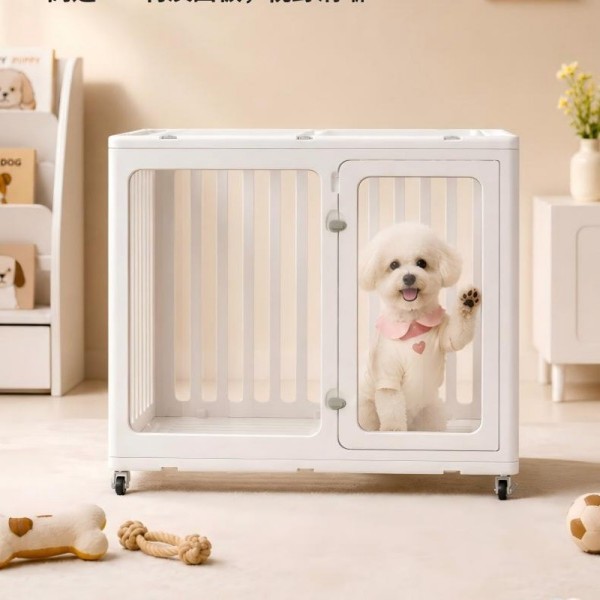
For this use scene, prioritize usable inner space, airflow, door access, cleaning, and visual weight before decorative details.
Modular Plastic Crate Furniture: Flexible First
A modular plastic dog crate works well when the room layout is limited or likely to change. The structure can be planned as panels, sections, or connected layouts, which gives more flexibility than one fixed box.
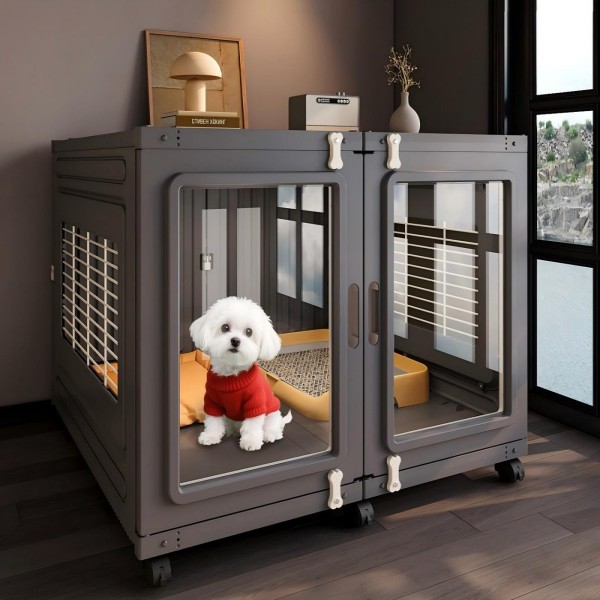
This matters for apartments, rental homes, puppy spaces, and small living rooms. Pet owners may need to move the crate from a sofa corner to a bedroom wall, or adjust the layout as the dog grows.
I like modular plastic because it does not pretend to be heavy furniture. Its strength is practical: lighter handling, easier cleaning, flexible setup, and a cleaner look than wire panels.
Resin Composite: Cleaner Than Wood, Warmer Than Basic Plastic
Resin composite crate furniture is useful when the product needs to feel more finished than basic plastic but easier to maintain than wood. It can give a smoother surface, controlled color, and a calmer furniture look.
This direction works well for pet owners who want a clean indoor crate but do not want a traditional wooden cabinet. It also suits homes where wipe-down care matters, especially around puppies, short-haired shedding dogs, or daily indoor use.
I would choose resin composite for simple modern rooms. White, grey, beige, black, and soft neutral colors usually work better than loud pet-product colors in small spaces.
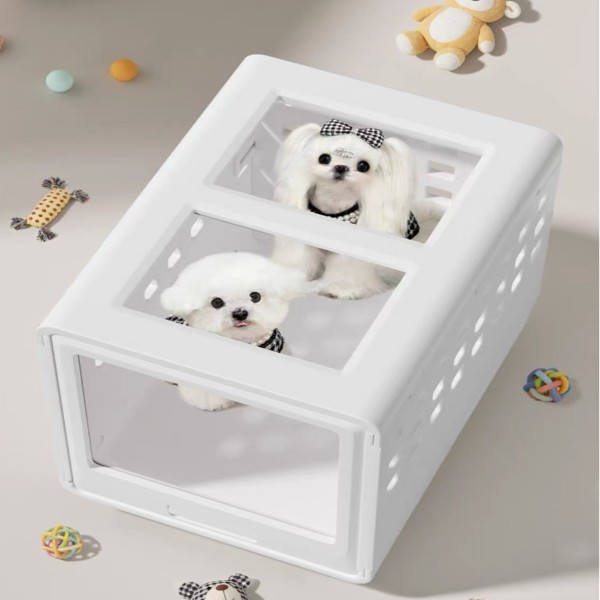
Clear Acrylic Crates: Visual Lightness Matters
A clear acrylic dog crate solves a problem that many small rooms have: visual heaviness. A dark wooden crate or metal cage can make a compact room feel even tighter.
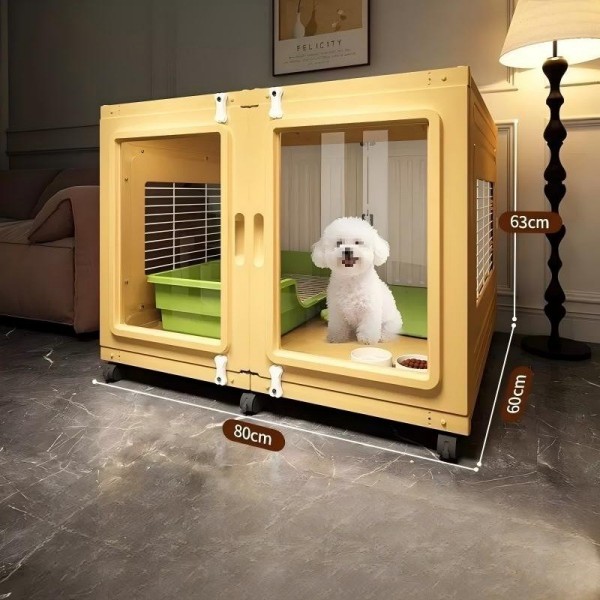
Clear acrylic keeps the dog visible and lets the room feel more open. It can work especially well in minimalist apartments, boutique pet corners, studio homes, and rooms where pet owners dislike bulky crate furniture.
But acrylic should not be chosen only for looks. I would still check airflow, frame strength, edge finishing, door stability, and scratch visibility. Transparent design should feel light, not fragile.
The Small-Space Value Is Not Only Saving Space
Here is the part many people miss. Small-space crate furniture is not only about reducing size. It is about making one product do two jobs without making the home feel crowded.
A crate end table can work as a side table. A modular plastic crate can become a calm dog corner. A clear acrylic crate can keep the room visually open. A resin composite crate can feel clean enough for a bedroom or living room.
This is why this category has real product value. It removes the “ugly crate” problem while still respecting the dog’s need for a safe and comfortable space.
Inner Size Comes Before Furniture Style
I usually check internal size before material. The dog should be able to stand naturally, turn around, and lie down comfortably. If the dog feels cramped, the furniture look does not matter.
Small-space products sometimes make a dangerous mistake: they save room by shrinking the dog’s usable space. That may look efficient on paper, but it creates discomfort at home.
A compact crate should save space around the product, not steal space from the dog inside it. This is the first rule I would not compromise.
Ventilation Is Not Optional
A dog crate furniture piece still needs airflow. Plastic panels, resin panels, and acrylic sides can all look cleaner than wire, but they must not make the inside feel closed or warm.
For modular plastic designs, ventilation can come from panel gaps, patterned openings, or open upper sections. For clear acrylic designs, airflow needs special attention because transparency alone does not equal comfort.
I would avoid any small-space crate that looks beautiful but feels too sealed. Dogs need air, visibility, and a calm resting environment, not just a nice outer shape.
Door Swing Can Make or Break a Small Room
In a small room, a door that opens the wrong way becomes annoying very fast. It may hit the sofa, block a walking path, or make the crate hard to use beside a bed.
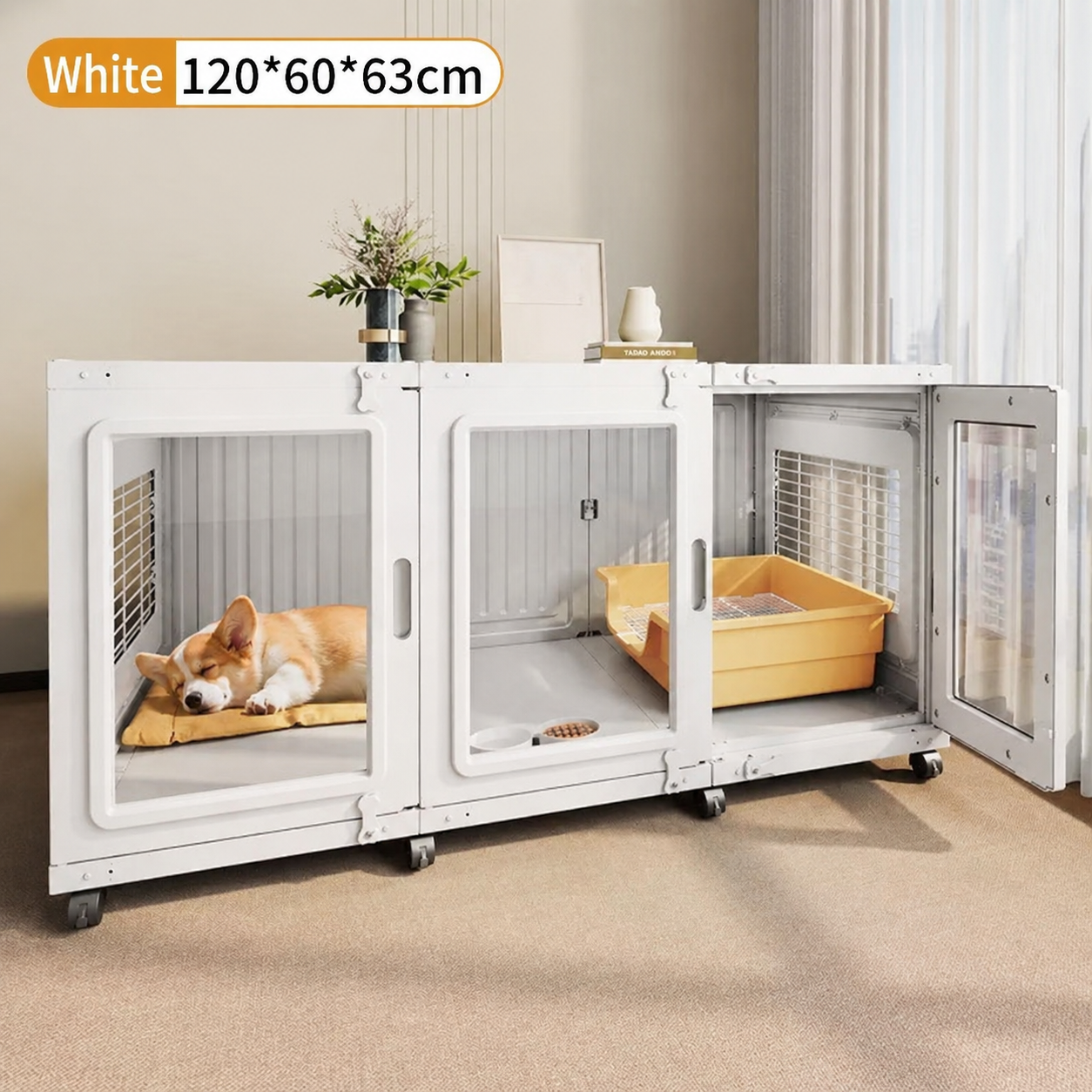
This is where modular plastic and acrylic structures can offer useful options. A front door may work in one room, while a side door may fit better beside furniture. Some layouts may need a wider entrance, especially for puppies or dogs that hesitate at the door.
I would check door position before choosing the finish. In small spaces, access is part of comfort.
Cleaning Should Match Real Dog Life
Pet owners like crate furniture until it becomes hard to clean. Hair, dust, drool, paw dirt, and small accidents all collect inside crate spaces.
Plastic and resin composite are strong here because they are easier to wipe than many wood or woven structures. Clear acrylic is also easy to wipe, though scratches and fingerprints may need more attention.
This is one reason I would put these materials first for small-space products. In a compact home, odor and mess feel bigger because everything is closer.
Plastic Does Not Have to Look Cheap
Plastic can look modern when panel shape, color, connectors, and surface finish are controlled. In compact homes, its value is practical: easier handling, easier wiping, flexible layouts, and less visual weight than many heavy furniture crates.
Where Wood and Woven Styles Still Fit
Wood and woven styles still work when natural texture or classic furniture appearance is the priority. In very compact homes, heavier visual mass, chewing risk, and harder cleaning can make them a secondary direction.
My Quick Material Judgment
| Material Direction | Best Fit | What I Would Watch |
|---|---|---|
| Modular plastic | Apartments, puppy zones, flexible layouts | Connector stability, panel fit, airflow |
| Resin composite | Modern indoor rooms, easy-care homes | Surface feel, structure, color direction |
| Clear acrylic | Minimalist spaces, boutique pet corners | Ventilation, scratches, frame strength |
| Wood and board | Classic furniture settings | Weight, moisture, chew-prone edges |
| Rattan / willow / PE rattan | Natural décor rooms | Chew risk, cleaning gaps, inner space |
I would not use this table as a ranking. I would use it to match the material with the room and the dog.
Risk Before Style
The biggest risk is a modern-looking crate that fails in daily use. Weak connectors, poor ventilation, cramped inner dimensions, unstable doors, or difficult cleaning quickly erase the furniture value.
Furniture-style crates are also not suitable for every dog. Dogs that panic, chew heavily, or repeatedly try to escape may need a different containment and behavior plan.
How Archova Fits This Product Direction
Archova looks at small-space crate furniture through the room first, then the dog, then the material. For modular plastic, we care about panel connection, layout flexibility, airflow, and easy cleaning. For resin composite, we care about surface finish, color stability, and home-friendly structure. For clear acrylic, we care about transparency, ventilation, frame strength, and visual lightness.
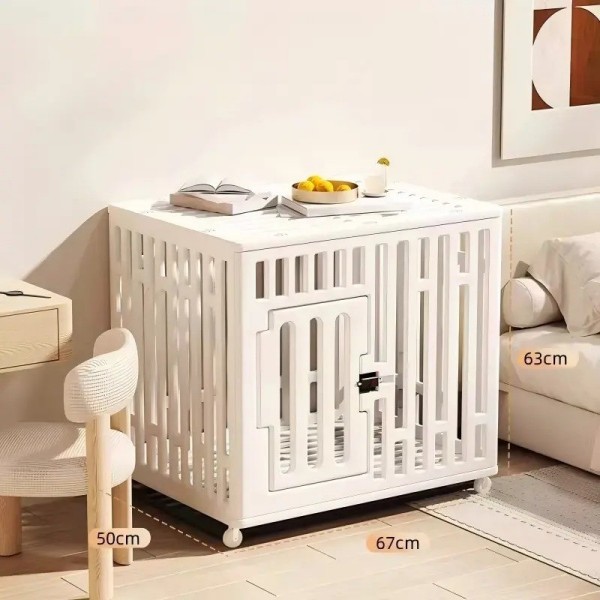
We can support finished product selection and practical private label changes without making the first order too complicated. Color, panel style, door direction, logo, and packaging protection are usually more practical starting points than a full custom build.
The goal is not to push every material into every home. The goal is to help you build a focused small-space crate furniture range that pet owners understand quickly and dogs can use comfortably.
When This Product Is Worth Adding
Modern dog crate furniture for small spaces is worth adding when your market includes apartment homes, small to medium dogs, puppies, modern interiors, and pet owners who dislike the look of wire crates.
The strongest starting directions are modular plastic crate furniture, resin composite crate furniture, and clear acrylic dog crate furniture. They solve the small-space problems more directly: flexibility, cleaning, visual openness, and room fit.
I would not add this category only because crate furniture looks premium. Add it when the product has suitable inner size, real airflow, stable doors, practical cleaning, and a material choice that makes small-space living easier.
FAQ
What type works best for small spaces?
Modular plastic, resin composite, and clear acrylic are strong directions when room flexibility, cleaning, and visual lightness matter.
Are modular plastic crates good for apartments?
Yes, when the layout is stable, the inner size is appropriate, and the dog is comfortable using a crate.
Are clear acrylic crates practical?
They can be, but transparency does not replace ventilation. Frame strength, airflow, edge finish, and scratch visibility still matter.
Can crate furniture replace a wire crate?
For some calm, crate-trained indoor dogs, yes. It is not the right replacement for every dog.
What should I avoid?
Cramped inner space, poor airflow, awkward door swing, weak hardware, unstable panels, and difficult cleaning.
References