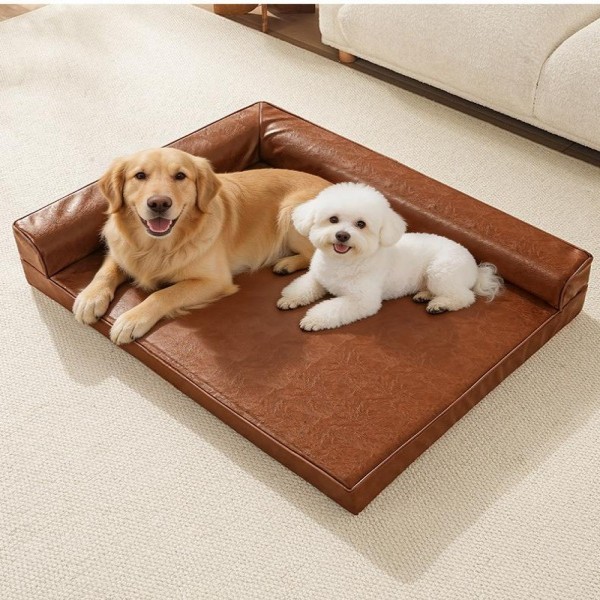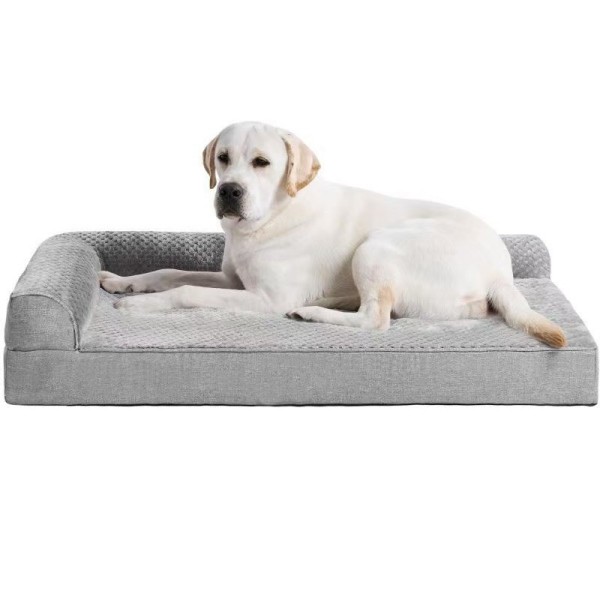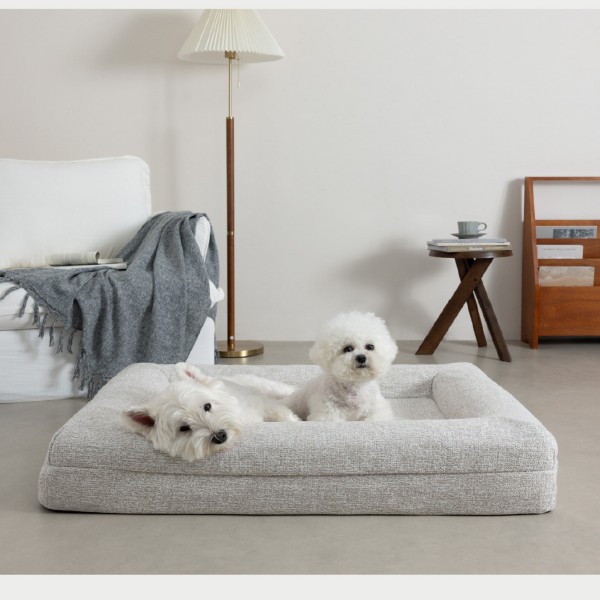
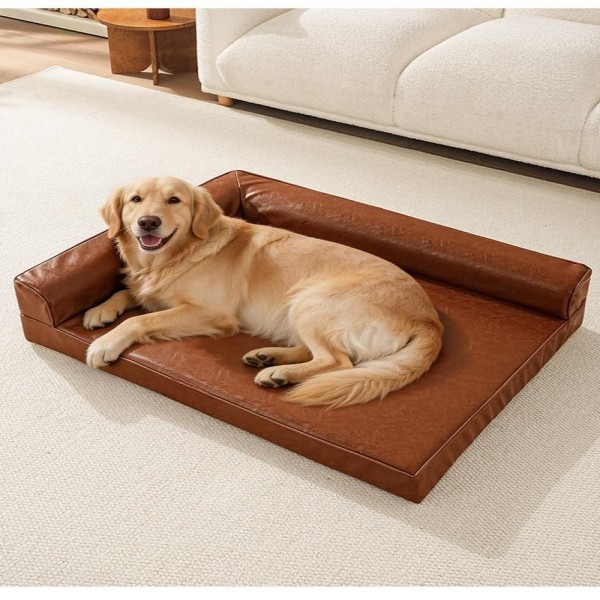
The best orthopedic dog bed is not the thickest bed, the softest bed, or the most expensive bed. It is the bed that supports the dog’s body, fits the dog’s sleeping habit, and stays practical after daily use.
If you are choosing this category for your product range, do not start with color. Start with the dog. Age, body weight, sleeping position, mobility, cleaning needs, and room placement decide whether the bed feels useful or just looks premium.
Start With the Dog, Not the Bed
I usually start with one question: what kind of dog is this bed really for? A senior Labrador, a small Dachshund, a young puppy, and a heavy bulldog do not need the same resting surface. They may all sleep indoors, but their bodies ask for different support.
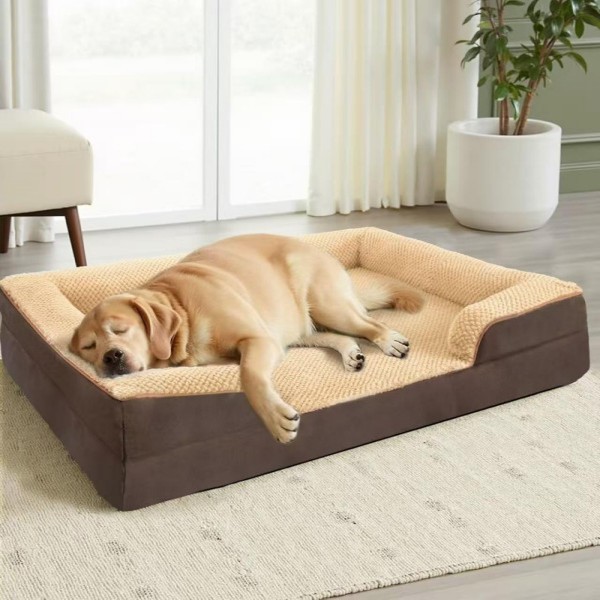
A young and healthy small dog may only need a comfortable soft bed. A large dog that flattens ordinary cushions needs deeper support. A senior dog may need both support and easier access, especially if getting up has become slower.
This is why “best orthopedic dog bed” should never mean one universal model. The best choice depends on the dog’s size, weight, movement, and how the dog naturally rests.
When an Orthopedic Dog Bed Makes Sense
An orthopedic bed makes sense when a dog needs more than casual softness. Slow rising, stiffness after rest, reduced willingness to jump, or difficulty getting up can be signs that deserve attention—especially in senior dogs.
A bed can support rest and make the home easier to use, but it does not diagnose or treat arthritis, pain, or mobility disease. New or worsening mobility changes should be discussed with a veterinarian.
Support Matters More Than Softness
Softness is easy to feel in a showroom. Support is what matters after the dog has been lying down for an hour.
The surface should cushion the dog while the core keeps the body supported above the floor. I would avoid calling a bed orthopedic simply because it looks thick or plush.
Foam Structure Is the Core Decision
Memory foam can contour around the body, but the full structure matters more than the material name. A comfort layer over a firmer support core is one practical direction.
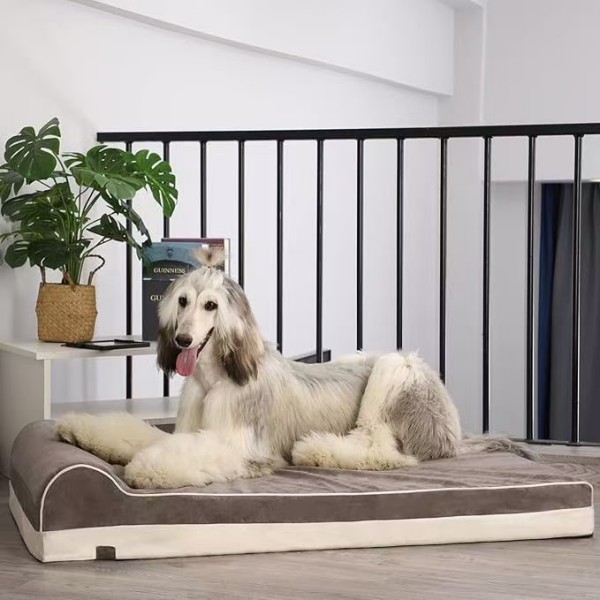
Compare foam depth, firmness, rebound, usable area, and target dog size rather than selling the words “memory foam” alone.
Match Thickness to Dog Size
Thickness and firmness should match the dog’s size and weight. A light dog and a heavy large breed do not compress the same bed in the same way.
For larger dogs, check whether the core keeps the body supported above the floor after full compression.
Choose the Right Bed Shape
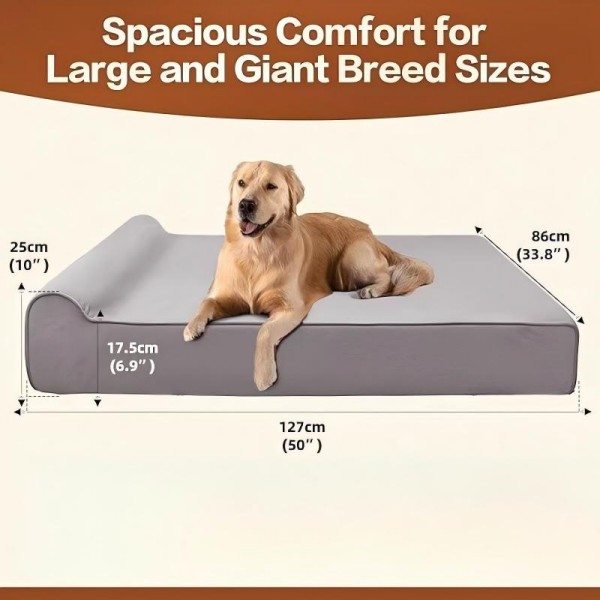
A flat orthopedic bed is usually the safest choice for dogs that stretch out, move around, or need easy entry from every side. It works well for large dogs, senior dogs, and dogs that dislike feeling closed in.
A bolster orthopedic bed works better for dogs that curl, lean, or rest their head on a raised edge. It feels more like a small sofa, which many pet owners like for living rooms and bedrooms.
The problem is that bolsters reduce the flat sleeping space. A bed can look large from the outside but feel smaller inside. I would judge the usable area, not only the outer size.
Low Entry Helps Senior Dogs
Senior dogs often need more than thick foam. They need a bed they can enter without effort.
A high-sided bed can look cozy, but an older dog may avoid it if stepping over the side feels difficult. Short-legged breeds can have the same problem.
For senior-focused beds, I would look for low entry, steady support, and a surface that does not shift under the paws. Comfort begins before the dog lies down. It begins when the dog decides whether the bed feels easy to use.
Usable Sleeping Area Is Often Overlooked
Outer size can be misleading. The dog does not sleep on the outer measurement; the dog sleeps on the usable center area.
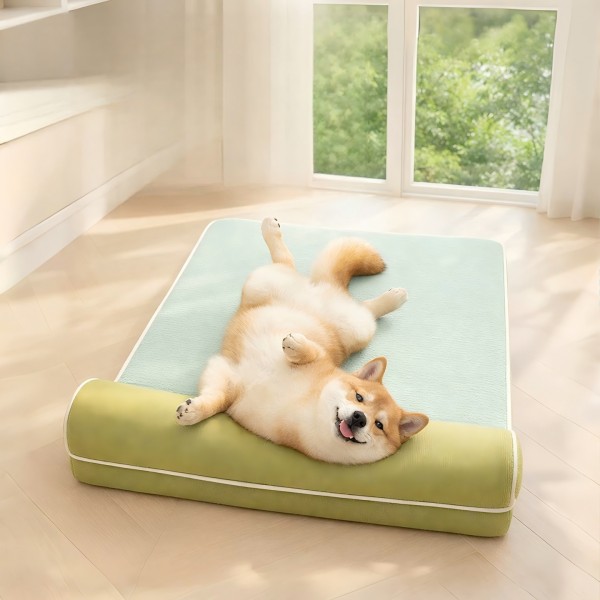
This matters especially for bolster beds. Raised sides take up space, so the actual flat area may be much smaller than expected. A large dog may look like the bed fits, then end up half on the bolster and half off the support zone.
I would choose a size that lets the dog stretch, curl, turn, and settle naturally. If the dog cannot stay fully on the supported surface, the orthopedic value becomes weaker.
Sleeping Style Should Guide the Choice
Curling dogs may prefer bolsters; stretching dogs often need a flat mattress-style surface. Dogs that run warm may prefer a simpler open shape.
Choose the shape around how the dog rests, not only how the bed photographs.
Cleaning Is Part of the Bed’s Value
Orthopedic beds are not decorative objects. They deal with hair, drool, dirt, odor, and sometimes accidents.
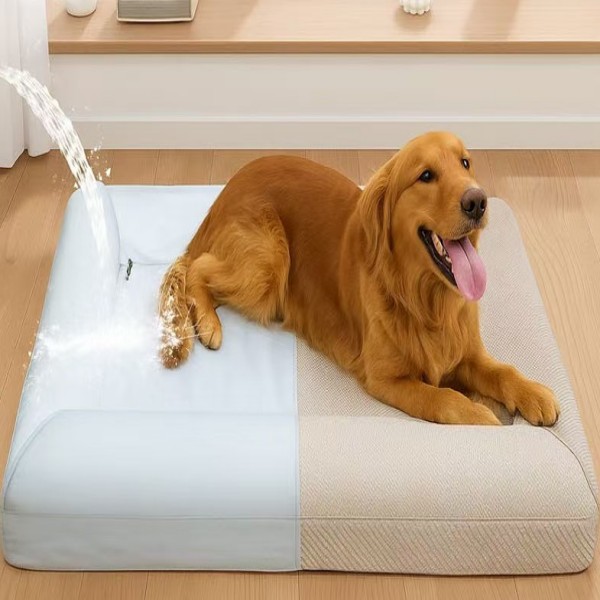
A removable washable cover is useful when it truly comes off and can be washed. A protective inner liner can help keep moisture and odor away from the foam core. Foam itself should not be treated like a normal washable fabric.
I would avoid unclear wording here. If the surface is fixed, call it a soft fabric surface and recommend spot cleaning. If the cover is removable, say so only when that is true.
Water-Resistant Is Different From Waterproof
Water-resistant, moisture-resistant, and waterproof are different claims. Use only the level of protection the cover, liner, seams, and zipper construction actually support.
Non-Skid Bottom Is Practical Support
A supportive bed still fails if it slides when the dog steps on it. This is common on tile, wood, vinyl, laminate, and other smooth floors.
Senior dogs and large dogs may notice movement more because they put more weight into the bed. If the bed shifts once, the dog may hesitate next time.
A non-skid bottom helps the bed feel stable. It is not the flashiest feature, but it protects the dog’s trust in the resting spot.
Fabric Changes Comfort and Home Fit
Fabric affects warmth, hair removal, cleaning, durability, and how the bed looks in the room.
Use plush for a warmer comfort story, woven fabric for a more structured look, and easy-care fabrics where shedding, drool, or outdoor dirt are common.
Be Careful With Chewing Dogs
Orthopedic dog beds are usually built for support and comfort, not aggressive chewing.
A stronger cover may help with light scratching, digging, or daily wear. But if a dog chews heavily, soft foam beds can be damaged quickly and may become unsafe.
I would not mix orthopedic support and chew-proof claims too casually. These are different product problems. A bed can be supportive without being suitable for a destructive chewer.
A Simple Selection Guide
| Dog or Home Situation | Better Bed Direction | What I Would Check |
|---|---|---|
| Senior dog | Low-entry orthopedic bed | Entry height, support, non-skid base |
| Large dog | Thick supportive flat bed | Foam depth, usable area, firmness |
| Dog that curls | Bolster orthopedic bed | Inner space and side height |
| Dog that stretches | Flat mattress-style bed | Full body support area |
| Messy dog | Easy-clean bed with liner | Cover care and foam protection |
| Smooth floors | Bed with non-skid bottom | Stability when stepping on |
| Warm climate | Breathable surface | Fabric feel and heat buildup |
| Modern home use | Furniture-friendly shape | Fabric texture, color, and structure |
This kind of comparison keeps the choice practical. It helps you think from dog use first, not from product names first.
How Archova Approaches Orthopedic Dog Beds
Archova looks at orthopedic dog beds through real pet home use. We do not treat them as ordinary cushions with a premium name.
For senior support, I would focus on low entry, steady foam support, non-skid bottom, and easy cleaning. For large dogs, I would focus on deeper support, wider usable sleeping area, and a stable flat surface. For modern home collections, I would also consider fabric texture, shape, color direction, and how the bed fits with other pet furniture.
Archova can support finished product selection, foam and fabric direction, size range planning, cover and liner options, color choices, and practical private label development. The goal is to build beds that pet owners understand and dogs actually use.
How This Product Fits a Wider Range
Orthopedic beds connect naturally with ramps, low-step stairs, sofa-style beds, crate mats, and other senior-support products.
The bed supports rest, while access products solve a different part of the same home-comfort problem.
Where I Would Be Careful
Be careful with thin beds marketed as orthopedic, very soft cores that collapse under weight, high-entry designs for mobility-limited dogs, and bolster beds with too little usable center space.
The product should not need exaggerated medical claims. Support, access, sizing, and care should make sense on their own.
When This Product Direction Is Worth Adding
Add orthopedic beds when your market includes senior dogs, large breeds, heavier dogs, or comfort-focused home use.
The product should earn the word orthopedic through support, sizing, access, cleaning, and clear care claims—not through a premium label alone.
FAQ
What makes an orthopedic dog bed different?
The support structure should keep the dog more evenly supported than a thin or easily compressed cushion.
How do I know if a dog may need more support?
Difficulty rising, stiffness, reduced activity, or mobility changes justify a closer look at the resting setup and veterinary evaluation.
Is memory foam necessary?
No. Foam depth, firmness, support structure, and dog size matter more than one material name.
Flat bed or bolster bed?
Flat beds suit stretching and easy entry. Bolsters suit curling or leaning but reduce the usable center area.
What size should I choose?
Choose by the usable sleeping surface, not only the outer dimensions.
Is a removable cover important?
Yes, when it genuinely comes off and can be washed.
Are orthopedic beds useful for large dogs?
They can be when depth and firmness keep a heavier dog supported above the floor.
What should B2B buyers verify?
Foam structure, usable area, entry height, fabric, cover and liner claims, non-skid performance, packaging, and care instructions.
References