Bulk buying can lower unit cost, but it also concentrates risk.
Once you move from samples to hundreds or thousands of units, a small mistake can affect the whole order. Wrong dimensions, changed foam, weak connectors, missing hardware, damaged cartons, late shipments, or compliance problems all become more expensive at scale.
The safer approach is to control the order in stages.
Lock the Specification Before You Lock the Price
A bulk order should never depend on photos and chat messages alone.
The PO should connect to a written specification covering dimensions, materials, tolerances, finish, accessories, labels, packaging, and inspection requirements.
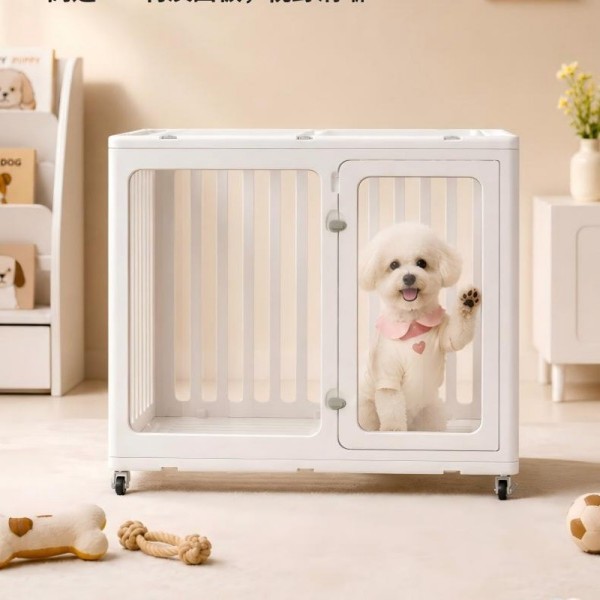
For dog crate furniture, I would lock panel dimensions, internal space, hardware, door structure, finish, assembly parts, and carton protection.
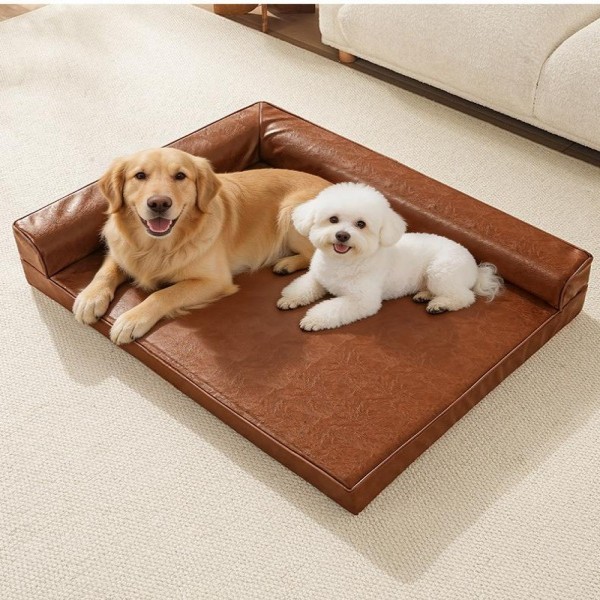
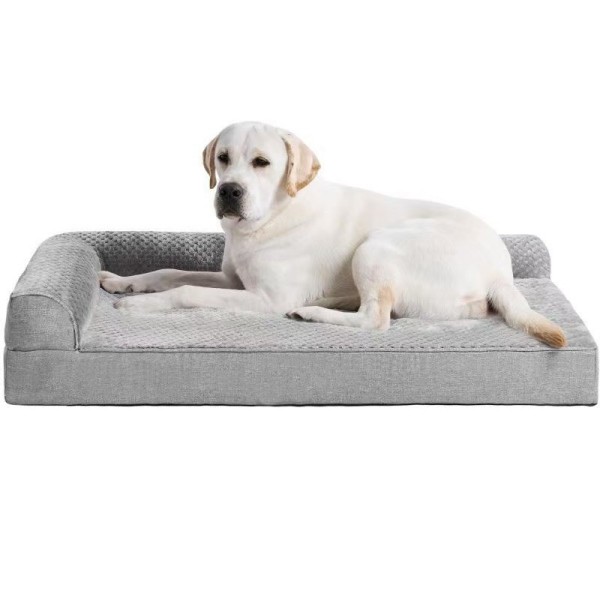
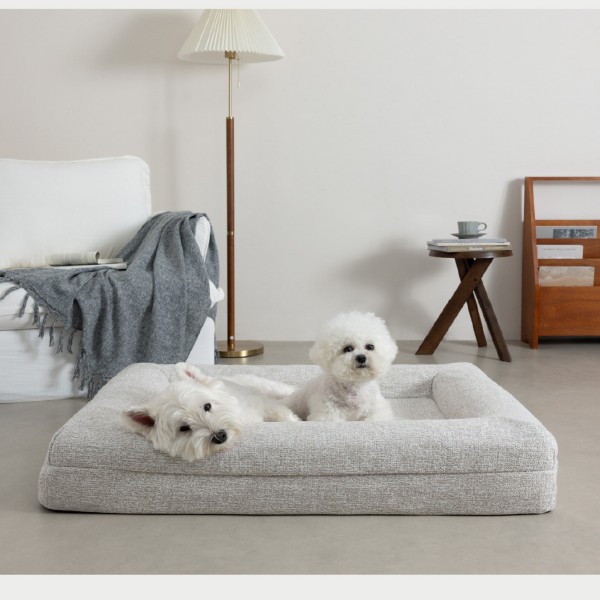
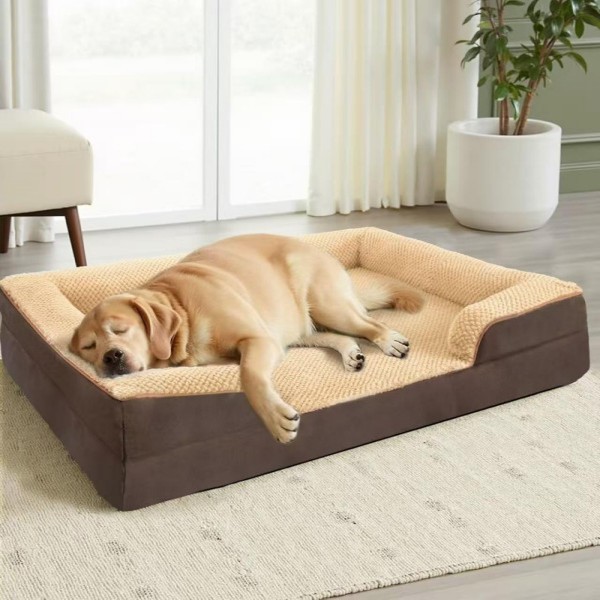
For an orthopedic dog bed, I would lock foam structure, usable sleeping area, fabric, zipper, liner, stitching, bottom grip, color, and packaging.
If any approved material or construction detail changes, require written authorization.
This reduces one of the most common bulk-order disputes: both sides believing they produced the “same product” while using different standards.
Turn the Approved Sample Into the Production Standard
A sample is useful only when it becomes a reference for bulk production.
Keep a golden sample or detailed sample record with photos, measurements, materials, colors, hardware, labels, and packaging.
Then inspect bulk goods against that reference.
Pay special attention to details that can change quietly between sample and production:
- foam or filling
- board thickness
- fabric
- hardware finish
- connector material
- stitching
- logo placement
- carton structure
The buyer should not have to rediscover the approved product after the container arrives.
Keep the First Bulk Order Manageable
MOQ is not only a price question. It is also a learning-risk question.
A pilot order can reveal production, packaging, assembly, freight, customer-use, and replacement-part problems before you commit to a much larger quantity.
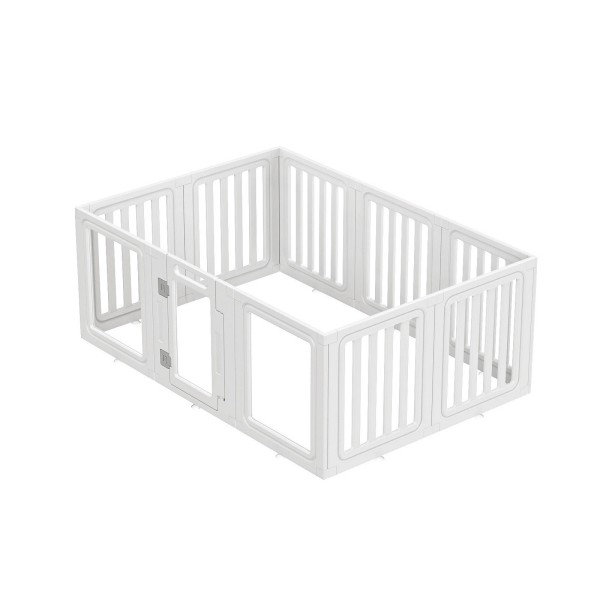
For a plastic modular indoor dog playpen, a pilot order can test panel consistency, connector fit, latch operation, floor stability, accessory count, and expansion compatibility.
The unit price may be slightly higher, but learning from 200 units is usually safer than learning from 2,000.
Scale after the product and supply process have proved themselves.
Inspect in Stages, Not Only Before Shipment
Final inspection is important, but some problems should be found earlier.
A practical control sequence can include:
- pre-production confirmation
- material check
- in-process inspection
- pre-shipment inspection
- carton or loading verification
For lot inspection, ISO 2859-1:2026 provides acceptance sampling systems for inspection by attributes.
You do not need to make every order overly technical. But you should define which defects matter, how samples are selected, and what happens if the lot fails.
Separate defects into categories such as safety, function, appearance, packaging, and missing parts.
Most importantly, inspect the product the way the customer will use it.
Assemble crate furniture. Connect full playpen layouts. Check bracket fit on wall products. Measure beds after unpacking.
A visual check alone can miss functional defects.
Treat Packaging as Part of Product Quality
Pet furniture is often bulky, flat-packed, compressible, or sensitive to pressure.
Packaging failure can turn acceptable products into damaged inventory.
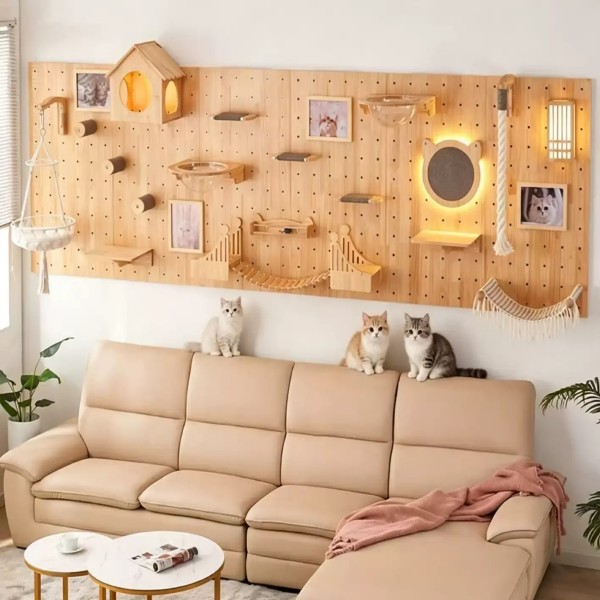
For cat wall shelves, visible surfaces need scratch protection, corners need protection, and brackets and screws need organized hardware packs.
Before shipment, confirm:
- carton dimensions
- gross weight
- inner protection
- hardware packing
- carton markings
- quantity per carton
- loading method
- spare-parts packing
For bulky products, carton dimensions also affect freight.
A cheaper carton is not cheaper if it creates damaged stock and customer returns.
Compare Landed Cost, Not Only Factory Price
A larger order may reduce the quoted unit price while increasing other costs.
The U.S. International Trade Administration explains that landed cost includes product price, freight, insurance, tariffs, taxes, and other fees.
For pet furniture, add inspection, warehousing, expected damage, and replacement costs to your internal model.
Do not increase quantity until you know the final packed dimensions.
A small product-price saving can disappear when cubic volume rises or cartons require more storage.
Clarify Incoterms and Payment Before Production
FOB, EXW, FCA, CIF, DDP, and other trade terms allocate different responsibilities.
The International Trade Administration explains that Incoterms define tasks, costs, and risks between seller and buyer.
Use the correct term in the contract and compare quotations on the same basis.
Payment structure matters too.
The International Trade Administration’s Methods of Payment guidance covers common international payment structures.
For a new supplier, I would avoid making the order financially irreversible before the buyer has meaningful evidence of production progress.
Payment milestones may be linked to deposit, sample approval, production, inspection, and shipping documents.
The exact terms depend on the relationship, but the buyer should retain commercial leverage until key conditions are satisfied.
Control Lead Time With Milestones
One promised shipping date is not enough.
Break the schedule into:
- material preparation
- production start
- customization
- packaging
- inspection
- rework
- booking
- loading
Ask for milestones and leave time for correction.
A supplier that finishes production on the last acceptable day gives the buyer no buffer if inspection fails.
For seasonal or promotion-driven orders, time risk can be as expensive as product defects.
Check Compliance Before the Goods Are Finished
Import responsibility does not disappear because the supplier made the goods.
U.S. Customs and Border Protection emphasizes importer responsibility and reasonable care.
For U.S. imports, foreign-origin goods are also generally subject to country-of-origin marking unless an exception applies.
For products subject to CPSC certification requirements, CPSC provides current eFiling guidance for imported regulated consumer products.
Do not assume every pet furniture product has the same requirements.
Before shipment, confirm destination-market rules, labels, origin marking, testing, certificate needs, material records, commercial invoice data, and packing-list data.
Compliance should be part of product development, not a shipping-week emergency.
Plan Spare Parts Before the Order Leaves
Bulk risk continues after delivery.
Pet furniture often contains inexpensive parts that are expensive to replace internationally:
- connectors
- screws
- brackets
- latches
- feet
- caps
- zippers
- covers
- hardware bags
For foam dog stairs, likely after-sales issues may involve the cover, zipper, foam recovery, or bottom grip.
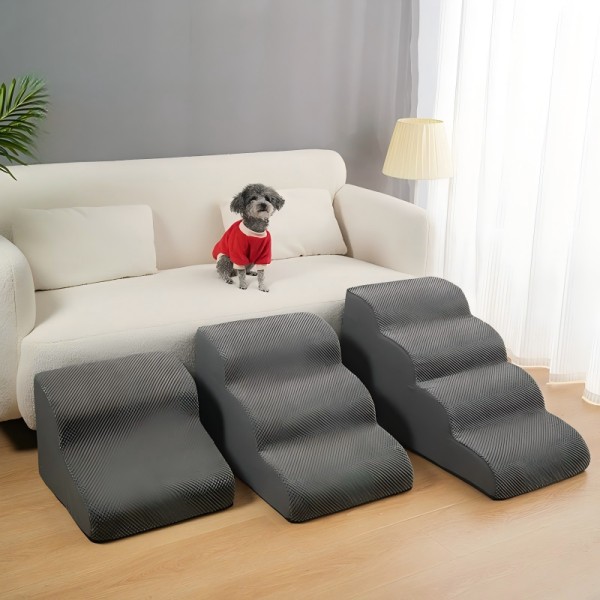
A small spare-parts inventory can stop a minor issue from becoming a full-unit refund.
Plan replacements around the product’s likely failure points.
A Practical Bulk-Buying Risk Checklist
| Risk | What Can Go Wrong | Better Control |
|---|---|---|
| Specification | Wrong material or dimensions | Signed specification |
| Sample consistency | Bulk differs from approval | Golden sample |
| Quantity | Too much inventory too early | Pilot order |
| QC | Defects found too late | Staged inspection |
| Packaging | Damage or missing hardware | Packaging approval |
| Freight | Landed cost exceeds plan | Final carton-based costing |
| Payment | Buyer loses leverage | Milestone-based payment |
| Lead time | No time for rework | Production milestones |
| Compliance | Marking or certificate issue | Pre-shipment review |
| After-sales | Small parts cause refunds | Spare-parts stock |
The goal is not to eliminate every risk.
It is to make expensive risks visible while the order can still be changed.
How Archova Approaches Bulk Pet Furniture Orders
Archova looks at bulk orders through product structure, production control, packaging, and repeatability.
For crate furniture, we focus on panel dimensions, assembly fit, hardware, internal space, finish, and carton protection.
For orthopedic beds, we focus on foam structure, usable area, cover and liner construction, stitching, grip, and packing recovery.
For playpens, we focus on panel consistency, connectors, doors, gaps, floor stability, and small-part packing.
For cat wall furniture, we focus on shelf dimensions, brackets, mounting hardware, visible finish, and packaging protection.
The objective is not only to ship the first order.
It is to make the approved product easier to reproduce in the second, third, and fourth orders.
When a Bulk Order Is Ready to Scale
Increase quantity when you have evidence that:
- bulk matches the approved specification
- packaging survives transport
- inspection standards are clear
- landed cost is understood
- lead time is realistic
- documents are accurate
- replacement parts are planned
- the supplier repeats the product reliably
The best bulk order is not the largest order you can negotiate.
It is the largest order your supply system can control.
FAQ
What is the biggest risk when buying pet furniture in bulk?
Losing control of the specification between sample approval, production, inspection, packaging, and shipment.
Should I place a pilot order first?
For a new supplier or new product, a pilot order can reveal production, packaging, logistics, and customer-use problems before a larger commitment.
Is pre-shipment inspection enough?
Not always. Complex products may benefit from material or in-process checks before final inspection.
How can I reduce shipping damage?
Approve packaging, confirm carton dimensions, check inner protection and hardware packing, and include packaging condition in inspection.
Do Incoterms protect me from all shipping risk?
No. They allocate specified tasks, costs, and risks. They do not replace insurance, QC, compliance, or supplier management.
When should I increase order quantity?
After the supplier has shown repeatable product quality, reliable packaging, realistic timing, and manageable after-sales performance.
How does Archova reduce bulk-order risk?
Archova approaches bulk orders through clear specifications, approved samples, production controls, inspection points, packaging review, and repeat-order consistency.
Conclusion
Bulk buying becomes risky when too many decisions are left until the end.
The safer approach is to lock the specification, approve the sample, test a manageable quantity, inspect in stages, verify packaging, understand landed cost, align payment with progress, and check compliance before shipment.
That turns bulk purchasing from a bet into a controlled supply process.
References
- U.S. Customs and Border Protection — Reasonable Care
- U.S. Customs and Border Protection — Marking of Country of Origin on U.S. Imports
- U.S. Consumer Product Safety Commission — eFiling
- U.S. International Trade Administration — Know Your Incoterms
- U.S. International Trade Administration — Determine Total Export Price
- U.S. International Trade Administration — Methods of Payment
- ISO — ISO 2859-1:2026 Sampling Procedures for Inspection by Attributes