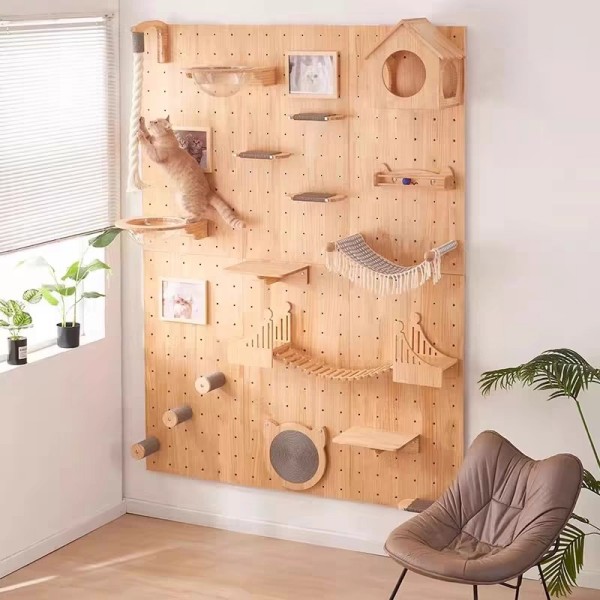
Private label pet products are not created by adding a logo to a generic item.
A stronger program starts with a clear market problem, a controlled specification, a reliable supplier, practical packaging, supported claims, and a reorder plan.
For retailers, the goal is simple: build a product that belongs to your brand and can be reproduced consistently.
Step 1: Start With a Market Problem
The U.S. Small Business Administration recommends using market research and competitive analysis to understand demand and competitive advantage before committing capital.
For pet furniture, useful questions include:
- Do pet owners want better home integration?
- Are large dogs underserved by current bed sizes?
- Do apartment cat owners need more vertical space?
- Are cleaning complaints creating returns?
- Is there room for a senior-pet collection?
A retailer might start with dog crate furniture because the product combines containment with home-furniture value.
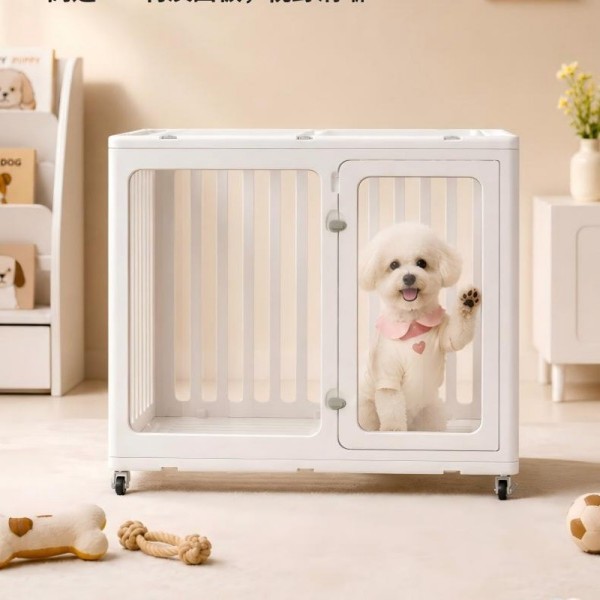
The product should have a reason to exist before you choose the color.
Step 2: Define the Use Scene
Describe how the pet and owner will use the product.
For a bed, define pet size, sleeping style, entry needs, cleaning expectations, floor type, and intended room.
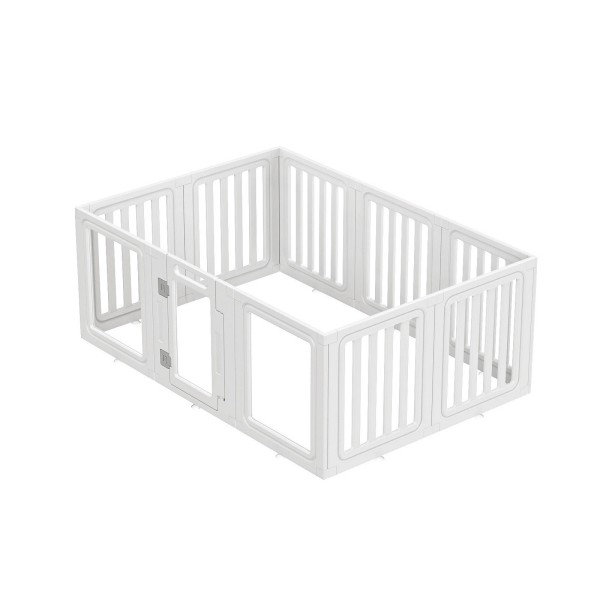
For a playpen, define pet size, panel layout, door access, floor contact, and expansion needs.
For cat furniture, define whether the product supports hiding, climbing, resting, scratching, or vertical territory.
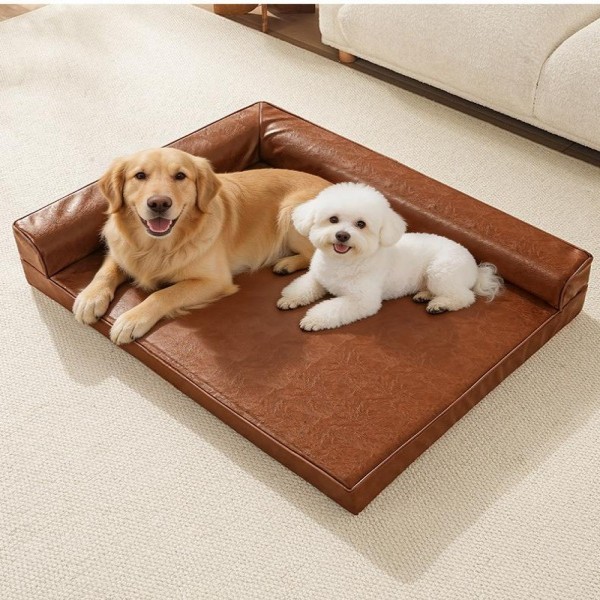
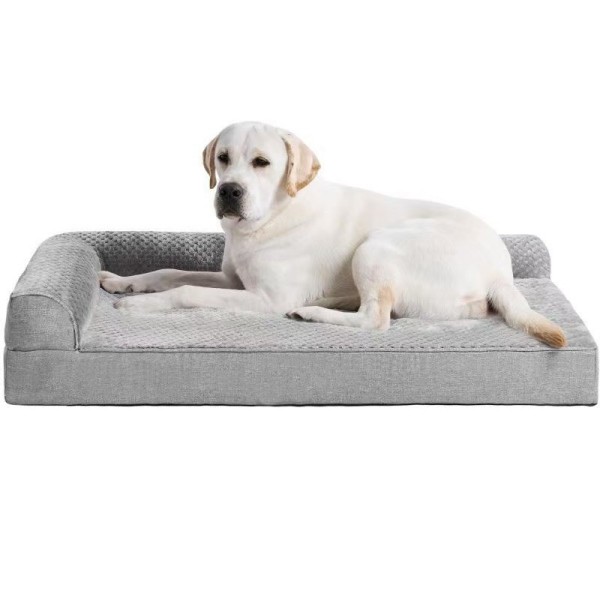
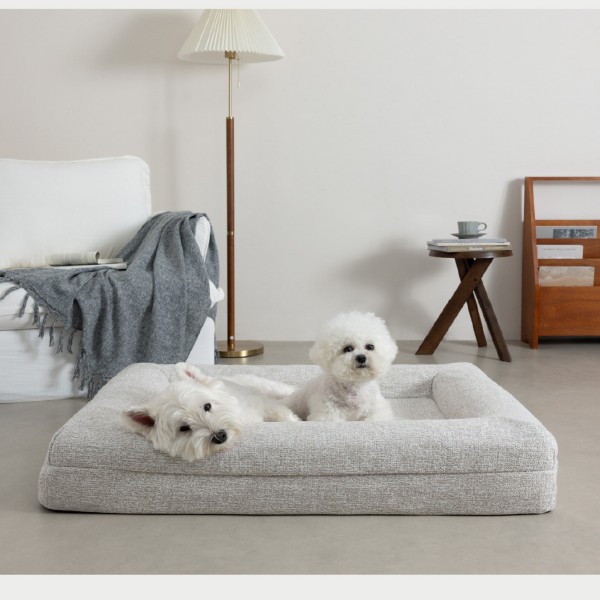
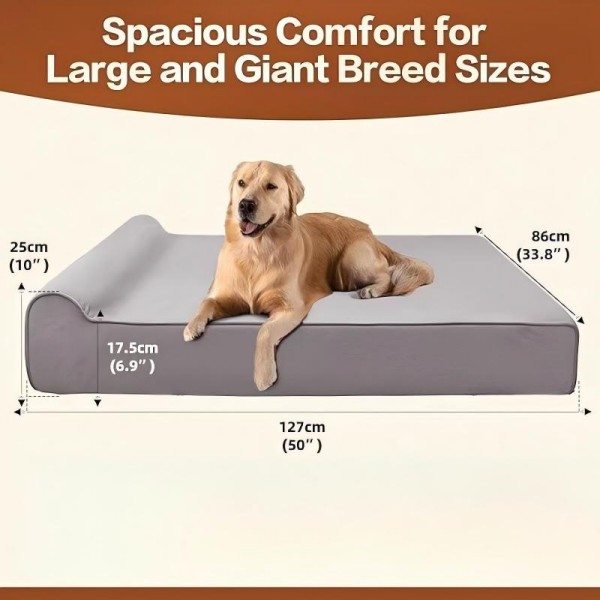
Instead of requesting “a premium orthopedic bed,” request a low-entry orthopedic dog bed for senior or large dogs with a removable cover and non-skid base.
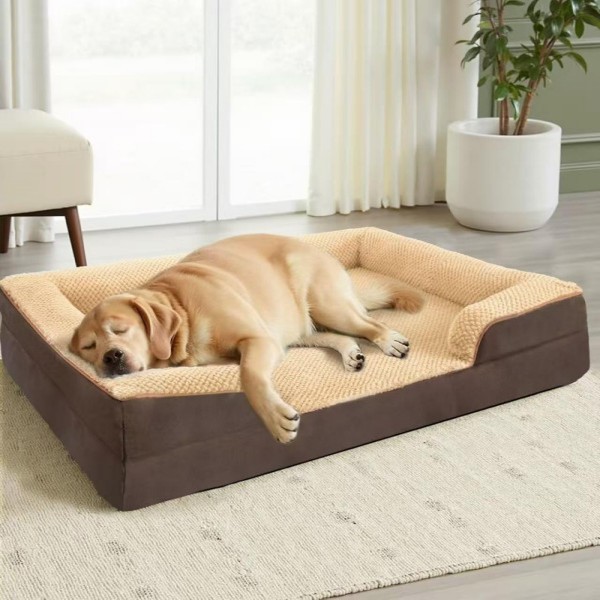
Specific use scenes are easier to sample, explain, and reorder.
Step 3: Build a Real Specification
Do not rely on photos and chat messages.
Create a specification sheet covering:
- overall and usable dimensions
- material type
- foam or filling structure
- fabric
- panel thickness
- hardware and connectors
- color reference
- stitching or edge finish
- accessories
- logo position
- labels
- packaging
- assembly parts
- inspection points
Control revisions too.
If a supplier changes fabric, foam, hardware, or packaging after approval, require written authorization.
Private label becomes risky when the brand owner controls the artwork but not the product.
Step 4: Shortlist Suppliers by Capability
The cheapest factory is not automatically the best private-label partner.
Compare whether suppliers can reproduce your specification, communicate changes, control production, protect the product in transit, and support documentation.
For a plastic modular indoor dog playpen, compare panel consistency, connector fit, latch structure, gap spacing, floor stability, accessory packing, and expansion compatibility.
Also separate standard product, light customization, and full development. A first order rarely needs the most complex option.
Step 5: Approve a Real Sample
The sample stage should test use, not only appearance.
Check usable size, stability, entry, cleaning, assembly, hardware, material feel, packing recovery, and likely damage points.
Keep an approved sample or documented golden sample.
If a material changes after testing, review the affected function again.
Do not print final packaging before the product itself is locked.
Step 6: Protect the Brand Name
Before committing to packaging or inventory, check whether the proposed name may conflict with existing marks.
The U.S. Patent and Trademark Office provides a federal trademark search system.
A search does not guarantee registration, and other countries require their own review. But discovering a conflict before printing is much cheaper than discovering it after launch.
Step 7: Design Packaging for the Channel
Packaging must protect the product, communicate it, and move efficiently through the sales channel.
A DTC carton, retail carton, wholesale pack, and marketplace-ready pack may have different priorities.
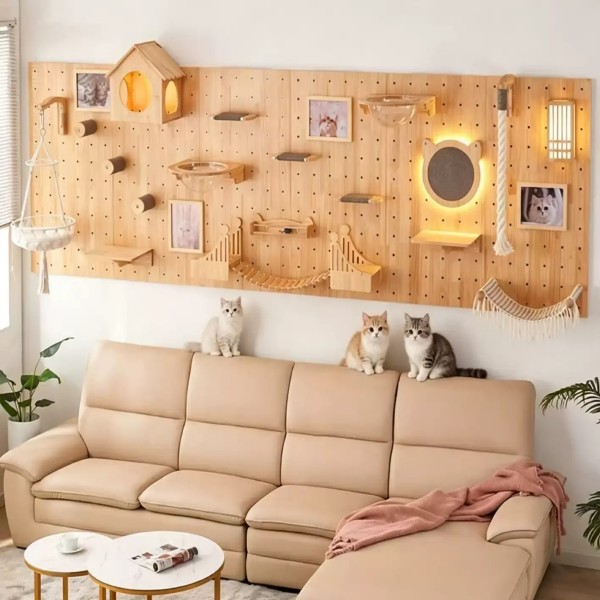
For cat wall shelves, packaging should protect visible panels while keeping brackets, screws, and mounting parts organized.
If your channel needs UPCs, GS1 US explains how GTINs and UPC barcodes identify retail products.
Build barcode placement into the artwork rather than adding it at the last minute.
Step 8: Control Product Claims
Private-label packaging often becomes more aggressive than the product specification.
Words such as “orthopedic,” “waterproof,” “eco-friendly,” “chew-proof,” and “100% recycled” should only be used when supported.
The Federal Trade Commission states that advertising claims must be truthful, non-deceptive, and evidence-based.
For environmental claims, the FTC’s Green Guides help businesses avoid misleading statements.
Use narrower language when appropriate:
- “water-resistant liner” instead of unsupported “100% waterproof”
- “supportive foam” instead of treatment claims
- documented recycled content instead of vague “eco-friendly”
- “reinforced fabric” instead of unsupported “chew-proof”
Private label gives you control over the message. It also gives you responsibility for it.
Step 9: Build Compliance Into Development
Compliance should be checked before bulk production.
For products entering the United States, U.S. Customs and Border Protection states that foreign-origin articles generally require country-of-origin marking unless an exception applies.
Other requirements depend on the product.
If a consumer product is subject to a CPSC rule requiring certification, importers may also need certificate information and electronic filing. CPSC states that eFiling requirements for covered imported consumer products are now in effect.
Do not assume every pet product has the same requirements.
Identify the destination market, product category, applicable rules, testing needs, documentation, labeling, and responsible party before production.
Step 10: Use a Pilot Order
A first order should test more than demand.
It should test production consistency, inspection, packaging, assembly, freight, warehouse handling, customer questions, damage, returns, replacement parts, and lead time.
A focused first range is usually safer than launching many unrelated SKUs.
The first order should create information for the second order.
Step 11: Inspect Bulk Against the Approved Product
Do not inspect bulk goods against memory.
Use the specification and approved sample.
For beds, check dimensions, foam, sewing, zipper, liner, cover, and non-skid base.
For playpens, check panels, gaps, connectors, latches, defects, and accessory count.
For furniture, check finish, hardware, hole positions, assembly fit, scratches, and packaging.
The purpose of QC is to stop differences before they reach the customer.
Step 12: Build Reorder Logic Before Launch
Private label becomes valuable when the product can be replenished reliably.
Decide:
- reorder point
- lead time
- safety stock
- carton quantity
- spare-parts stock
- material-change procedure
- artwork revision control
- version numbering
- expansion compatibility
A product that sells well but cannot be reproduced consistently becomes a supply problem.
A Practical Private Label Development Flow
| Stage | Main Decision | What I Would Lock |
|---|---|---|
| Market research | Who is it for? | Use scene and pain point |
| Product brief | What does it solve? | Size, structure, material |
| Supplier shortlist | Who can reproduce it? | Capability and communication |
| Sampling | Does it work? | Approved sample |
| Branding | Does the name work? | Trademark direction |
| Packaging | Can it survive the channel? | Carton, labels, barcode |
| Claims | Can statements be supported? | Approved copy |
| Compliance | Can it enter the market? | Marking and documents |
| Pilot order | Does the system work? | Production and logistics |
| QC | Does bulk match approval? | Inspection standard |
| Reorder | Can it scale? | Version and replenishment control |
This is the difference between private labeling a product and building a private-label product line.
How Archova Approaches Private Label Pet Products
Archova starts with the finished product and the use scene.
For pet furniture, we can support product selection, size planning, material direction, fabric and color, structure review, hardware, cleaning access, packaging, and practical private-label changes.
For a first project, I would usually avoid unnecessary complexity.
Start with an existing structure that fits the use case. Then customize the parts that matter: size mix, finish, fabric, color, module combination, logo, labels, instructions, packaging, and assortment.
Deeper structural changes can come after the retailer learns what the market actually buys.
When Private Label Is Worth It
Private label is worth considering when you have a clear target customer, a product problem worth solving, manageable inventory, and a supplier that can reproduce the approved specification.
I would be cautious when:
- the only difference is a logo
- the market position is unclear
- too many SKUs are planned
- the supplier cannot control revisions
- packaging is designed before sample approval
- claims are stronger than the evidence
- compliance is left until shipping
Private label should create control and differentiation.
If it only adds artwork to an uncontrolled product, it adds risk instead.
FAQ
What is a private label pet product?
It is a product sold under the retailer or brand owner’s own brand, with controlled specifications, packaging, labeling, and positioning.
Do I need a completely new product?
No. Many first projects begin with a proven structure and make focused changes to size, material, finish, color, packaging, or set composition.
How many SKUs should I launch?
Start with enough variety to create a clear range, but not so many that sampling, inventory, and reordering become difficult.
What should I approve before bulk production?
Approve the specification, sample, materials, color, logo placement, labels, packaging, instructions, barcode, and relevant compliance documents.
Who is responsible for compliance?
Responsibilities depend on the market and product. Suppliers can provide documents, but retailers and importers should understand the rules applying to their goods.
How can I reduce private-label risk?
Use a focused first range, detailed specifications, approved samples, controlled claims, pre-shipment inspection, clear packaging, and a pilot order when practical.
How does Archova support private-label projects?
Archova can support product selection, materials, sizing, structure, color, fabric, packaging, labeling, instructions, assortment planning, and practical customization.
Conclusion
Private label is not a printing project.
It is a controlled product-development process connecting market demand, specification, supplier execution, branding, packaging, compliance, quality control, and replenishment.
Retailers that control those steps build more than a branded SKU.
They build a product line they can understand, improve, and reorder.
References
- U.S. Small Business Administration — Plan Your Business
- USPTO — Search Our Trademark Database
- GS1 US — How to Get UPC Barcodes for Products
- Federal Trade Commission — Advertising and Marketing
- Federal Trade Commission — Environmental Marketing
- U.S. Customs and Border Protection — Marking of Country of Origin on U.S. Imports
- U.S. Consumer Product Safety Commission — eFiling