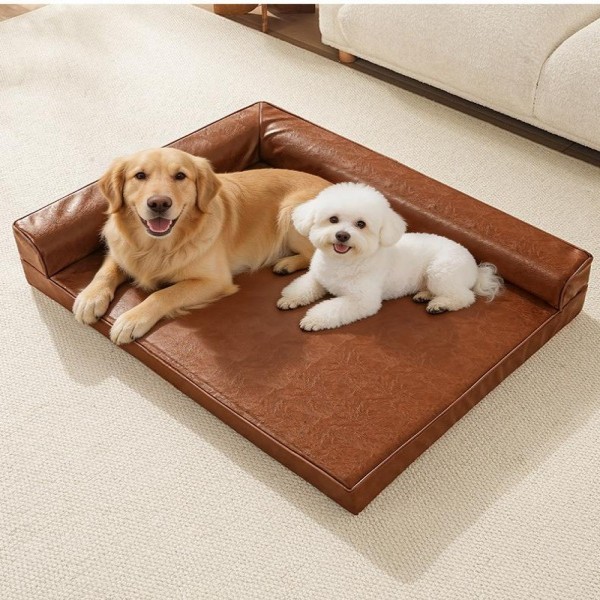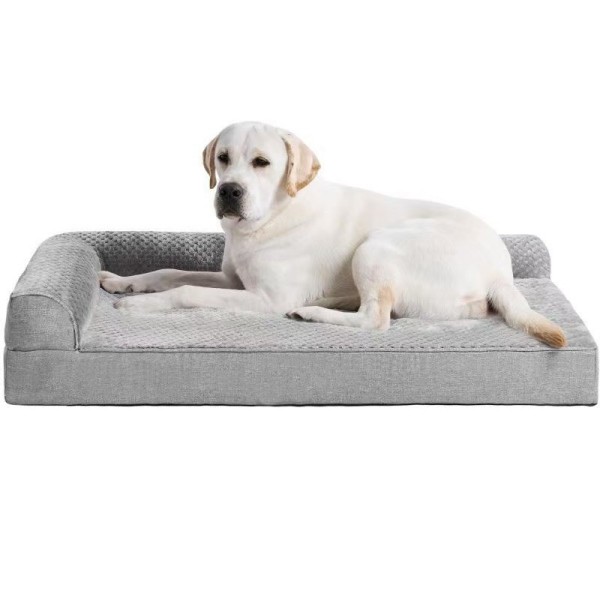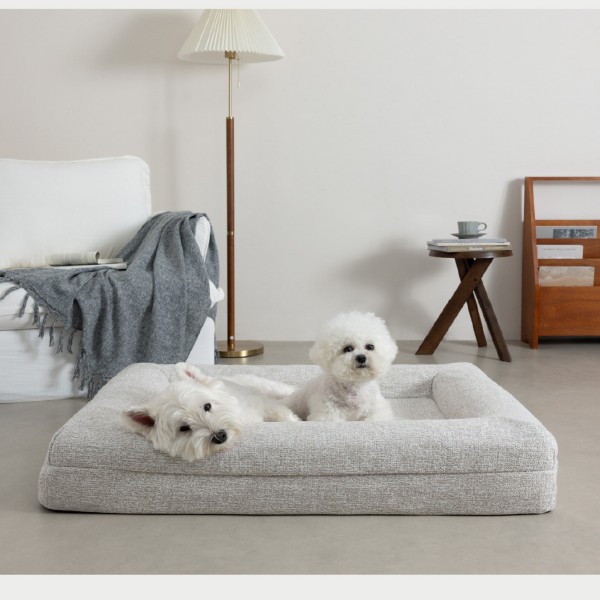
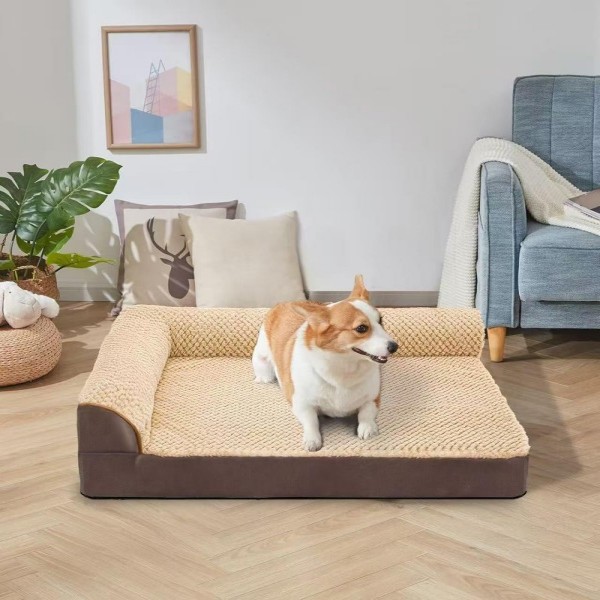
When you compare an orthopedic dog bed with a memory foam dog bed, you are usually trying to answer one practical question: which bed will help the dog rest better, not just sound better?
The clean answer is this: an orthopedic dog bed is chosen for support, while a memory foam dog bed is chosen for body-contouring comfort. The best product may use both, but memory foam alone does not guarantee strong support.
If the dog is young, small, and already sleeps well, a comfortable memory foam bed may be enough. If the dog is older, heavier, larger, stiff after rest, or spending long hours lying down, the support structure matters much more.
Why This Comparison Matters
“Memory foam” describes a material. “Orthopedic” should describe the support role of the full bed.
That distinction matters when pet owners pay more because they expect meaningful support rather than a premium label.
The Short Answer
An orthopedic dog bed should support the dog’s body more evenly. It should help keep the dog lifted from the floor and reduce pressure on areas such as hips, elbows, shoulders, spine, and chest.
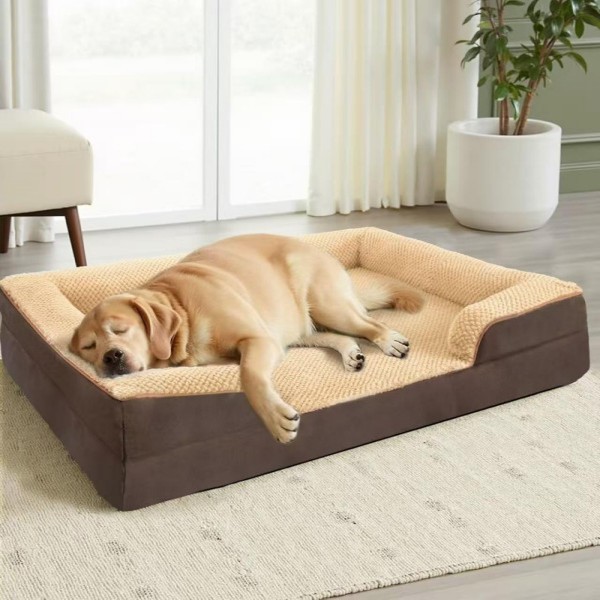
A memory foam dog bed uses memory foam to shape around the dog’s body. That can feel comfortable and can help with pressure relief, but only when the foam has enough thickness and support.
So I would not ask, “Which one sounds more premium?” I would ask, what does this dog actually need when lying down for hours?
Orthopedic Means Support First
A supportive bed should keep the dog above the floor and avoid collapsing under normal body weight. The value comes from foam depth, firmness, base support, usable area, and access.
I would be careful with any bed marketed as orthopedic when those details are unclear.
Memory Foam Means Cushioned Comfort
Memory foam can contour around the body and create a cushioned feel. But a thin layer or an overly soft block may not give enough support for a large or heavy dog.
Treat memory foam as one component in the structure, not proof of orthopedic performance.
The Best Bed Often Combines Both
Many strong beds are actually orthopedic memory foam dog beds. That means the bed uses memory foam as part of a more supportive structure.
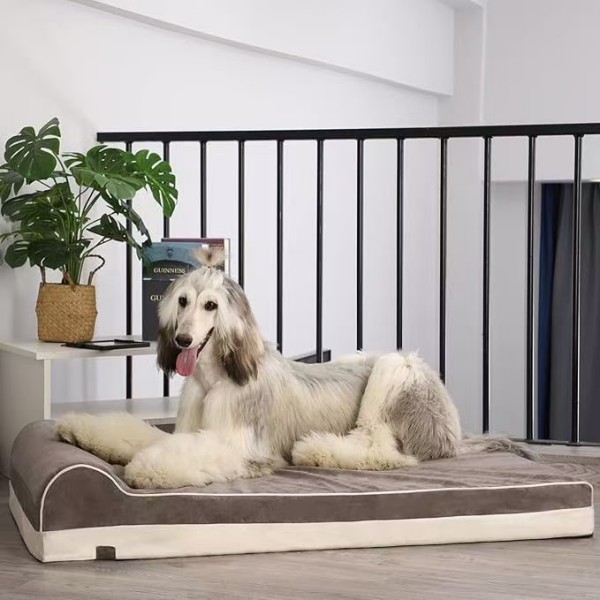
A common good design is a softer comfort layer on top and a firmer support layer underneath. The top helps the dog settle in, while the bottom helps carry body weight.
This is much easier for pet owners to understand than complicated foam language. The dog gets comfort on the surface and steadiness underneath. That is the real value.
When Orthopedic Is the Better Direction
Choose the orthopedic direction when support, easy access, or heavier body weight matters more than softness alone.
Senior dogs, large breeds, heavier dogs, and dogs spending long periods resting often need stronger structure. If a dog is stiff, painful, or suddenly reluctant to move, the bed should not replace veterinary evaluation.
When Memory Foam Is the Better Direction
Choose memory foam when the main story is cushioned indoor comfort and body contouring.
It can work well in bedroom or sofa-style beds, but the support underneath still matters.
Large Dogs Need Stronger Support
Large dogs expose weak foam quickly. The bed needs enough depth, firmness, and usable area to keep the body supported rather than compressed close to the floor.
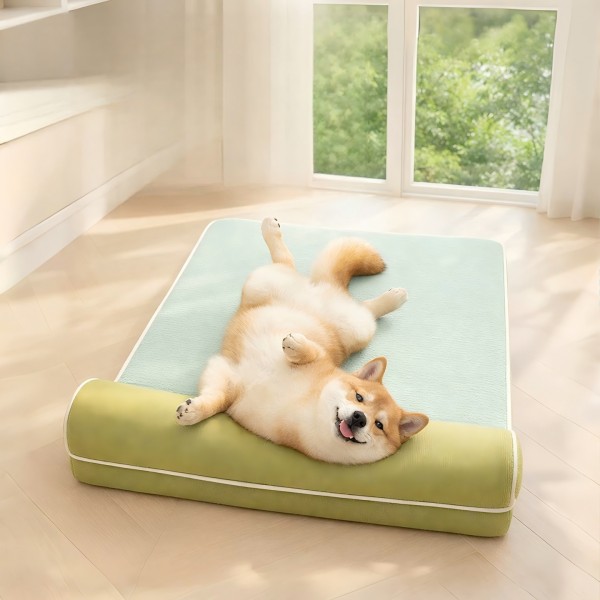
Senior Dogs Need Support and Easy Access
Senior dogs often need more than a soft surface. They need a bed that feels stable when they step onto it and easy when they get out of it.
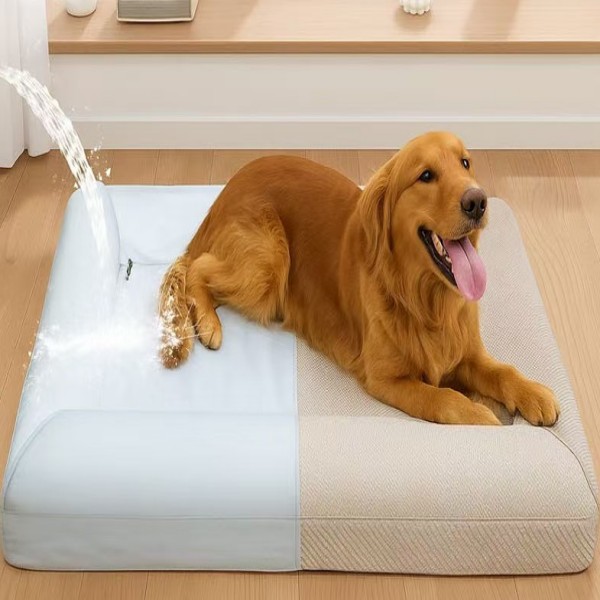
A thick bed with high sides can look luxurious, but it may not be friendly to an older dog. If the dog has to lift the legs too high to enter, the bed may stay unused.
For senior dogs, I would look for steady support, low entry, non-skid bottom, and easy cleaning. If the bed has bolsters, a lower front opening can make a big difference.
Comfort is not only what happens after the dog lies down. It starts when the dog approaches the bed.
Small Dogs Still Need the Right Fit
Small dogs may not need the same foam depth as large breeds, but entry height, warmth, body fit, and sleeping style still matter.
Flat Bed or Bolster Bed?
A flat orthopedic bed is better for dogs that stretch out, move around often, or need easy access from every side. It is usually a safer choice for large dogs and older dogs that do not want to step over raised edges.
A bolster bed works well for dogs that like curling, leaning, or resting the head on a raised side. It also feels more like furniture, which can make it easier to place in a living room.
But bolsters reduce the flat sleeping space. A large outside size does not always mean a large usable area. I would always judge the space where the dog actually lies down.
Cleaning Decides Long-Term Use
A removable cover, practical liner, and clear care instructions often decide whether the bed stays useful after months of hair, odor, drool, and accidents.
Keep claims precise. A fixed fabric surface is not a removable washable cover, and water resistance is not full waterproofing.
Non-Skid Bottom Matters More Than It Sounds
A bed that slides can make a dog hesitate.
This matters on tile, wood, vinyl, laminate, and other smooth floors. Senior dogs and large dogs may notice bed movement more because they step onto the bed with more weight and less flexibility.
A non-skid bottom is not exciting, but it is practical. It helps the bed feel steady, and steadiness is part of comfort.
If the dog does not trust the bed when entering, the foam inside will not matter much.
Fabric Changes the Experience
Fabric affects warmth, hair removal, cleaning, durability, and room appearance. Treat it as part of daily use rather than decoration alone.
Chew Resistance Should Not Be Mixed Carelessly
Orthopedic support and chew resistance are different things.
A stronger cover may help with light scratching, digging, and daily wear. But most soft foam beds are not truly chew-proof, especially for dogs that chew aggressively.
If the dog is a heavy chewer, a soft memory foam or orthopedic bed may not be the safest first choice unless the chewing behavior is already controlled.
I would keep the message honest. Let orthopedic beds focus on support and rest. Let chew-resistant products handle chewing as a separate problem.
The Practical Comparison
| What You Need to Judge | Orthopedic Dog Bed | Memory Foam Dog Bed |
|---|---|---|
| Main value | Body support during rest | Soft body-contouring comfort |
| Best fit | Senior dogs, large dogs, heavier dogs, long rest | Dogs that like cushioned indoor comfort |
| What to check first | Support core, thickness, usable area | Foam thickness and support underneath |
| Main risk | “Orthopedic” used without real support | Thin foam sold as premium comfort |
| Strongest version | Stable support with clear size fit | Memory foam combined with firmer base |
| Better message | Easier, steadier rest | Softer, closer comfort feel |
This comparison is not about which name is better. It is about which structure fits the dog’s real body and daily rest.
How This Becomes Value for Your Product Range
A strong bed range can separate flat supportive mattresses, bolster orthopedic beds, large-dog beds, low-entry senior beds, and comfort-focused memory-foam options.
The value comes from clear use scenes, not from stacking premium words on similar products.
How Archova Approaches This Category
Archova looks at orthopedic and memory foam dog beds through real pet home use.
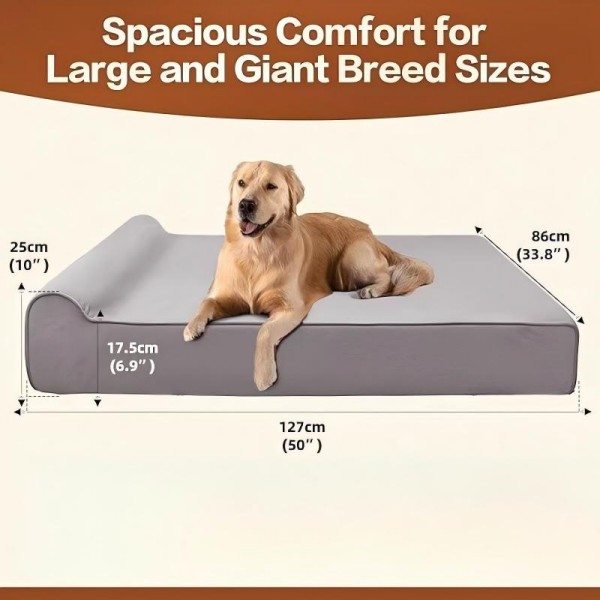
For a senior-support direction, I would focus on low entry, steady support, non-skid bottom, and easy cleaning. For a large-dog direction, I would focus on thickness, support core, and usable sleeping area. For a modern home direction, fabric texture, color, and bed shape become more important.
Archova can support finished product selection, foam and fabric direction, size planning, cover and liner options, color choices, and practical private label development. The goal is not to make every bed sound medical. The goal is to build beds that pet owners understand and dogs actually use.
When This Direction Is Worth Adding
This product direction is worth adding when your market includes senior dogs, large breeds, heavier dogs, comfort-focused pet owners, and modern pet home spaces.
It also fits naturally beside dog ramps, foam dog stairs, sofa-style beds, crate mats, and senior support products. Beds support rest. Ramps and stairs support access. Together, they answer a fuller home comfort need.
Do not add orthopedic or memory foam beds only because the words sound premium. Add them when the product has clear support, comfort, cleaning, and size logic.
That is when the bed earns its place.
FAQ
Is an orthopedic bed better than a memory foam bed?
Not automatically. Orthopedic should describe support; memory foam describes a material.
Can a memory foam bed be orthopedic?
Yes, when the full structure has enough depth, firmness, usable area, and stability for the target dog.
Which is better for senior dogs?
A stable, easy-entry supportive bed is usually the stronger direction. Mobility or pain changes should still be discussed with a veterinarian.
Which is better for large dogs?
Look for deeper support, appropriate firmness, and enough usable sleeping area.
Flat bed or bolster bed?
Flat beds offer easy access and full sleeping area. Bolsters work for dogs that curl or lean but reduce the usable center.
Can these beds treat arthritis?
No. They can support more comfortable rest but do not treat joint disease.
References