Premium B2B Pet Living

Our Product Collections

Explore Archova's full range of premium pet living solutions -- designed for global B2B partners seeking differentiation, quality, and margin.

Filtered by: Senior Support Clear filter

Dog Steps for High Bed and Bedside Pet Access

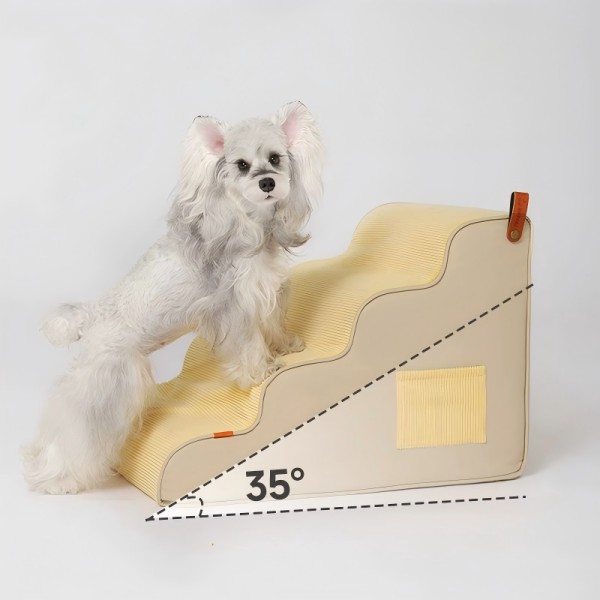
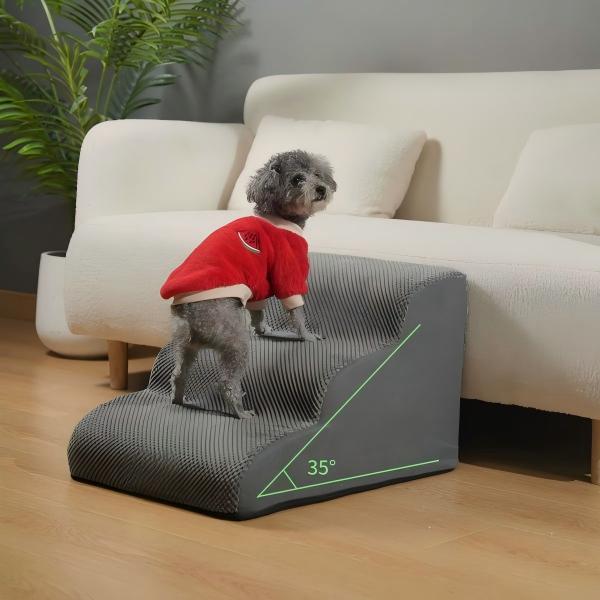
Archova supplies foam dog steps and soft wave-ramp formats for bedside access, with product shapes developed around small and short-legged pets that need an easier route to elevated indoor furniture. The supplied images show several related wave profiles rather than one fixed SKU: a compact 35° model, longer bedside designs, and a dimensioned model measuring approximately 70 × 38 × 36 cm.

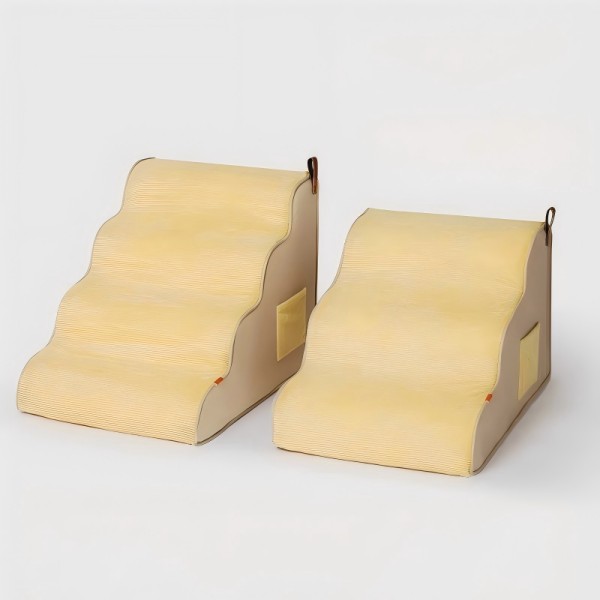
The climbing surface uses broad rounded transitions instead of narrow square treads. Depending on the model, the cover is finished as a full-width textured or smooth textile surface with contrasting side panels, piping, a rear carry loop, and a small side pocket. This product line also uses non-slip bottom fabric, giving the base added grip on common indoor floors while retaining the soft foam construction.

For a true high-bed program, the stair height must be matched to the actual furniture edge. The shown 36 cm model is a confirmed image reference, not a universal high-bed height; taller beds may require a higher stair body or a longer ramp geometry rather than simply increasing steepness. For quotation, share the target bed height, preferred profile, intended pet size, order quantity, cover direction, branding requirements and destination market.
Foam Dog Ramp for Couch and Living Room Pet Access

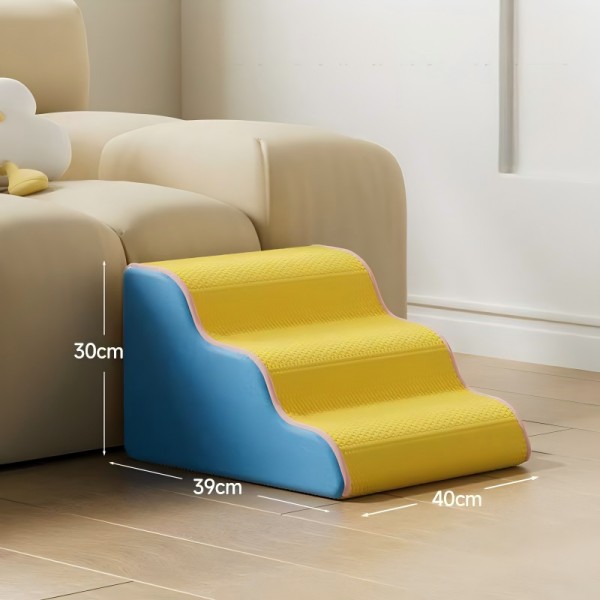
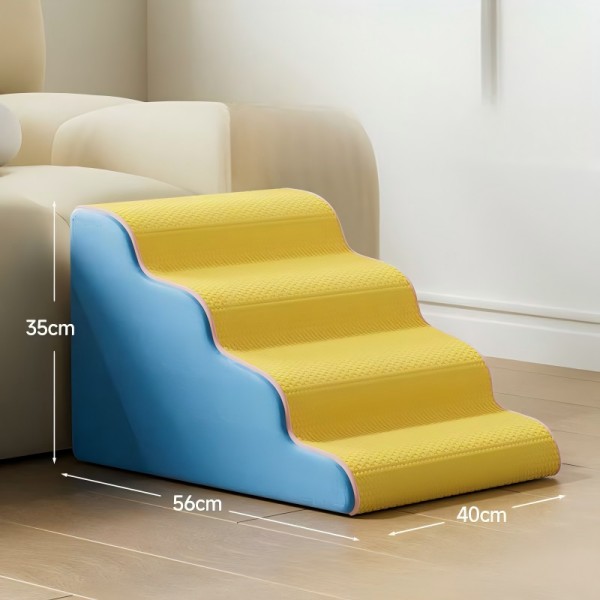
Archova supplies curved foam dog ramps for couch access in compact, medium and extended height directions. The product images show three practical size references: approximately 39 × 40 × 30 cm, 56 × 40 × 35 cm and 70 × 40 × 45 cm, allowing the range to match different sofa and low-furniture heights instead of forcing one profile into every use scene.

The ramp body combines a high-density rebound foam direction with broad rounded paw-contact levels and a top landing. A ribbed textile surface follows the curved profile, while the confirmed dotted non-slip bottom fabric helps the ramp resist movement on smooth indoor floors during normal use.

For quotation, share the preferred size direction, target furniture height, cover color and fabric, order quantity, branding requirements and destination market. Final foam density, tested load rating, cover-care method and recovery guidance are confirmed with the selected production model.

Foam Dog Stairs for Everyday Indoor Pet Access

Archova supplies wave-profile foam dog stairs and soft pet ramp formats for access to sofas, beds, chairs and other indoor furniture. The supplied images show three dimensioned height directions – approximately 39 × 40 × 30 cm, 56 × 40 × 35 cm and 70 × 40 × 45 cm – plus coordinated taller and lower covered designs with the same rounded, furniture-friendly visual language.

Instead of hard square treads, the climbing route uses broad rounded transitions over a supportive foam body. The covered models show a textured textile contact surface, fitted side panels and, on selected versions, a rear carry loop and side pocket. This product also uses non-slip bottom fabric, giving the base additional grip on common indoor floors while keeping the construction soft and lightweight.

For quotation, share the preferred height direction, target furniture height, intended pet size, cover fabric and color, order quantity, branding requirements and destination market. Final foam firmness, tested load rating, cover-care method, dimensional tolerance and compression-recovery guidance are confirmed with the selected production model.

Foam Ramp for Dogs for Gentle Indoor Pet Access

Archova supplies foam ramps for dogs in several soft indoor access profiles rather than one fixed wedge. The supplied images show compact wave ramps, a longer multi-wave format, and a gentler wedge-style direction for couches, sofas and comparable indoor furniture. One photographed model is marked approximately 56 × 40 × 35 cm, while another image shows an approximately 32° incline reference.

The wave models use broad rounded transitions that sit between conventional stairs and a straight ramp, creating visible paw-contact zones without hard square risers. The product family uses a supportive foam body, fitted textile covers and a confirmed non-slip bottom fabric. Selected cover directions also show a rear carry loop and side storage pocket; these exterior details are treated as model-specific rather than universal.

Ramp performance depends on more than height alone. The finished height, run length, width, incline, foam firmness, upper-surface grip and bottom grip need to work together for the intended pet and furniture. For quotation, share the target sofa or bed height, preferred model/photo, intended pet size, order quantity, cover direction, branding requirements and destination market.
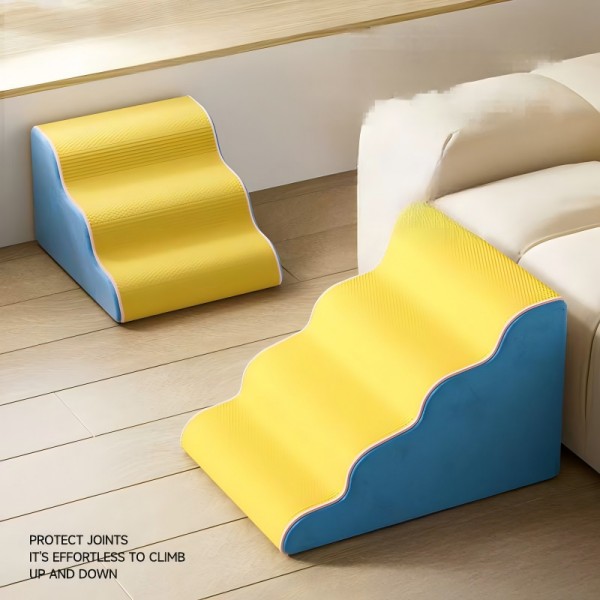
High Density Foam Dog Steps for Small Dogs & Medium Cats

Archova supplies high-density foam dog stairs in compact, medium and taller wave-profile formats for indoor access to sofas, beds, chairs and other resting areas. The supplied images show three coordinated dimensioned directions at approximately 39 × 40 × 30 cm, 56 × 40 × 35 cm and 70 × 40 × 45 cm, plus an alternative bedside format around 70 × 38 × 36 cm.

The product family uses a continuous foam body with broad rounded changes in height rather than exposed hard step edges. The images also confirm a textured textile paw-contact surface, a zippered removable cover on one shown construction, and dotted non-slip bottom fabric. One medium model is marked at approximately 32°, so slope and rise should be treated as model-specific instead of using one angle across the full range.

For quotation, share the preferred height direction, target furniture height, intended pet size, fabric and color direction, order quantity, branding needs and destination market. Final foam density / firmness, tested load rating, washing instructions, dimensional tolerance and compression-recovery standard are confirmed with the selected production sample.

Low-Step Dog Stairs for Senior Dogs and Easy Indoor Access

Archova supplies low-step foam dog stairs for senior dogs, small breeds and compact indoor furniture access. The supplied images show two clear low-height directions around 30 cm overall height: a compact 2-step format at approximately 40 × 40 × 30 cm and a rounded wave-step format at approximately 39 × 40 × 30 cm. These are the main product references for this page, while the taller images are treated as related range directions rather than the same specification.

The low-height models use a supportive foam body with rounded transitions instead of hard exposed step edges. The image set shows soft textile covers, multiple neutral and bright color directions, and compact footprints that fit beside sofas, lounge chairs and lower beds. This product is also confirmed to use non-slip bottom fabric, which is an important stability feature for senior-pet positioning, although real floor grip still depends on floor finish, dust, moisture and pet movement.

For quotation, share the target furniture height, intended pet size, preferred 2-step or rounded wave profile, fabric and color direction, order quantity, branding requirements and destination market. Final foam density / firmness, tested load rating, cover washing instructions, recovered dimensions and compression-recovery standard are confirmed with the approved production sample.
Support & Inquiries

Questions & Contact

Find answers to common B2B questions, or send us a direct inquiry -- our team responds within 24 hours.

Frequently Asked Questions

What height dog steps do I need for a high bed?

Measure from the floor to the point where the pet should enter the mattress or bed platform. The top of the selected stair should finish close enough to that height that the pet is not forced to make a final large jump. The shown 36 cm model is only one reference size, so taller beds may need a taller and longer model.

One supplied model is approximately 70 × 38 × 36 cm, while other images show taller profiles without stated dimensions. Whether a model suits a high bed depends on the actual furniture height. Archova should confirm the finished stair height against your target bed before production.

One dimensioned image shows approximately 70 cm length × 38 cm width × 36 cm height. The image set also contains other compact and taller profiles, so this dimension should not be applied to every model.

Selected compact wave-profile images are labeled 35°. Other shown models do not provide an angle, so 35° should be treated as a model-specific reference rather than a universal specification.

Wave or scalloped steps create rounded transitions and a more continuous climbing route than hard square risers. Some pet owners prefer this middle ground between stairs and a ramp, but the best profile depends on the dog, furniture height and the dog’s willingness to use it.

Stairs use more defined level changes, while a ramp uses a more continuous slope. A high bed can make a short ramp too steep, so a longer run may be needed. The supplied wave-step models combine a continuous direction with rounded paw-placement zones.

Short-legged breeds are common users of bedside access products, but no stair or ramp should be presented as preventing spinal or joint disease. The selected height, width, firmness and profile should fit the individual dog, and owners with medical concerns should follow veterinary advice.

They can be useful for older dogs that are comfortable walking on a soft stepped or ramped surface. Stability matters: if the foam feels too soft, the stair wobbles, or the dog refuses it, another profile or firmer construction may be more appropriate.

Yes. This product line uses non-slip bottom fabric. The final sample should still be tested on the target floor because dust, floor finish, stair width, foam weight and pet movement can affect real-world grip.

The bottom fabric is intended to add grip on common indoor floors, but no lightweight foam stair should be marketed as impossible to move. Keep both the floor and base clean and dry, place the stair flat against the furniture, and add a suitable mat if the target floor remains slippery.

Yes, if the foam is too soft, the base is too narrow for the pet, or a larger dog loads the stair from the side. Marketplace reviews repeatedly mention wobble and tipping as reasons dogs refuse foam stairs. Sample testing should include side loading, repeated climbing and the intended pet-weight range.

There is no single correct firmness for every model. The foam should compress enough for comfortable paw contact but recover without the tread collapsing or creating a moving surface. Density, firmness and geometry should be approved together rather than judged from density alone.

The shown dimensioned model is about 38 cm wide. Wider or heavier dogs may need more width and lateral stability. Buyers should choose width from the intended pet size and test whether the dog can climb, turn and descend without stepping off the side.

Dogs may avoid unfamiliar stairs because of movement, steepness, surface feel or uncertainty. Real owner discussions commonly describe a learning period. Introduce the stairs on a stable floor, use rewards, train both up and down, and do not force the dog onto a surface it finds unstable.

Going down can feel different from going up, and some dogs choose to jump off the side instead of using the access product. Position the stair where the dog naturally exits, train the descent separately and avoid leaving a large exposed drop immediately beside the stair.

It can. If the required height increases while the stair footprint stays short, the access route becomes steeper. For a high-bed program, increasing the run length or using a taller multi-wave structure is generally a better design direction than forcing more height into the same compact footprint.

The images confirm fitted textile covers, but they do not prove that every shown cover is removable or machine washable. Removable washable constructions can be specified for selected models and should be confirmed with zipper design, fabric and care label before production.

Selected covered models show a rear fabric carry loop and a small side pocket. These are model-specific exterior details and should be listed only on SKUs that include them.

The supplied images and source file do not provide a fixed kg/m³ value for all models. Archova should quote the selected foam specification and approve it through a physical sample, recovery test and intended load test.

A tested load rating is not shown in the supplied material. The rating should be established for the final foam firmness, width, height and wave geometry. Buyers should avoid publishing a weight limit that has not been verified on the selected model.

Suitable foam stair models can use compression packing to reduce carton volume. The exact compression plan should be validated by model because a taller stair contains more foam and can be more sensitive to uneven recovery.

Recovery time is model-specific. Market reviews show that some compressed foam stairs recover quickly while others remain low, uneven or misshapen for longer than expected. The final production specification should define the normal recovery window and the action to take if shape or height remains outside tolerance.

Remove all compression packaging, position the stair in its intended shape, allow the specified recovery period and check whether the cover is restricting expansion. If one side, tread or landing remains outside the approved tolerance after that period, treat it as a QC issue rather than telling customers to wait indefinitely.

A temporary packed-material odor can occur with some foam and textile combinations. The approved model should include ventilation and care guidance if needed. Strong, persistent or unusual odor should be investigated against the confirmed material specification.

Check finished height, length and width; wave geometry; foam firmness; top and side recovery after compression; lateral stability; non-slip bottom grip; cover tension; zipper and stitching if present; carry loop and pocket attachment if included; color consistency; carton condition; and whether the stair reaches the intended furniture height.

At minimum, agree dimensional tolerance, finished height after recovery, foam firmness or density control, cover fit, bottom-grip construction, stitching, packaging compression, and the recovery window. High-bed products are especially sensitive to height loss because a few centimeters can change the final furniture match.

Yes. Existing wave-step directions can be used as starting points while overall height, run length, wave count, foam specification, cover, color, non-slip bottom fabric, branding and packaging are matched to the target furniture and market.

Send the target bed or furniture height, preferred model/photo, required width or intended pet size, quantity, destination market, cover direction, color, branding, packaging requirements and any testing or labeling requirements. Archova can then confirm the final product and carton specification.

Send an Inquiry

We respond within 24 hours.

🔒 Your information is kept private and never shared.

24h Reply

Low MOQ

Global Ship